 DecodedCars
Ford Focus 2017
Versiones, desempeño, equipamiento, consumo, seguridad y problemas conocidos, con sus ventajas y desventajas frente a modelos similares 2017.
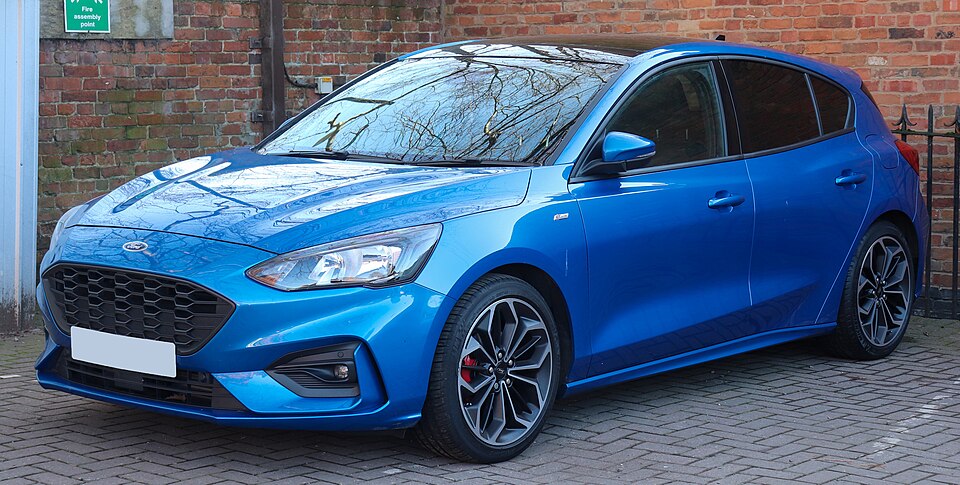
- Clase
- Auto compacto
- Carrocerías
- 4dr Hatchback Se/Titanium, 4dr Sedan S/Se/Titanium, Electric 4d Hatchback, St/RS 4dr Hatchback
- Motores
- 1.0L 3 cil. turbo, 2.0L 4 cil., 2.0L 4 cil. turbo, 2.3L 4 cil. turbo
- Potencia
- 123–160 hp
- Tracción
- Tracción delantera, Tracción total (AWD)
- Asientos
- 5
- Combustible
- Eléctrico, Gasolina regular, FFV, Gasolina premium
- MPG (mejor)
- 34 combinadas · 30 ciudad / 40 carretera
- Autonomía eléctrica
- 115 mi · 5.5 h a 240 V
- Largo
- 171.7–178.3 in
- Peso en vacío
- 2,926–3,673 lb
- Calificación NHTSA
- ★★★★★
- Retiros
- 10 campañas
Ventajas y desventajas
Lo bueno
- Excelente consumo de combustibleHasta 34 MPG combinadas: un 26 % mejor que el promedio de su clase (auto compacto, 2017: 26.9 MPG).
- Disponible en versión eléctricaSe ofrece en versión eléctrica además de gasolina.
- Tracción total / 4x4 disponible
- 5 estrellas en seguridad NHTSALa máxima calificación general en las pruebas de choque federales.
A tener en cuenta
- Muchas quejas de propietarios907 quejas ante la NHTSA frente a unas 50 de modelos similares; sobre todo por problemas de tren motriz.
- 10 retirosMás que modelos similares (unos 2). Confirma las reparaciones con el VIN.
Calculado con datos de la EPA, la NHTSA y vPIC frente a 21 modelos similares 2017; no es una reseña. Cómo lo calculamos →
Resumen
El Ford Focus 2017 es un auto compacto disponible con 4 motores (1.0L 3 cil. turbo, 2.0L 4 cil., 2.0L 4 cil. turbo y 2.3L 4 cil. turbo), con tracción delantera y tracción total (AWD).
Mide unas 172 pulgadas de largo y 72 de ancho, con una distancia entre ejes de 104 pulgadas, y pesa alrededor de 2,926 lb (4dr Hatchback Se/Titanium).
La EPA califica su versión más eficiente con 34 MPG combinadas (30 en ciudad / 40 en carretera), un 26 % mejor que el promedio de su clase (auto compacto, 2017: 26.9 MPG), con un gasto estimado de $700 al año en combustible.
La versión eléctrica tiene una autonomía EPA de hasta 115 millas y tarda unas 5.5 horas en cargarse con un cargador de nivel 2 (240 V).
En las pruebas de choque de la NHTSA obtuvo la máxima calificación general de 5 estrellas.
Tiene 10 campañas de retiro registradas y los propietarios han presentado 907 quejas ante la NHTSA desde 2015, sobre todo por problemas de tren motriz.
Novedades del 2017
- Autonomía eléctrica máxima sube de 76 a 115 millas
- Ya probado por la NHTSA: 5 estrellas en general
Comparado con 2016; no incluye cambios de versiones, equipamiento ni precio. Ver el Focus 2016 →
Versiones, desempeño y equipamiento
Versiones
Seguridad y asistencias al conductor
Fabricado en: Wayne, Michigan
NHTSA vPIC, según el fabricante, para 5 configuraciones del Focus 2017; puede no incluir todas las versiones. Cómo lo calculamos →
Dimensiones y peso
| Carrocería | Largo | Ancho | Alto | Distancia entre ejes | Vía del. / tras. | Peso en vacío | Peso del./tras. |
|---|---|---|---|---|---|---|---|
| 4dr Hatchback Se/Titanium | 171.7 in | 72 in | 57.9 in | 104.3 in | 61 / 60.2 in | 2,926 lb | 60/40 |
| 4dr Sedan S/Se/Titanium | 178.3 in | 72 in | 57.9 in | 104.3 in | 61 / 60.2 in | 2,954 lb | 60/40 |
| Electric 4d Hatchback | 172.4 in | 71.7 in | 58.3 in | 104.3 in | 60.6 / 59.8 in | 3,673 lb | 49/51 |
| St/RS 4dr Hatchback | 172.8 in | 71.7 in | 57.9 in | 104.3 in | 60.6 / 59.8 in | 3,252 lb | 60/40 |
Transport Canada CVS (Open Government Licence – Canada), medidas del mercado canadiense.
¿Cabe en tu garaje? Compruébalo con tus medidas →Motores, consumo y costo de uso
| Versión | Motor | Transmisión | Tracción | Ciudad / Carr. / Comb. | vs. su clase | Combustible / año | CO₂ g/mi |
|---|---|---|---|---|---|---|---|
| Focus Electric Eléctrico | 107 kW AC PMSM | Automática (A1) | Tracción delantera | 115 mi · 31 kWh/100mi | – | $700 | – |
| Focus FWD | 1.0L 3 cil. turbo | Manual 6-spd | Tracción delantera | 30 / 40 / 34 | +26% | $1,950 | 264 |
| Focus FWD | 1.0L 3 cil. turbo | Automática (S6) | Tracción delantera | 27 / 38 / 31 | +15% | $2,150 | 284 |
| Focus FWD | 2.0L 4 cil. | Automática (AM6) | Tracción delantera | 26 / 38 / 31 | +15% | $2,150 | 289 |
| Focus FWD FFV FFV | 2.0L 4 cil. | Automática (AM6) | Tracción delantera | 26 / 38 / 31 | +15% | $2,150 | 289 |
| Focus FWD | 2.0L 4 cil. | Automática (AM-S6) | Tracción delantera | 26 / 36 / 29 | +8% | $2,300 | 303 |
| Focus FWD FFV FFV | 2.0L 4 cil. | Automática (AM-S6) | Tracción delantera | 26 / 36 / 29 | +8% | $2,300 | 303 |
| Focus FWD | 2.0L 4 cil. | Manual 5-spd | Tracción delantera | 25 / 34 / 28 | +4% | $2,400 | 314 |
| Focus FWD FFV FFV | 2.0L 4 cil. | Manual 5-spd | Tracción delantera | 25 / 34 / 28 | +4% | $2,400 | 314 |
| Focus ST FWD | 2.0L 4 cil. turbo | Manual 6-spd | Tracción delantera | 22 / 30 / 25 | -7% | $2,700 | 356 |
| Focus RS AWD | 2.3L 4 cil. turbo | Manual 6-spd | Tracción total (AWD) | 19 / 25 / 22 | -18% | $3,750 | 412 |
Estimaciones de la EPA; "vs. su clase" compara las MPG combinadas con el promedio 2017 de su clase EPA. Cómo lo calculamos →
Calificaciones de seguridad y tecnología
| Versión | General | Frontal | Conductor / pasajero | Lateral | Poste lateral | Volcadura | Riesgo de volcadura |
|---|---|---|---|---|---|---|---|
| 2017 Ford Focus 4 DR FWD | ★★★★★ | ★★★★★ | 5★ / 4★ | ★★★★★ | ★★★★★ | ★★★★★ | 11.6% |
| 2017 Ford Focus 5 HB FWD | ★★★★★ | ★★★★★ | 5★ / 4★ | ★★★★★ | ★★★★★ | ★★★★★ | 11.6% |


Auto compacto similares 2017
| Modelo | Mejor MPG / autonomía | General NHTSA | Retiros |
|---|---|---|---|
| Ford Focus 2017 (este auto) | 34 MPG | ★★★★★ | 10 |
| Honda Civic 2017 | 36 MPG | ★★★★★ | 6 |
| Toyota Prius 2017 | 56 MPG | ★★★★★ | 3 |
| Mazda 3 2017 | 32 MPG | Sin calificar | 0 |
| Volkswagen Golf/GTI 2017 | 29 MPG | ★★★★★ | 5 |
| Hyundai Elantra 2017 | 35 MPG | ★★★★★ | 4 |
| Subaru WRX 2017 | 23 MPG | Sin calificar | 1 |
Retiros (10)
Texto oficial de la NHTSA (en inglés).
Tren motriz › Transmisión manual · 9 jun 2026
Campaña NHTSA 26V376000 · 5,252 vehículos
- Problema
- Ford Motor Company (Ford) is recalling certain 2015-2018 Focus and 2013-2016 Fusion vehicles previously repaired incorrectly under recall numbers 18V169 and 18V845. The clutch may fracture, resulting in damage to the transmission assembly and possibly a transmission fluid leak.
- Riesgo
- A transmission fluid leak in the presence of an ignition source such as hot engine or exhaust components can increase the risk of a fire.
- Solución
- Dealers will update the software, free of charge. Additionally, dealers will inspect Focus vehicles and replace the clutch assembly as necessary, free of charge. Owner notification letters were October 16, 2026. Owners may contact Ford customer service at 1-866-436-7332. Ford's number for this recall is 26S43. Vehicle Identification Numbers (VINs) involved in this recall will become searchable on NHTSA.gov on July 6,2026.
Combustible (gasolina) › Storage › Evaporative Emissions › Canister · 9 jun 2026
Campaña NHTSA 26V369000 · 257,868 vehículos
- Problema
- Ford Motor Company (Ford) is recalling certain 2012-2018 Focus vehicles previously repaired incorrectly under recall number 18V735. The Canister Purge Valve (CPV) may malfunction, causing the engine to stall unexpectedly while driving.
- Riesgo
- An engine that stalls while driving increases the risk of a crash.
- Solución
- Dealers will update the powertrain control module (PCM) software, free of charge. Owner notification letters were mailed July 29, 2026. Owners may contact Ford customer service at 1-866-436-7332. Ford's number for this recall is 26S40. Vehicle Identification Numbers (VINs) involved in this recall will become searchable on NHTSA.gov on July 6,2026.
Equipamiento › Electrical › Engine Block Heater · 15 ene 2026
Campaña NHTSA 26V012000 · 2,403 vehículos
- Problema
- Ford Motor Company (Ford) is recalling certain 2016-2018 Focus, 2019 Explorer, and 2024 Explorer vehicles. The engine block heater may crack and develop a coolant leak, causing it to short circuit when the block heater is plugged in.
- Riesgo
- An electrical short circuit can increase the risk of a fire.
- Solución
- Owners are advised not to plug in their block heater until the vehicle is remedied. Dealers will replace the block heater, free of charge. Owners will also have a alternative option to replace engine block heater element with a threaded blanking plug, and remove the block heater electrical cord. Interim letters, notifying owners of the safety risk, were mailed February 13, 2026. Additional letters will be sent once the final remedy is available, anticipated in December 2026. Owners may contact Ford customer service at 1-866-436-7332. Ford's number for this recall is 25SA4. Vehicle Identification Numbers (VINs) involved in this recall became searchable on NHTSA.gov on January 16, 2026. This recall expands previous recall number 25V685.
Equipamiento › Electrical › Engine Block Heater · 15 ene 2026
Campaña NHTSA 26V011000 · 116,672 vehículos
- Problema
- Ford Motor Company (Ford) is recalling certain 2013-2018 Focus, 2013-2019 Escape, and 2015-2016 MKC vehicles equipped with a 2.0L engine. The engine block heater may crack and develop a coolant leak, causing it to short circuit when the block heater is plugged in.
- Riesgo
- An electrical short circuit can increase the risk of a fire.
- Solución
- Owners are advised not to plug in their block heater until the vehicle is remedied. Dealers will replace the block heater, free of charge. Owners will also have a alternative option to replace engine block heater element with a threaded plug, and remove the block heater electrical cord. Interim letters, notifying owners of the safety risk, were mailed March 6, 2026. Additional letters will be sent once the final remedy is available. Owners may contact Ford customer service at 1-866-436-7332. Ford's number for this recall is 26S01. Vehicle Identification Numbers (VINs) involved in this recall became searchable on NHTSA.gov on January 16, 2026.
Motor y refrigeración › Motor › Oil/Lubrication › Pump · 22 dic 2023
Campaña NHTSA 23V905000 · 139,730 vehículos
- Problema
- Ford Motor Company (Ford) is recalling certain 2016-2018 Ford Focus and 2018-2022 Ford EcoSport vehicles. The oil pump drive belt or drive belt tensioner may fail, resulting in a loss of engine oil pressure.
- Riesgo
- A loss of oil pressure can result in an engine stall and a loss of power braking assist, increasing the risk of a crash.
- Solución
- Dealers will replace the oil pump tensioner assembly and oil pump drive belt, free of charge. If engine failure occurs due to a damaged oil pump belt and/or oil pump belt tensioner, Ford has authorized dealers to replace the engine assembly as an interim repair before the availability of remedy parts for the final repair. This repair will be free of charge (parts and labor). Owner notification letters were mailed August 11, 2025. Owners may contact Ford customer service at 1-866-436-7332. Ford's number for this recall is 23S64.
Combustible (gasolina) › Storage › Evaporative Emissions › Canister · 5 jul 2019
Campaña NHTSA 19V515000 · 57,488 vehículos
- Problema
- Ford Motor Company (Ford) is recalling certain 2012 and 2017 Focus vehicles equipped with 2.0L GDI gasoline engines and 2013-2014 Focus ST vehicles equipped with 2.0L GTDI engines, previously recalled under 18V-735. The affected vehicles did not have the Powertrain Control Module (PCM) updated as intended. Therefore, the Canister Purge Valve (CPV) may malfunction, possibly causing excessive vacuum in the fuel vapor management system.
- Riesgo
- The excessive vacuum may result in an engine stall while driving, without warning and without the ability to restart the vehicle, increasing the risk of a crash.
- Solución
- Ford will notify owners, and dealers will reprogram the Powertrain Control Module. Dealers will also check for fault codes and replace the CPV as needed. If the CPV is replaced, dealers will inspect and replace the carbon canister, fuel tank and fuel delivery module as necessary. The recall began July 29, 2019. Owners may contact Ford customer service at 1-866-436-7332. Ford's number for this recall is 19S22.
Tren motriz › Transmisión manual · 28 nov 2018
Campaña NHTSA 18V845000 · 2,828 vehículos
- Problema
- Ford Motor Company (Ford) is recalling certain 2016-2018 Ford Focus vehicles equipped with a 1.0L Fox GTDI engine and a 6-speed manual transmission. The clutch may fracture, resulting in damage to the transmission assembly and possibly a transmission fluid leak.
- Riesgo
- A transmission fluid leak in the presence of an ignition source such as hot engine or exhaust components can increase the risk of a fire.
- Solución
- Ford will notify owners, and dealers will update vehicles with software that detects and prevents prolonged clutch slip, and will replace the clutch, as necessary, free of charge. The recall began January 17, 2019. Owners may contact Ford at 1-866-436-7332. Ford's number for this recall is 18S07. Note: This recall is an expansion of Recall 18V-169.
Combustible (gasolina) › Storage › Evaporative Emissions › Canister · 22 oct 2018
Campaña NHTSA 18V735000 · 1,282,596 vehículos
- Problema
- Ford Motor Company (Ford) is recalling certain 2012-2018 Ford Focus vehicles with a 2.0L GDI or 2.0L GTDI engine. The Canister Purge Valve (CPV) may malfunction, possibly causing excessive vacuum in fuel vapor management system.
- Riesgo
- The excessive vaccuum may result in an engine stall while driving, without warning and without the ability to restart the vehicle, increasing the risk of a crash.
- Solución
- Ford will notify owners, and dealers will reprogram the Powertrain Control Module. Dealers will also check for fault codes and replace the CPV as needed. If the CPV is replaced, dealers will inspect and replace the carbon canister, fuel tank and fuel delivery module as necessary. The recall began August 19, 2019. Owners may contact Ford Customer service at 1-866-436-7332. Ford's number for this recall is 18S32. Note: Until the vehicle is serviced for this concern, owners are advised to keep the fuel tank at least halfway full.
Asientos › Mid/Rear Assembly · 28 ago 2017
Campaña NHTSA 17V528000 · 698 vehículos
- Problema
- Ford Motor Company (Ford) is recalling certain 2017 Focus vehicles. The rear left side seat back frame may have an insufficient weld between the outboard pivot bracket and the pivot nut joint, resulting in the seat back having reduced strength. As such, these vehicles fail to comply with the requirements of Federal Motor Vehicle Safety Standard (FMVSS) number 207, "Seating Systems," and 210, "Seat Belt Assembly Anchorages."
- Riesgo
- The reduced seat back strength may increase the risk of injury in the event of a crash.
- Solución
- Ford will notify owners, and dealers will inspect and replace the rear second left side rear seat back as necessary, free of charge. The recall began October 10, 2017. Owners may contact Ford customer service at 1-866-436-7332. Ford's number for this recall is 17C13.
Cerraduras y seguros › Hatchback/Liftgate › Lock · 28 sept 2016
Campaña NHTSA 16V698000 · 64,038 vehículos
- Problema
- Ford Motor Company (Ford) is recalling certain model year 2013-2017 Ford Focus hatchback vehicles manufactured February 14, 2012, to August 26, 2016 and equipped with a manual transmission. The hatchback of the affected vehicles may be unlatched with a single press of the interior latch release button. As such, these vehicles fail to comply with the requirements of Federal Motor Vehicle Safety Standard (FMVSS) number 206, "Door Locks and Door Retention Components."
- Riesgo
- With only a single press needed, the driver may accidently unlatch the hatchback, increasing the risk of injury to any unsecured passengers in the back.
- Solución
- Ford will notify owners, and dealers will reprogram the Body Control Module with updated software, free of charge. The recall began February 10, 2017. Owners may contact Ford customer service at 1-866-436-7332. Ford's number for this recall is 16C13.
No todos los Focus 2017 están afectados: solo el VIN lo confirma.
Problemas reportados por propietarios
Reportes sin verificar; los más vendidos acumulan más.
Lista para comprar un Ford Focus 2017 usado
- Consulta el VIN en nhtsa.gov/recalls. 10 retiros en este año: pide comprobantes de reparación.
- Tren motriz — 434 reportes de propietarios. Prueba todas las marchas, incluida la reversa; nota patinazos o cambios bruscos o tardíos.
- Motor — 233 reportes de propietarios. Arranca el motor en frío, escucha si golpetea y fíjate en luces de advertencia o titubeos al acelerar.
- Combustible / propulsión — 117 reportes de propietarios. Busca olor a combustible alrededor del auto y en la cabina, comprueba que arranque bien en caliente y revisa la varilla del aceite por olor a gasolina o nivel en aumento.
- Millaje a vigilar. Los propietarios suelen reportar problemas alrededor de las 47,260 millas; pregunta qué se reparó cerca de ese punto.
- Salud de la batería. Pide un reporte del estado de la batería, revisa la garantía restante y compara la autonomía al 100 % con las 115 millas de la EPA.
- Antes de pagar: historial de servicio, reporte de antecedentes e inspección de un mecánico independiente.
Generado por DecodedCars a partir de retiros y quejas de propietarios ante la NHTSA para el Ford Focus 2017. No sustituye una inspección profesional.
Otros años del Focus
Comparar todos los años →| Año | MPG (mejor) | Largo | General | Retiros | Quejas |
|---|---|---|---|---|---|
| Focus 2018 | 34 | 171.7 in | ★★★★★ | 7 | 837 |
| Focus 2016 | 34 | 171.7 in | Sin calificar | 11 | 1,194 |
| Focus 2015 | 34 | 171.7 in | Sin calificar | 11 | 1,034 |
| Focus 2014 | 32 | 171.7 in | Sin calificar | 14 | 2,496 |
| Focus 2013 | 32 | 171.7 in | Sin calificar | 14 | 1,759 |
| Focus 2012 | 32 | 171.7 in | Sin calificar | 10 | 3,147 |
| Focus 2011 | 29 | 175.2 in | Sin calificar | 0 | 73 |
| Focus 2010 | 28 | 175.2 in | Sin calificar | 0 | 139 |
| Focus 2009 | 28 | 175.2 in | Sin calificar | 0 | 85 |
| Focus 2008 | 28 | 175.2 in | Sin calificar | 0 | 104 |
| Focus 2007 | 27 | 168.9 in | Sin calificar | 0 | 105 |
| Focus 2006 | 26 | 168.9 in | Sin calificar | 0 | 49 |
Fuentes: EPA, NHTSA, Transport Canada, Wikimedia Commons. Sin afiliación con la NHTSA, la EPA ni Ford. Cómo lo calculamos →