 DecodedCars
Honda Fit 2019
Versiones, desempeño, equipamiento, consumo, seguridad y problemas conocidos, con sus ventajas y desventajas frente a modelos similares 2019.
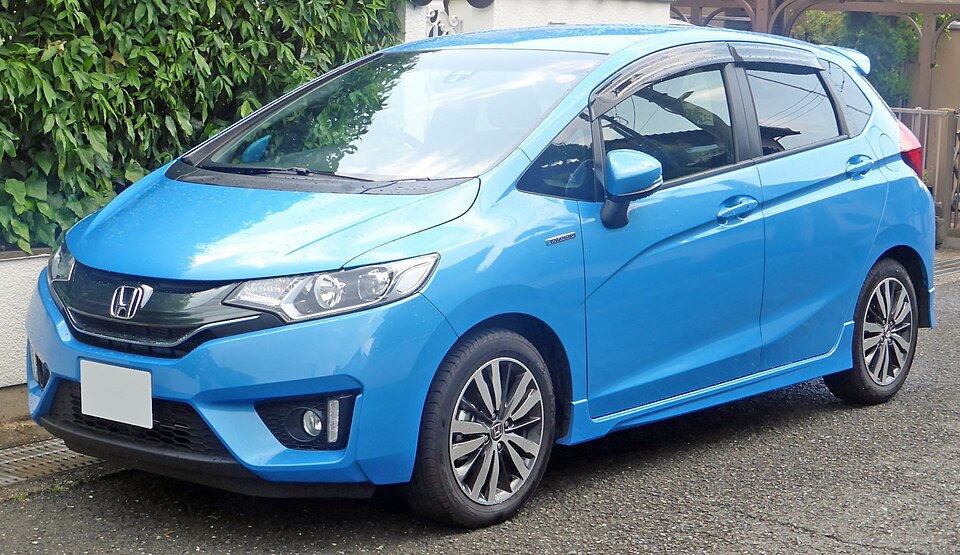
- Clase
- Familiar pequeño
- Carrocerías
- 4dr Hatch FWD DX/LX, 4dr Hatch FWD Sport/EX//EX-L Navi
- Motores
- 1.5L 4 cil.
- Potencia
- 128–130 hp
- Transmisión
- CVT, manual de 6 vel.
- Tracción
- Tracción delantera
- Asientos
- 5
- Combustible
- Gasolina regular
- MPG (mejor)
- 36 combinadas · 33 ciudad / 40 carretera
- Largo
- 161.4 in
- Peso en vacío
- 2,493–2,579 lb
- Calificación NHTSA
- ★★★★★
- Retiros
- 6 campañas
Ventajas y desventajas
Lo bueno
- Excelente consumo de combustibleHasta 36 MPG combinadas: un 20 % mejor que el promedio de su clase (familiar pequeño, 2019: 30 MPG).
- 5 estrellas en seguridad NHTSALa máxima calificación general en las pruebas de choque federales.
A tener en cuenta
- Frenado de emergencia no es de serieEl frenado automático de emergencia es opcional o solo está en algunas versiones.
Calculado con datos de la EPA, la NHTSA y vPIC frente a 4 modelos similares 2019; no es una reseña. Cómo lo calculamos →
Resumen
El Honda Fit 2019 es un familiar pequeño con motor 1.5L 4 cil., con tracción delantera.
Mide unas 161 pulgadas de largo y 67 de ancho, con una distancia entre ejes de 100 pulgadas, y pesa alrededor de 2,493 lb (4dr Hatch FWD DX/LX).
La EPA califica su versión más eficiente con 36 MPG combinadas (33 en ciudad / 40 en carretera), un 20 % mejor que el promedio de su clase (familiar pequeño, 2019: 30 MPG), con un gasto estimado de $1,850 al año en combustible.
En las pruebas de choque de la NHTSA obtuvo la máxima calificación general de 5 estrellas.
Tiene 6 campañas de retiro registradas y los propietarios han presentado 138 quejas ante la NHTSA desde 2015, sobre todo por problemas de sistema eléctrico.
Novedades del 2019
Sin cambios en motores, versiones, tracción, tamaño, consumo EPA ni calificación NHTSA respecto al Fit 2018: un año sin cambios según los datos.
Comparado con 2018; no incluye cambios de versiones, equipamiento ni precio. Ver el Fit 2018 →
Versiones, desempeño y equipamiento
Versiones
Seguridad y asistencias al conductor
Fabricado en: Celaya, Guanajuato
NHTSA vPIC, según el fabricante, para 5 configuraciones del Fit 2019; puede no incluir todas las versiones. Cómo lo calculamos →
Dimensiones y peso
| Carrocería | Largo | Ancho | Alto | Distancia entre ejes | Vía del. / tras. | Peso en vacío | Peso del./tras. |
|---|---|---|---|---|---|---|---|
| 4dr Hatch FWD DX/LX | 161.4 in | 66.5 in | 59.8 in | 99.6 in | 57.5 / 57.5 in | 2,493 lb | 62/38 |
| 4dr Hatch FWD Sport/EX//EX-L Navi | 161.4 in | 66.5 in | 59.8 in | 99.6 in | 57.5 / 57.5 in | 2,579 lb | 62/38 |
Transport Canada CVS (Open Government Licence – Canada), medidas del mercado canadiense.
¿Cabe en tu garaje? Compruébalo con tus medidas →Motores, consumo y costo de uso
| Versión | Motor | Transmisión | Tracción | Ciudad / Carr. / Comb. | vs. su clase | Combustible / año | CO₂ g/mi |
|---|---|---|---|---|---|---|---|
| Fit | 1.5L 4 cil. | Automática (relación variable) | Tracción delantera | 33 / 40 / 36 | +20% | $1,850 | 246 |
| Fit | 1.5L 4 cil. | Automática (AV-S7) | Tracción delantera | 31 / 36 / 33 | +10% | $2,050 | 267 |
| Fit | 1.5L 4 cil. | Manual 6-spd | Tracción delantera | 29 / 36 / 31 | +3% | $2,150 | 281 |
Estimaciones de la EPA; "vs. su clase" compara las MPG combinadas con el promedio 2019 de su clase EPA. Cómo lo calculamos →
Calificaciones de seguridad y tecnología
| Versión | General | Frontal | Conductor / pasajero | Lateral | Poste lateral | Volcadura | Riesgo de volcadura |
|---|---|---|---|---|---|---|---|
| 2019 Honda Fit 5 HB FWD | ★★★★★ | ★★★★★ | 5★ / 5★ | ★★★★★ | ★★★★★ | ★★★★★ | 14.7% |


Familiar pequeño similares 2019
| Modelo | Mejor MPG / autonomía | General NHTSA | Retiros |
|---|---|---|---|
| Honda Fit 2019 (este auto) | 36 MPG | ★★★★★ | 6 |
| Honda HR-V 2019 | 30 MPG | ★★★★★ | 7 |
| Chevrolet Bolt EV 2019 | 238 mi | ★★★★★ | 6 |
| Kia Soul 2019 | 28 MPG | ★★★★★ | 3 |
| Nissan Rogue Sport 2019 | 28 MPG | ★★★★★ | 2 |
Retiros (6)
Texto oficial de la NHTSA (en inglés).
Bolsas de aire › Sensor › Occupant Classification › Front Passenger · 21 may 2026
Campaña NHTSA 26V332000 · 98,892 vehículos
- Problema
- Honda (American Honda Motor Co.) is recalling certain 2018-2021, 2023 Acura TLX, 2019-2024 RDX, 2017-2020, 2022-2026 MDX, 2017-2021, 2023, 2025 Honda Ridgeline, 2017-2022 Pilot, 2019-2021 Passport, 2018-2026 Odyssey, 2019-2022 Insight, 2019-2021 HR-V, 2018-2020 Fit, 2020-2022 CR-V Hybrid, 2017-2022 CR-V, 2017-2018, 2021 Civic Type R, 2017-2021 Civic hatchback, 2016-2020 Civic coupe, 2016-2022 Civic, 2017-2022 Accord Hybrid, and 2016-2022 Accord vehicles. The front passenger seat weight sensor may crack and short circuit, which can cause the air bags to deploy unintentionally during a crash.
- Riesgo
- Air bags that deploy unintentionally during a crash increase the risk of injury.
- Solución
- Dealers will replace the seat weight sensors, free of charge. Owner notification letters were mailed July 7, 2026. Owners may contact Honda's customer service at 1-888-234-2138. Honda's numbers for this recall are BOL, WO9, OOA, WOM, XOH, NOC, POD, BOE, UOF, POB, EOG, AOI, QO8, TOJ, DO7, and SOK. This recall expands previous NHTSA recall number 24V064. Vehicle Identification Numbers (VINs) involved in this recall will be searchable on NHTSA.gov beginning May 29, 2026.
Prevención de impacto en reversa › Software · 31 may 2024
Campaña NHTSA 24V384000 · 114,686 vehículos
- Problema
- Honda (America Honda Motor Co.) is recalling certain 2018-2020 Fit and 2019-2022 HR-V vehicles that were previously recalled under NHTSA recall number 23V-046. The rearview camera image may not display when the engine is started with a key, due to a design error in the audio display power circuit. As such, these vehicles fail to comply with the requirements of Federal Motor Vehicle Safety Standard number 111, "Rear Visibility."
- Riesgo
- An inoperative rearview camera display can reduce the driver's rear visibility, increasing the risk of a crash.
- Solución
- Dealers will update the display audio unit software, free of charge. Owner notification letters were mailed July 8, 2024. Owners may contact Honda service at 1-888-234-2138. Honda's numbers for this recall are TIQ and DIR. Vehicles previously repaired under recall 23V-046 will need to have the new remedy completed.
Combustible (gasolina) › Delivery › Fuel Pump · 18 dic 2023
Campaña NHTSA 23V858000 · 2,490,460 vehículos
- Problema
- Honda (American Honda Motor Co.) is recalling certain 2013-2023 Honda Accord, Civic Coupe, Civic Sedan, Civic Hatchback, Civic Type R, CR-V, HR-V, Ridgeline, Odyssey, Acura ILX, MDX, MDX Hybrid, RDX, RLX, TLX, 2019-2022 Honda Insight, Passport, 2020 Honda CR-V Hybrid, 2018-2019 Honda Clarity PHEV, Fit, and 2015-2020 Honda Accord Hybrid, Pilot, Acura NSX vehicles. The fuel pump inside the fuel tank may fail.
- Riesgo
- Fuel pump failure can cause an engine stall while driving, increasing the risk of a crash.
- Solución
- Dealers will replace the fuel pump module, free of charge. Owner letters were mailed September 6, 2024. Owners may contact Honda customer service at 1-888-234-2138. Honda's numbers for this recall are KGC and KGD. This recall is an expansion of NHTSA recall numbers 21V-215 and 20V-314.
Prevención de impacto en reversa › Display Function · 2 feb 2023
Campaña NHTSA 23V046000 · 114,686 vehículos
- Problema
- Honda (American Honda Motor Co.) is recalling certain 2018-2020 Fit and 2019-2022 HR-V vehicles. The rearview camera image may not display when the engine is started with a key, due to a design error in the audio display power circuit. As such, these vehicles fail to comply with the requirements of Federal Motor Vehicle Safety Standard number 111, "Rear Visibility."
- Riesgo
- An inoperative rearview camera display can reduce the driver's rear visibility, increasing the risk of a crash.
- Solución
- Dealers will update the display audio unit software, free of charge. Owner notification letters were mailed March 13, 2023. Owners may contact Honda customer service at 1-888-234-2138. Honda's number for this recall is 6DW. This recall has been superseded by NHTSA recall number 24V-384. Vehicles previously repaired under recall 23V-046 will need to have the new remedy completed under recall 24V-384.
Combustible (gasolina) › Delivery › Fuel Pump · 25 mar 2021
Campaña NHTSA 21V215000 · 624,552 vehículos
- Problema
- Honda (American Honda Motor Co.) is recalling certain 2019-2020 Acura MDX, MDX Sport Hybrid, RDX, TLX, Honda Accord, Civic Hatchback, Insight, 2019 Acura ILX, Honda Accord Hybrid, Civic Coupe, Civic Coupe Si, Civic Sedan, Civic Sedan Si, Civic Type R, Fit, HR-V, Odyssey, Passport, Pilot and Ridgeline, and 2018-2019 CR-V vehicles. The low-pressure fuel pump inside the fuel tank may fail.
- Riesgo
- Fuel pump failure can cause an engine stall while driving, increasing the risk of a crash.
- Solución
- Honda will notify owners, and dealers will replace the fuel pump assembly, free of charge. Owner letters were mailed May 18, 2021. Owners may contact Honda customer service at 1-888-234-2138. Note: This recall is an expansion of recall 20V-314.
Combustible (gasolina) › Delivery › Fuel Pump · 28 may 2020
Campaña NHTSA 20V314000 · 135,995 vehículos
- Problema
- Honda (American Honda Motor Co.) is recalling certain 2018-2019 Acura NSX, 2019 Acura RDX, RLX and RLX Sport Hybrid, 2018-2019 Honda Accord, Civic Hatchback, Civic Type R and HR-V, 2019-2020 Insight and 2019 Fit vehicles. The low-pressure fuel pump inside the fuel tank may fail.
- Riesgo
- If the fuel pump fails, the engine can stall while driving, increasing the risk of a crash.
- Solución
- Honda will notify owners and dealers will replace the fuel pump assembly, free of charge. The recall began July 22, 2020. Owners may contact Honda customer service at 1-888-234-2138.
No todos los Fit 2019 están afectados: solo el VIN lo confirma.
Problemas reportados por propietarios
Reportes sin verificar; los más vendidos acumulan más.
Lista para comprar un Honda Fit 2019 usado
- Consulta el VIN en nhtsa.gov/recalls. 6 retiros en este año: pide comprobantes de reparación.
- Sistema eléctrico — 46 reportes de propietarios. Prueba todas las ventanas, seguros, luces, pantallas y puertos USB; revisa la antigüedad de la batería.
- Combustible / propulsión — 40 reportes de propietarios. Busca olor a combustible alrededor del auto y en la cabina, comprueba que arranque bien en caliente y revisa la varilla del aceite por olor a gasolina o nivel en aumento.
- Motor — 16 reportes de propietarios. Arranca el motor en frío, escucha si golpetea y fíjate en luces de advertencia o titubeos al acelerar.
- Millaje a vigilar. Los propietarios suelen reportar problemas alrededor de las 12,000 millas; pregunta qué se reparó cerca de ese punto.
- Antes de pagar: historial de servicio, reporte de antecedentes e inspección de un mecánico independiente.
Generado por DecodedCars a partir de retiros y quejas de propietarios ante la NHTSA para el Honda Fit 2019. No sustituye una inspección profesional.
Otros años del Fit
Comparar todos los años →| Año | MPG (mejor) | Largo | General | Retiros | Quejas |
|---|---|---|---|---|---|
| Fit 2020 | 36 | 161.4 in | ★★★★★ | 4 | 36 |
| Fit 2018 | 36 | 161.4 in | ★★★★★ | 4 | 117 |
| Fit 2017 | 36 | 159.8 in | Sin calificar | 0 | 43 |
| Fit 2016 | 36 | 159.8 in | Sin calificar | 1 | 122 |
| Fit 2015 | 36 | 159.8 in | Sin calificar | 4 | 271 |
| Fit 2014 | 82 mi | 161.8 in | Sin calificar | 3 | 0 |
| Fit 2013 | 31 | 161.8 in | Sin calificar | 10 | 150 |
| Fit 2012 | 31 | 161.8 in | Sin calificar | 11 | 87 |
| Fit 2011 | 31 | 161.8 in | Sin calificar | 11 | 98 |
| Fit 2010 | 31 | 161.8 in | Sin calificar | 12 | 133 |
| Fit 2009 | 31 | 161.8 in | Sin calificar | 11 | 201 |
| Fit 2008 | 31 | 157.1 in | Sin calificar | 7 | 113 |
Fuentes: EPA, NHTSA, Transport Canada, Wikimedia Commons. Sin afiliación con la NHTSA, la EPA ni Honda. Cómo lo calculamos →