 DecodedCars
2025 Honda Pilot
Trims, performance, features, fuel economy, safety and known problems — with the pros and cons against similar 2025 models.
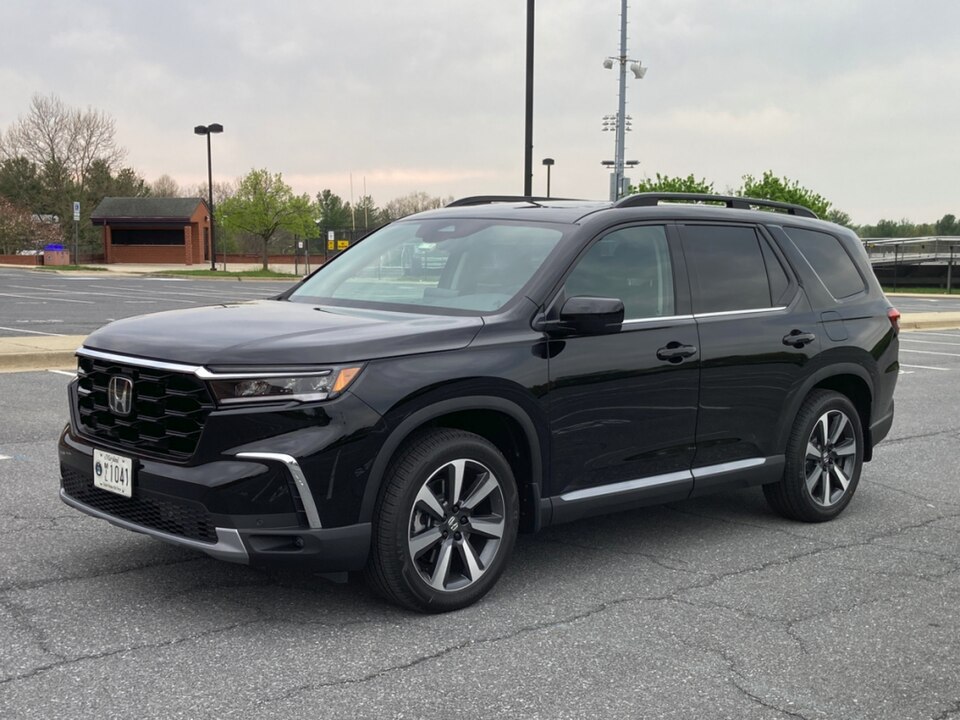
- Class
- Small Sport Utility Vehicle 2WD
- Body styles
- Sport /EX-L 4dr SUV, Touring / Black Edition 4dr SUV, Trailsport 4dr SUV
- Engines
- 3.5L 6-cyl
- Horsepower
- 285 hp
- Transmission
- 10-speed automatic
- Drivetrain
- Front-Wheel Drive, All-Wheel Drive
- Fuel
- Regular Gasoline
- MPG (best)
- 22 combined · 19 city / 27 hwy
- Length
- 200 in
- Curb weight
- 4,522–4,696 lb
- NHTSA rating
- ★★★★★
- Recalls
- 4 campaigns
Pros & cons
What's good
- AWD / 4WD available
- 5-star NHTSA safety ratingTop overall score in federal crash tests.
- Lots of standard safety tech4 of 5 key driver aids standard on the versions we checked.
Watch out for
- Below-average fuel economyBest version gets 22 MPG combined, 24% below the 2025 small SUV average of 29 MPG.
- Many owner complaints216 complaints filed with NHTSA versus about 55 for similar models — most often about the steering.
Calculated from EPA, NHTSA and vPIC data against 31 similar 2025 models — not a review. How we calculate this →
Overview
The 2025 Honda Pilot is a small SUV offered with a 3.5L 6-cyl engine and front-wheel drive and all-wheel drive.
It measures about 200 inches long and 78 inches wide on a 114-inch wheelbase, with a curb weight of roughly 4,522 lb (Sport /EX-L 4dr SUV).
EPA rates its most efficient version at 22 MPG combined (19 city / 27 highway), 24% worse than the 2025 small SUV average of 29 MPG, for an estimated $3,050 a year in fuel.
In NHTSA crash testing it earned the top 5-star overall rating.
It has 4 recall campaigns on file and owners have filed 216 complaints with NHTSA since 2015, most often about the steering.
What changed for 2025
No changes to engines, powertrains, drivetrains, size, EPA ratings or NHTSA crash rating compared with the 2024 Pilot — a carry-over year in the data.
Compared with 2024; trim, feature and price changes aren't covered. See the 2024 Pilot →
Trims, performance & features
Trims
Safety & driver-assist features
Built in: Lincoln, Alabama
NHTSA vPIC, as reported by the manufacturer for 5 2025 Pilot configurations; may not list every trim. How we calculate this →
Dimensions & weight
| Body | Length | Width | Height | Wheelbase | Track F / R | Curb weight | Weight F/R |
|---|---|---|---|---|---|---|---|
| Sport /EX-L 4dr SUV | 200 in | 78.3 in | 70.9 in | 113.8 in | 67.7 / 67.7 in | 4,522 lb | 57/43 |
| Touring / Black Edition 4dr SUV | 200 in | 78.3 in | 70.9 in | 113.8 in | 67.7 / 67.7 in | 4,667 lb | 57/43 |
| Trailsport 4dr SUV | 200 in | 78.3 in | 72 in | 113.8 in | 67.3 / 67.3 in | 4,696 lb | 57/43 |
Transport Canada CVS (Open Government Licence – Canada), Canadian-market figures.
Will it fit your garage? Check with your measurements →Engines, MPG & running costs
| Version | Engine | Transmission | Drive | City / Hwy / Comb | vs. class | Fuel / yr | CO₂ g/mi |
|---|---|---|---|---|---|---|---|
| Pilot FWD | 3.5L 6-cyl | Automatic (S10) | Front-Wheel Drive | 19 / 27 / 22 | -24% | $3,050 | 402 |
| Pilot AWD | 3.5L 6-cyl | Automatic (S10) | All-Wheel Drive | 19 / 25 / 21 | +6% | $3,200 | 415 |
| Pilot AWD Touring/Elite/Black | 3.5L 6-cyl | Automatic (S10) | All-Wheel Drive | 19 / 25 / 21 | +6% | $3,200 | 422 |
| Pilot AWD TrailSport | 3.5L 6-cyl | Automatic (S10) | All-Wheel Drive | 18 / 23 / 20 | +1% | $3,350 | 444 |
EPA estimates; "vs. class" is combined MPG against the 2025 EPA class average. How we calculate this →
Safety ratings & technology
| Version | Overall | Frontal | Driver / passenger | Side | Side pole | Rollover | Rollover risk |
|---|---|---|---|---|---|---|---|
| 2025 Honda PILOT SUV AWD | ★★★★★ | ★★★★★ | 4★ / 4★ | ★★★★★ | ★★★★★ | ★★★★★ | 14.3% |
| 2025 Honda PILOT SUV FWD | ★★★★★ | ★★★★★ | 4★ / 4★ | ★★★★★ | ★★★★★ | ★★★★★ | 15.5% |


Similar 2025 small SUVs
| Model | Best MPG / range | NHTSA overall | Recalls |
|---|---|---|---|
| 2025 Honda Pilot (this car) | 22 MPG | ★★★★★ | 4 |
| 2025 Toyota Land Cruiser | 23 MPG | ★★★★★ | 4 |
| 2025 Toyota 4Runner | 23 MPG | ★★★★★ | 1 |
| 2025 Ford Explorer | 24 MPG | ★★★★★ | 22 |
| 2025 Toyota Highlander | 35 MPG | ★★★★★ | 4 |
| 2025 Jeep Grand Cherokee | 23 MPG | ★★★★★ | 5 |
| 2025 Kia Telluride | 22 MPG | ★★★★★ | 3 |
Recalls (4)
Service Brakes, Hydraulic › Pedals And Linkages · Jun 12, 2025
NHTSA campaign 25V391000 · 259,033 vehicles
- Problem
- Honda (American Honda Motor Co.) is recalling certain 2021-2025 Acura TLX, 2023-2025 Acura MDX, and 2023-2025 Honda Pilot vehicles. The brake pedal pivot pin was not secured properly, which can cause the pedal to shift out of position. As such, these vehicles fail to comply with Federal Motor Vehicle Safety Standard numbers 108, "Lamps, Reflective Devices, and Associated Equipment" and 135, "Light Vehicle Brake Systems."
- Risk
- A brake pedal that shifts out of position can prevent the driver from applying the brakes as intended, increasing the risk of a crash or injury.
- Fix
- Dealers will inspect and replace the brake pedal assembly as necessary, free of charge. Owner notification letters were mailed July 29, 2025. Owners may contact Honda's customer service at 1-888-234-2138. Honda's numbers for this recall are FLX and XLY.
Seat Belts › Rear/Other · Feb 5, 2025
NHTSA campaign 25V056000 · 1,494 vehicles
- Problem
- Honda (American Honda Motor Co.) is recalling certain 2025 Honda Pilot vehicles. The third-row passenger seat belt assembly may not function, due to incorrect routing that traps the seat belt behind the passenger side panel. As such, these vehicles fail to comply with the requirements of Federal Motor Vehicle Safety Standard (FMVSS) number 208, "Occupant Crash Protection."
- Risk
- A non-functioning seat belt cannot properly restrain the seat occupant, increasing the risk of injury during a crash.
- Fix
- Dealers will inspect and repair the seat belt routing as necessary, free of charge. Owner notification letters were mailed March 24, 2025. Owners may contact Honda's customer service at 1-888-234-2138. Honda's number for this recall is ZL4.
Electrical System › Software · Jan 23, 2025
NHTSA campaign 25V031000 · 294,612 vehicles
- Problem
- Honda (American Honda Motor Co.) is recalling certain 2022-2025 Acura MDX Type-S, 2023-2025 Honda Pilot, and 2021-2025 Acura TLX Type-S vehicles. A software error in the fuel injection electronic control unit (FI-ECU) may cause an engine stall or a loss of power.
- Risk
- An engine stall or loss of power can increase the risk of a crash or injury.
- Fix
- Dealers will reprogram the FI-ECU software, free of charge. Owner notification letters were mailed March 17, 2025. Owners may contact Honda's customer service at 1-888-234-2138. Honda's numbers for this recall are EL1 and AL0.
Fuel System, Gasoline › Storage › Tank Assembly › Filler Pipe And Cap · Nov 27, 2024
NHTSA campaign 24V900000 · 205,760 vehicles
- Problem
- Honda (American Honda Motor Co.) is recalling certain 2023-2024 Passport and 2023-2025 Pilot vehicles. The fuel filler neck tube and fuel filler pipe may separate, allowing fuel to leak.
- Risk
- A fuel leak in the presence of an ignition source increases the risk of a fire.
- Fix
- Dealers will inspect and repair the fuel filler neck tube and pipe as necessary, free of charge. Owner notification letters were mailed January 7, 2025. Owners may contact Honda customer service at 1-888-234-2138. Honda's number for this recall is OKM.
Not every 2025 Honda Pilot is affected — only a VIN check confirms your car.
Owner-reported problems
Unverified owner reports; best-sellers collect more.
Used 2025 Honda Pilot buyer's checklist
- Run the VIN at nhtsa.gov/recalls. 4 recalls this year — ask for proof of repairs.
- Steering — 44 owner reports. Turn lock-to-lock while parked and on the road; listen for noises and feel for heavy or loose steering.
- Electrical System — 43 owner reports. Test every window, lock, light, screen and USB port; check the battery age.
- Forward Collision Avoidance › Automatic Emergency Braking — 34 owner reports. Make sure driver-assist systems and the backup camera work without error messages.
- Mileage to watch. Owners typically reported problems around 8,435 miles; ask what was repaired near that point.
- Before you pay: service records, a history report and an independent inspection.
Generated by DecodedCars from NHTSA recalls and owner complaints for the 2025 Honda Pilot. Not a substitute for a professional inspection.
Other Pilot years
Compare all years →| Year | MPG (best) | Length | Overall | Recalls | Complaints |
|---|---|---|---|---|---|
| 2026 Pilot | 22 | 200 in | Not rated | 1 | 27 |
| 2024 Pilot | 22 | 200 in | ★★★★★ | 6 | 116 |
| 2023 Pilot | 22 | 200 in | ★★★★★ | 5 | 146 |
| 2022 Pilot | 23 | 196.5 in | ★★★★★ | 5 | 170 |
| 2021 Pilot | 23 | 196.5 in | ★★★★★ | 10 | 450 |
| 2020 Pilot | 23 | 196.5 in | ★★★★★ | 11 | 492 |
| 2019 Pilot | 23 | 196.5 in | ★★★★★ | 13 | 921 |
| 2018 Pilot | 23 | 194.9 in | ★★★★★ | 7 | 440 |
| 2017 Pilot | 23 | 194.9 in | ★★★★★ | 4 | 936 |
| 2016 Pilot | 23 | 194.9 in | ★★★★★ | 8 | 1,720 |
| 2015 Pilot | 20 | 191.3 in | ★★★★★ | 4 | 108 |
| 2014 Pilot | 20 | 190.9 in | ★★★★★ | 3 | 105 |
Sources: EPA, NHTSA, Transport Canada, Wikimedia Commons. Not affiliated with NHTSA, the EPA or Honda. How we calculate this →