 DecodedCars
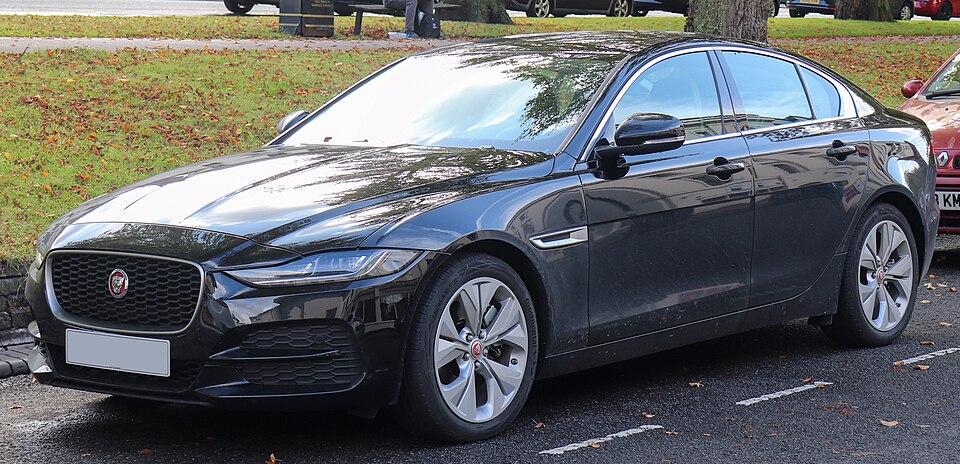
2020 Jaguar XE
Trims, performance, features, fuel economy, safety and known problems — with the pros and cons against similar 2020 models.
- Class
- Compact Cars
- Body styles
- 4dr Sedan
- Engines
- 2.0L 4-cyl turbo
- Drivetrain
- Rear-Wheel Drive, All-Wheel Drive
- Fuel
- Premium Gasoline
- MPG (best)
- 28 combined · 25 city / 34 hwy
- Length
- 183.9 in
- Curb weight
- 3,503 lb
- NHTSA rating
- Not rated
- Recalls
- 2 campaigns
Pros & cons
What's good
- AWD / 4WD available
Watch out for
- Premium fuel requiredEvery gasoline version is rated for premium, which raises running costs.
Calculated from EPA, NHTSA and vPIC data against 25 similar 2020 models — not a review. How we calculate this →
Overview
The 2020 Jaguar XE is a compact car offered with a 2.0L 4-cyl turbo engine and rear-wheel drive and all-wheel drive.
It measures about 184 inches long and 73 inches wide on a 111-inch wheelbase, with a curb weight of roughly 3,503 lb.
EPA rates its most efficient version at 28 MPG combined (25 city / 34 highway), 3% better than the 2020 compact car average of 27.3 MPG, for an estimated $2,950 a year in fuel.
NHTSA has not published a 5-Star overall rating for this model year.
It has 2 recall campaigns on file and owners have filed 3 complaints with NHTSA since 2015, most often about the electrical system.
What changed for 2020
- No diesel version any more
- Engines dropped: 3.0L 6-cyl and 5.0L 8-cyl
- Best combined MPG down from 36 to 28
Compared with 2019; trim, feature and price changes aren't covered. See the 2019 XE →
Dimensions & weight
| Body | Length | Width | Height | Wheelbase | Track F / R | Curb weight | Weight F/R |
|---|---|---|---|---|---|---|---|
| 4dr Sedan | 183.9 in | 72.8 in | 55.9 in | 111.4 in | 62.2 / 62.2 in | 3,503 lb | 53/47 |
Transport Canada CVS (Open Government Licence – Canada), Canadian-market figures.
Will it fit your garage? Check with your measurements →Engines, MPG & running costs
| Version | Engine | Transmission | Drive | City / Hwy / Comb | vs. class | Fuel / yr | CO₂ g/mi |
|---|---|---|---|---|---|---|---|
| XE | 2.0L 4-cyl turbo | Automatic (S8) | Rear-Wheel Drive | 25 / 34 / 28 | +3% | $2,950 | 312 |
| XE AWD | 2.0L 4-cyl turbo | Automatic (S8) | All-Wheel Drive | 24 / 34 / 28 | +3% | $2,950 | 321 |
| XE 30t | 2.0L 4-cyl turbo | Automatic (S8) | Rear-Wheel Drive | 24 / 32 / 27 | -1% | $3,050 | 333 |
| XE AWD 30t | 2.0L 4-cyl turbo | Automatic (S8) | All-Wheel Drive | 22 / 30 / 25 | -8% | $3,300 | 354 |
EPA estimates; "vs. class" is combined MPG against the 2020 EPA class average. How we calculate this →
Safety ratings & technology
NHTSA has not published 5-Star ratings for the 2020 Jaguar XE.
Similar 2020 compact cars
| Model | Best MPG / range | NHTSA overall | Recalls |
|---|---|---|---|
| 2020 Jaguar XE (this car) | 28 MPG | Not rated | 2 |
| 2020 BMW 3 Series | 30 MPG | Not rated | 0 |
| 2020 Lexus IS | 24 MPG | Not rated | 0 |
| 2020 Audi A4 | 30 MPG | Not rated | 3 |
| 2020 Tesla Model 3 | 330 mi | ★★★★★ | 21 |
| 2020 Audi A3 | 30 MPG | ★★★★★ | 3 |
| 2020 Audi A5 | 27 MPG | Not rated | 4 |
Recalls (2)
Back Over Prevention › Sensing System › Camera · Jan 16, 2025
NHTSA campaign 25V017000 · 5,329 vehicles
- Problem
- Jaguar Land Rover North America, LLC (Jaguar) is recalling certain 2019-2020 Jaguar XE vehicles. Due to wiring damage in the trunk, the rearview camera image may not appear on the display.
- Risk
- A rearview camera that does not display an image can reduce the driver's rear view, increasing the risk of a crash.
- Fix
- Dealers will inspect and repair, or replace the rearview camera wiring harness, as necessary, free of charge. Owner letters were mailed February 2, 2026. Owners may contact Jaguar's customer service at 1-800-452-4827. Jaguar's number for this recall is H535. This recall replaces and expands previous recall number 23V-501. Vehicles already repaired under recall 23V-501 will need to have the new remedy completed.
Structure › Body · Apr 8, 2021
NHTSA campaign 21V248000 · 3 vehicles
- Problem
- Jaguar Land Rover North America, LLC (Jaguar) is recalling certain 2017-2018 and 2020 Jaguar XE vehicles that received a replacement rear rail assembly as part of a service repair. Missing spot welds may weaken the structural strength of the rear rail assembly.
- Risk
- The weakened rear rail assembly may allow the rear bumper beam to detach when the vehicle is being towed or the tow-bar assembly to detach when towing a trailer. Either of these scenarios can increase the risk of a crash.
- Fix
- Jaguar will notify owners, and dealers will replace the rear rail assembly, free of charge. Owner letters were mailed May 7, 2021. Owners may contact Jaguar customer service at 1-800-452-4827. Jaguar's number for this recall is H349.
Not every 2020 Jaguar XE is affected — only a VIN check confirms your car.
Owner-reported problems
Unverified owner reports; best-sellers collect more.
Used 2020 Jaguar XE buyer's checklist
- Run the VIN at nhtsa.gov/recalls. 2 recalls this year — ask for proof of repairs.
- Electrical System — 2 owner reports. Test every window, lock, light, screen and USB port; check the battery age.
- Power Train — 1 owner reports. Test-drive through all gears, including reverse; note slipping, harsh or delayed shifts.
- Service Brakes — 1 owner reports. Brake firmly from speed; check for pulling, pulsing pedal or ABS warning light.
- Before you pay: service records, a history report and an independent inspection.
Generated by DecodedCars from NHTSA recalls and owner complaints for the 2020 Jaguar XE. Not a substitute for a professional inspection.
Other XE years
Compare all years →Sources: EPA, NHTSA, Transport Canada, Wikimedia Commons. Not affiliated with NHTSA, the EPA or Jaguar. How we calculate this →