 DecodedCars
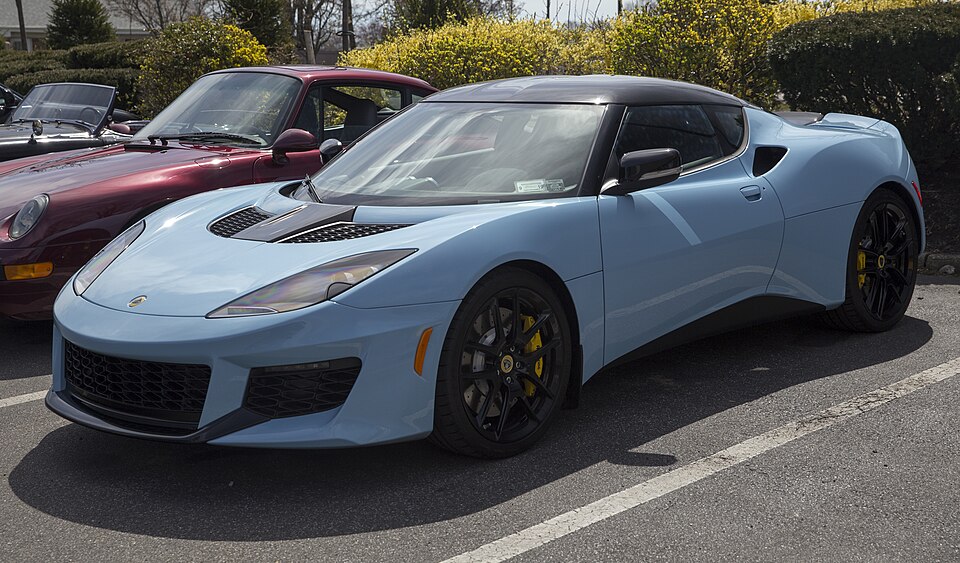
2017 Lotus Evora
Trims, performance, features, fuel economy, safety and known problems — with the pros and cons against similar 2017 models.
- Class
- Minicompact Cars
- Body styles
- 2dr Coupe
- Engines
- 3.5L 6-cyl
- Drivetrain
- Rear-Wheel Drive
- Fuel
- Premium Gasoline
- MPG (best)
- 20 combined · 17 city / 24 hwy
- Length
- 172.8 in
- Curb weight
- 3,075 lb
- NHTSA rating
- Not rated
- Recalls
- 1 campaign
Pros & cons
What's good
Nothing stands out against similar models in the data.
Watch out for
- Below-average fuel economyBest version gets 20 MPG combined, 15% below the 2017 minicompact car average of 23.4 MPG.
- Premium fuel requiredEvery gasoline version is rated for premium, which raises running costs.
Calculated from EPA, NHTSA and vPIC data against 3 similar 2017 models — not a review. How we calculate this →
Overview
The 2017 Lotus Evora is a minicompact car offered with a 3.5L 6-cyl engine and rear-wheel drive.
It measures about 173 inches long and 73 inches wide on a 102-inch wheelbase, with a curb weight of roughly 3,075 lb.
EPA rates its most efficient version at 20 MPG combined (17 city / 24 highway), 15% worse than the 2017 minicompact car average of 23.4 MPG, for an estimated $4,100 a year in fuel.
NHTSA has not published a 5-Star overall rating for this model year.
It has 1 recall campaign on file and owners have filed 3 complaints with NHTSA since 2015, most often about the engine.
What changed for 2017
- Best combined MPG down from 22 to 20
Compared with 2014; trim, feature and price changes aren't covered. See the 2014 Evora →
Dimensions & weight
| Body | Length | Width | Height | Wheelbase | Track F / R | Curb weight | Weight F/R |
|---|---|---|---|---|---|---|---|
| 2dr Coupe | 172.8 in | 72.8 in | 48.4 in | 101.6 in | 61.4 / 62.2 in | 3,075 lb |
Transport Canada CVS (Open Government Licence – Canada), Canadian-market figures.
Will it fit your garage? Check with your measurements →Engines, MPG & running costs
| Version | Engine | Transmission | Drive | City / Hwy / Comb | vs. class | Fuel / yr | CO₂ g/mi |
|---|---|---|---|---|---|---|---|
| Evora | 3.5L 6-cyl | Automatic (S6) | Rear-Wheel Drive | 17 / 24 / 20 | -15% | $4,100 | 451 |
| Evora | 3.5L 6-cyl | Manual 6-spd | Rear-Wheel Drive | 16 / 24 / 19 | -19% | $4,350 | 468 |
EPA estimates; "vs. class" is combined MPG against the 2017 EPA class average. How we calculate this →
Safety ratings & technology
NHTSA has not published 5-Star ratings for the 2017 Lotus Evora.
Similar 2017 minicompact cars
| Model | Best MPG / range | NHTSA overall | Recalls |
|---|---|---|---|
| 2017 Lotus Evora (this car) | 20 MPG | Not rated | 1 |
| 2017 Ferrari 488 GTB | 18 MPG | Not rated | 3 |
| 2017 Ferrari 488 Spider | 18 MPG | Not rated | 2 |
| 2017 Ferrari California T | 19 MPG | Not rated | 3 |
Recalls (1)
Structure · Apr 2, 2019
NHTSA campaign 19V263000 · 424 vehicles
- Problem
- Lotus Cars USA, Inc. (Lotus) is recalling certain 2017-2018 Evora vehicles. The toe board in the passenger footwell lacks stiffness, allowing the knee of an unbelted occupant to contact the rigid structure of the vehicle, in the event of a crash. As such, these vehicles fail to comply with the requirements of Federal Motor Vehicle Safety Standard (FMVSS) number 208, "Occupant Crash Protection."
- Risk
- In the event of a crash, if the occupant's knee contacts the rigid structure, there may be an increased risk of injury.
- Fix
- Lotus will notify owners, and dealers will replace the toe board with a new design to provide the appropriate stiffness, free of charge. The recall began May 27, 2019. Owners may contact Lotus customer service at 1-800-245-6887. Lotus' number for this recall is 2019/01R.
Not every 2017 Lotus Evora is affected — only a VIN check confirms your car.
Owner-reported problems
Unverified owner reports; best-sellers collect more.
Used 2017 Lotus Evora buyer's checklist
- Run the VIN at nhtsa.gov/recalls. 1 recall this year — ask for proof of repairs.
- Engine — 2 owner reports. Cold-start the engine, listen for knocking, and watch for warning lights or hesitation on acceleration.
- Electrical System — 1 owner reports. Test every window, lock, light, screen and USB port; check the battery age.
- Suspension › Rear — 1 owner reports. Drive over bumps and listen for clunks; look for uneven tire wear.
- Mileage to watch. Owners typically reported problems around 69,000 miles; ask what was repaired near that point.
- Before you pay: service records, a history report and an independent inspection.
Generated by DecodedCars from NHTSA recalls and owner complaints for the 2017 Lotus Evora. Not a substitute for a professional inspection.
Other Evora years
Compare all years →| Year | MPG (best) | Length | Overall | Recalls | Complaints |
|---|---|---|---|---|---|
| 2021 Evora | 20 | 172.8 in | Not rated | 0 | 0 |
| 2020 Evora | 20 | 172.8 in | Not rated | 0 | 0 |
| 2018 Evora | 20 | 172.8 in | Not rated | 2 | 1 |
| 2014 Evora | 22 | 170.9 in | Not rated | 0 | 2 |
| 2013 Evora | 23 | 170.9 in | Not rated | 1 | 3 |
| 2012 Evora | 23 | 170.9 in | Not rated | 0 | 1 |
| 2011 Evora | 23 | 170.9 in | Not rated | 3 | 2 |
| 2010 Evora | 21 | 170.9 in | Not rated | 0 | 0 |
Sources: EPA, NHTSA, Transport Canada, Wikimedia Commons. Not affiliated with NHTSA, the EPA or Lotus. How we calculate this →