 DecodedCars
Nissan Sentra
23 model years from 2005 to 2027, compared on size, efficiency, safety and reliability.
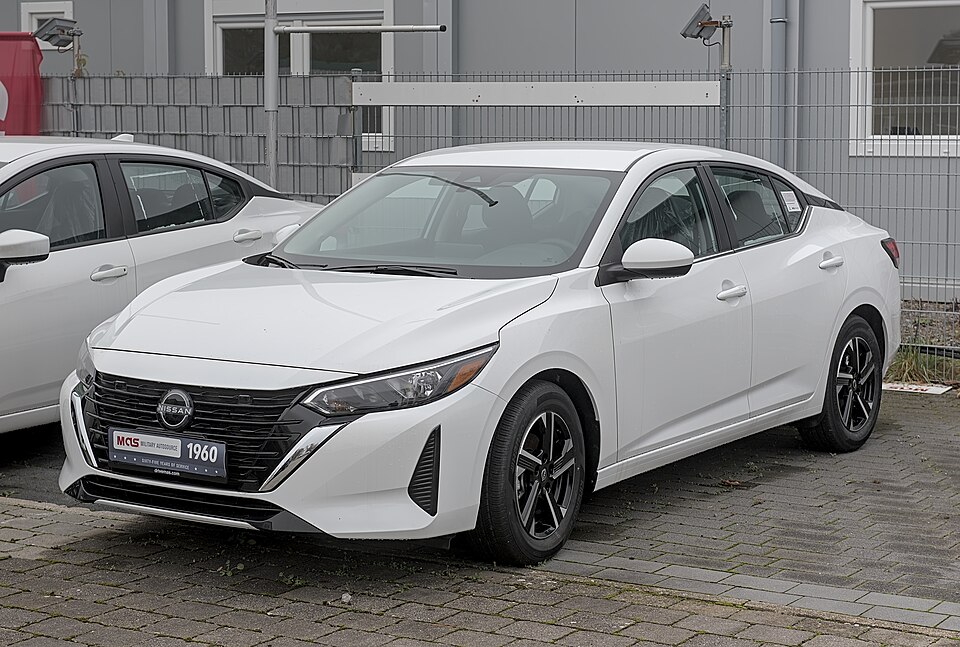
- Model years
- 2005–2027
- Class
- Midsize Cars, Compact Cars
- Latest engines
- 2.0L 4-cyl
- Best MPG
- 27–34 combined, by year
- Latest rating
- ★★★★★ (2025)
- Recalls
- 32 campaigns, all years
- Most complaints
- 2013 (542)
- Fewest problems
- 2023
- Interest
- 15,594 Wikipedia views / 30 days
The 2026 Sentra in brief
The 2026 Nissan Sentra is a midsize car offered with a 2.0L 4-cyl engine and front-wheel drive.
It measures about 184 inches long and 72 inches wide on a 106-inch wheelbase, with a curb weight of roughly 4,087 lb.
EPA rates its most efficient version at 33 MPG combined (30 city / 38 highway), 6% better than the 2026 midsize car average of 31.2 MPG, for an estimated $2,050 a year in fuel.
It has 1 recall campaign on file and owners have filed 19 complaints with NHTSA since 2015, most often about the unknown or other.
The Nissan Sentra has 23 model years in our data, from 2005 to 2027, classed as Midsize Cars, Compact Cars.
Its most efficient year was 2025 at 34 MPG combined; across all years the best version ranged from 27 to 34 MPG.
Owners most often report problems with the power train (1,064), unknown or other (520), engine (493).
Buying used? 2023 has the fewest problems in our data, and 2015 is the year to avoid.
2016 has the most recalls (6); all years together count 32 campaigns and 3,260 owner complaints.
How the 2005 Sentra compares
The 2005 Nissan Sentra is a compact car offered with 2 engines (1.8L 4-cyl and 2.5L 4-cyl) and front-wheel drive.
It measures about 178 inches long and 67 inches wide on a 100-inch wheelbase, with a curb weight of roughly 2,533 lb (4dr Sedan FWD /1.8 /1.8s/Speical Editi).
About the Nissan Sentra
The Nissan Sentra is a series of automobiles manufactured by the Japanese automaker Nissan since 1982. Since 1999, the Sentra has been categorized as a compact car, while previously it occupied the subcompact class. Until 2006, Sentra was a rebadged version of the Japanese Nissan Sunny for markets outside of Japan, but since the 2013 model year, Sentra is a rebadged version of the Sylphy for markets outside of Japan. The Sentra nameplate is not used in Japan. Several other countries in Latin America sell their versions of the Sunny as the Sentra.
From the Wikipedia article "Nissan Sentra", licensed under CC BY-SA 4.0.
2026 Sentra pros & cons
Full 2026 details →What's good
- Lots of standard safety tech5 of 5 key driver aids standard on the versions we checked.
Watch out for
- Modest powerUp to 149 hp, versus about 188 hp for similar 2026 models.
Best and worst years to buy used
2023 Sentra
20 owner complaints · 1 recall · 1 crash report
NHTSA overall: ★★★★★
Year to avoid2015 Sentra
352 owner complaints · 3 recalls · 3 fire reports · 23 crash reports
Most reported: Power Train
NHTSA recalls and complaints for 10 model years since 2015; use it alongside a pre-purchase inspection. How we calculate this →
Compare head to head
Sentra changes by model year
- 2026
- Lightest version 1034 lb heavier
- 2020
- Engine added: 2.0L 4-cyl
- Engines dropped: 1.8L 4-cyl and 1.6L 4-cyl turbo
- Lightest version 154 lb heavier
- NHTSA overall rating up from 4 to 5 stars
- 2017
- Engine added: 1.6L 4-cyl turbo
- Now crash-tested by NHTSA: 4 stars overall
- 2013
- New body dimensions: 2.4 in longer — most likely a redesign or new generation
- Engine added: 1.8L 4-cyl
- Engines dropped: 2.0L 4-cyl and 2.5L 4-cyl
- Best combined MPG up from 29 to 33
- 2007
- New body dimensions: 2.3 in longer, wheelbase +6.3 in — most likely a redesign or new generation
- Engine added: 2.0L 4-cyl
- Engine dropped: 1.8L 4-cyl
Years without a measurable change are left out.
Show all 23 model years side by side
| Year | Latest engines | Best MPG / range | Length | Weight | Overall | Recalls | Complaints |
|---|---|---|---|---|---|---|---|
| 2027 | 2.0L 4-cyl | 33 MPG | 183.5 in | 4,087 lb | Not rated | 0 | 0 |
| 2026 | 2.0L 4-cyl | 33 MPG | 183.5 in | 4,087 lb | Not rated | 1 | 19 |
| 2025 | 2.0L 4-cyl | 34 MPG | 182.7 in | 3,053 lb | ★★★★★ | 4 | 31 |
| 2024 | 2.0L 4-cyl | 34 MPG | 182.7 in | 3,053 lb | ★★★★★ | 3 | 41 |
| 2023 | 2.0L 4-cyl | 33 MPG | 182.7 in | 3,053 lb | ★★★★★ | 1 | 20 |
| 2022 | 2.0L 4-cyl | 33 MPG | 182.7 in | 3,053 lb | ★★★★★ | 2 | 81 |
| 2021 | 2.0L 4-cyl | 33 MPG | 182.7 in | 3,053 lb | ★★★★★ | 3 | 132 |
| 2020 | 2.0L 4-cyl | 33 MPG | 182.7 in | 3,053 lb | ★★★★★ | 4 | 207 |
| 2019 | 1.8L 4-cyl, 1.6L 4-cyl turbo | 32 MPG | 182.3 in | 2,899 lb | ★★★★★ | 2 | 223 |
| 2018 | 1.8L 4-cyl, 1.6L 4-cyl turbo | 32 MPG | 182.3 in | 2,866 lb | ★★★★★ | 2 | 185 |
| 2017 | 1.8L 4-cyl, 1.6L 4-cyl turbo | 32 MPG | 182.3 in | 2,866 lb | ★★★★★ | 3 | 231 |
| 2016 | 1.8L 4-cyl | 33 MPG | 182.3 in | 2,879 lb | Not rated | 6 | 270 |
| 2015 | 1.8L 4-cyl | 33 MPG | 182.3 in | 2,851 lb | Not rated | 3 | 352 |
| 2014 | 1.8L 4-cyl | 33 MPG | 182.3 in | 2,851 lb | Not rated | 5 | 361 |
| 2013 | 1.8L 4-cyl | 33 MPG | 182.3 in | 2,829 lb | Not rated | 6 | 542 |
| 2012 | 2.0L 4-cyl, 2.5L 4-cyl | 29 MPG | 179.9 in | 2,862 lb | Not rated | 0 | 137 |
| 2011 | 2.0L 4-cyl, 2.5L 4-cyl | 29 MPG | 179.9 in | 2,857 lb | Not rated | 2 | 95 |
| 2010 | 2.0L 4-cyl, 2.5L 4-cyl | 29 MPG | 179.9 in | 2,857 lb | Not rated | 3 | 92 |
| 2009 | 2.0L 4-cyl, 2.5L 4-cyl | 29 MPG | 179.9 in | 2,857 lb | Not rated | 1 | 28 |
| 2008 | 2.0L 4-cyl, 2.5L 4-cyl | 28 MPG | 179.9 in | 2,857 lb | Not rated | 1 | 66 |
| 2007 | 2.0L 4-cyl, 2.5L 4-cyl | 28 MPG | 179.9 in | 2,807 lb | Not rated | 0 | 54 |
| 2006 | 1.8L 4-cyl, 2.5L 4-cyl | 27 MPG | 177.6 in | 2,579 lb | Not rated | 3 | 49 |
| 2005 | 1.8L 4-cyl, 2.5L 4-cyl | 27 MPG | 177.6 in | 2,533 lb | Not rated | 3 | 44 |
Alternatives to the 2026 Sentra
| Model | Best MPG / range | NHTSA overall | Recalls |
|---|---|---|---|
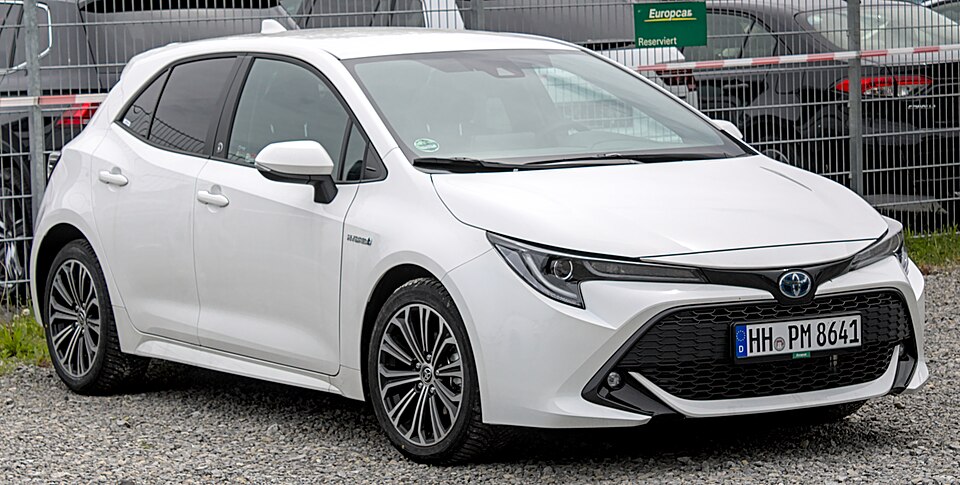
| 2026 Toyota Corolla | 50 MPG | Not rated | 1 |
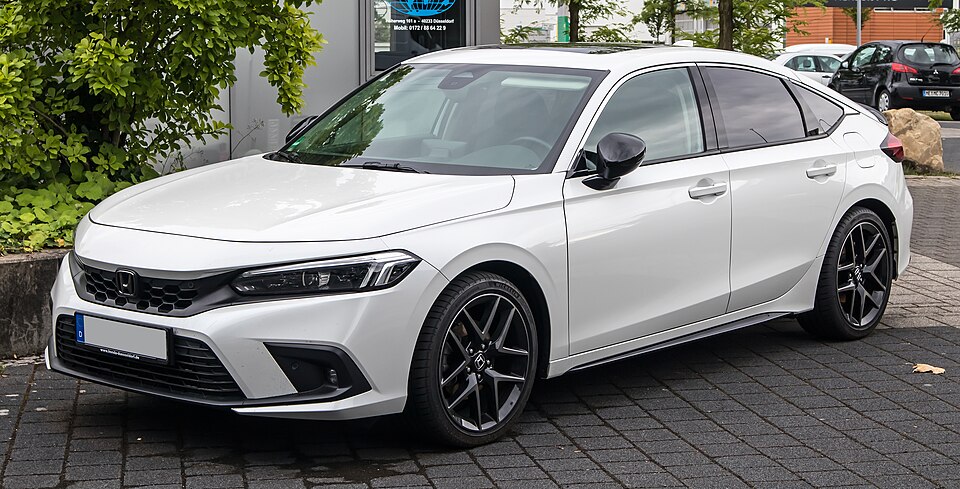
| 2026 Honda Civic | 49 MPG | Not rated | 1 |
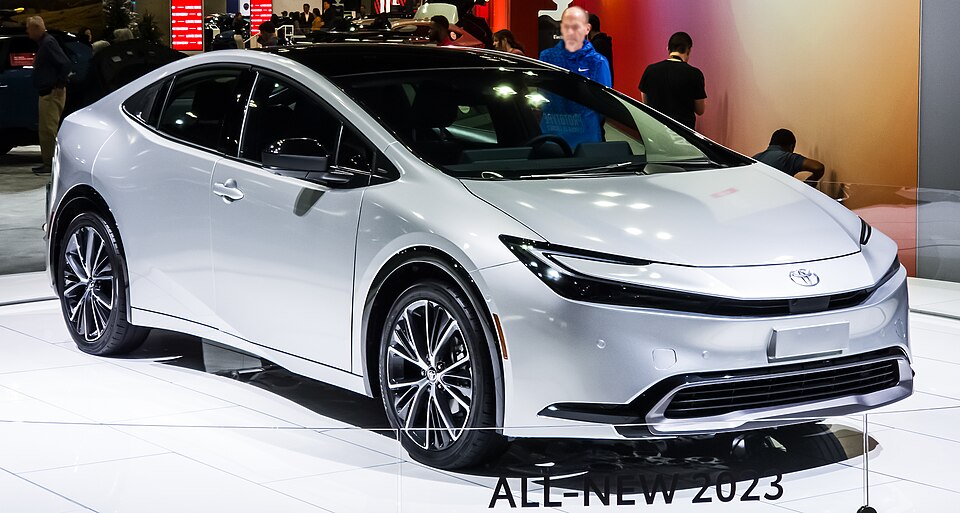
| 2026 Toyota Prius | 57 MPG | Not rated | 1 |
| 2026 Honda Prelude | 44 MPG | Not rated | 0 |
| 2026 Hyundai Elantra | 54 MPG | Not rated | 4 |
| 2026 Subaru WRX | 22 MPG | Not rated | 0 |
Most common owner-reported problems
Sources: EPA, NHTSA, Transport Canada, Wikipedia, Wikimedia Commons. Not affiliated with NHTSA, the EPA or Nissan. How we calculate this →