 DecodedCars
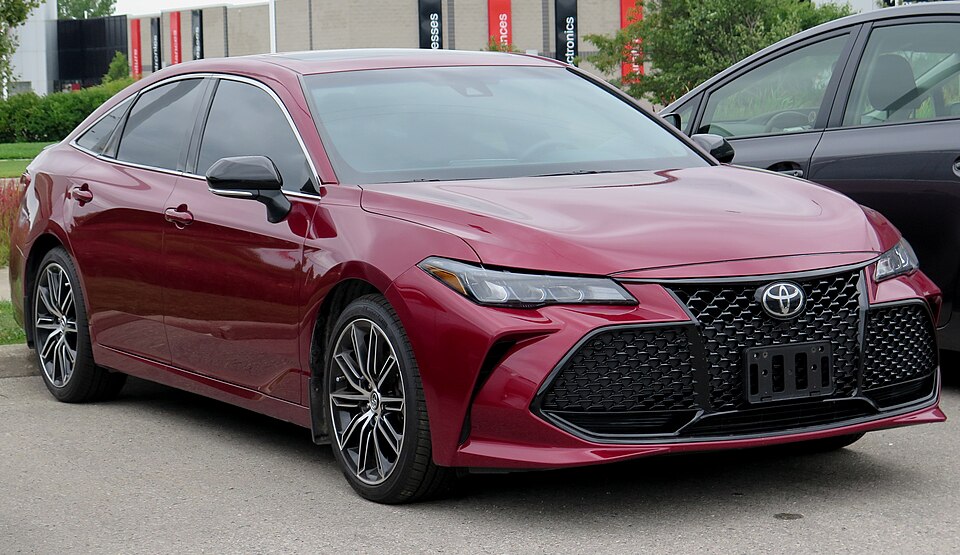
2006 Toyota Avalon
Trims, performance, features, fuel economy, safety and known problems — with the pros and cons against similar 2006 models.
- Class
- Large Cars
- Body styles
- 4dr Sedan Xl/Xls
- Engines
- 3.5L 6-cyl
- Drivetrain
- Front-Wheel Drive
- Fuel
- Regular Gasoline
- MPG (best)
- 23 combined · 20 city / 28 hwy
- Length
- 197.2 in
- Curb weight
- 3,561 lb
- NHTSA rating
- Not rated
- Recalls
- 5 campaigns
Pros & cons
What's good
- Excellent fuel economyUp to 23 MPG combined — 28% better than the average 2006 large car (17.9 MPG).
Watch out for
- 5 recallsMore than similar models (about 1). Confirm repairs with the VIN.
Calculated from EPA, NHTSA and vPIC data against 28 similar 2006 models — not a review. How we calculate this →
Overview
The 2006 Toyota Avalon is a large car offered with a 3.5L 6-cyl engine and front-wheel drive.
It measures about 197 inches long and 73 inches wide on a 111-inch wheelbase, with a curb weight of roughly 3,561 lb.
EPA rates its most efficient version at 23 MPG combined (20 city / 28 highway), 28% better than the 2006 large car average of 17.9 MPG, for an estimated $2,900 a year in fuel.
It has 5 recall campaigns on file and owners have filed 60 complaints with NHTSA since 2015, most often about the unknown or other.
What changed for 2006
- New body dimensions: 1.1 in longer, wheelbase +1.2 in — most likely a redesign or new generation
Compared with 2005; trim, feature and price changes aren't covered. See the 2005 Avalon →
Dimensions & weight
| Body | Length | Width | Height | Wheelbase | Track F / R | Curb weight | Weight F/R |
|---|---|---|---|---|---|---|---|
| 4dr Sedan Xl/Xls | 197.2 in | 72.8 in | 58.7 in | 111 in | 61.8 / 61.4 in | 3,561 lb | 61/39 |
Transport Canada CVS (Open Government Licence – Canada), Canadian-market figures.
Will it fit your garage? Check with your measurements →Engines, MPG & running costs
| Version | Engine | Transmission | Drive | City / Hwy / Comb | vs. class | Fuel / yr | CO₂ g/mi |
|---|---|---|---|---|---|---|---|
| Avalon | 3.5L 6-cyl | Automatic (S5) | Front-Wheel Drive | 20 / 28 / 23 | +28% | $2,900 | 386 |
EPA estimates; "vs. class" is combined MPG against the 2006 EPA class average. How we calculate this →
Safety ratings & technology
NHTSA has not published 5-Star ratings for the 2006 Toyota Avalon under the current (2011+) test program.
Similar 2006 large cars
| Model | Best MPG / range | NHTSA overall | Recalls |
|---|---|---|---|
| 2006 Toyota Avalon (this car) | 23 MPG | Not rated | 5 |
| 2006 Ford Mustang | 20 MPG | Not rated | 4 |
| 2006 Honda Accord | 26 MPG | Not rated | 9 |
| 2006 Chevrolet Impala | 22 MPG | Not rated | 1 |
| 2006 Toyota Camry | 25 MPG | Not rated | 4 |
| 2006 Dodge Charger | 21 MPG | Not rated | 2 |
| 2006 Chevrolet Malibu | 24 MPG | Not rated | 4 |
Recalls (5)
Seats › Front Assembly › Seat Heater/Cooler · Jun 2, 2016
NHTSA campaign 16V396000 · 7,749 vehicles
- Problem
- Southeast Toyota Distributors, LLC (SET) is recalling certain 2005-2011 4Runner, Highlander, Sequoia, and Sienna, 2005-2010 Avalon and Tundra, 2006-2008 Camry Solara, 2006-2010 Highlander hybrid, 2006-2011 Rav4 and Tacoma, 2007-2010 FJ Cruiser, 2007-2011 Camry hybrid, 2009-2010 Venza, 2010-2012 Prius, 1988-1990 and 2005-2010 Camry, and 1989 and 2009-2010 Corolla vehicles equipped with aftermarket accessory seat heaters with a copper strand heating element. The electrical wiring in the seat heaters may be damaged when the seat cushion is compressed.
- Risk
- If damaged, the copper strand heating element may short circuit, increasing the risk of a fire.
- Fix
- SET will notify owners, and dealers will disconnect the seat heaters, free of charge, and refund the purchase price of the seat heater accessory. The recall began on July 14, 2016. Owners may contact SET customer service at 1-866-405-4226. SET number for this recall is SET16B.
Seats › Front Assembly › Seat Heater/Cooler · Nov 19, 2014
NHTSA campaign 14V743000 · 3,233 vehicles
- Problem
- Southeast Toyota Distributors, LLC (SET) is recalling certain model year 2010-2011 Prius and Corolla, 2009-2011 Venza, 2006-2010 Avalon, 2007-2010 FJ Cruiser, 2005-2011 Sienna and Sequoia, 2006-2011 Tacoma 4x2 and 4x4, Camry, Highlander, Tundra 4x2 and 4x4, and 2007-2011 Rav4 and 4Runner. The affected vehicles may experience compression of the seat cushion which may damage the seat heater wiring.
- Risk
- Damage to the seat heater wiring could cause the wires to short, increasing the risk of the seat burning and causing personal injury to the occupant.
- Fix
- SET will notify owners, and dealers will disconnect the heaters with copper strand heating elements and refund the purchase price of the seat heater accessory, free of charge. The recall is expected to began in January 2015. Owners may contact SET customer service at 1-866-405-4226.
Service Brakes, Hydraulic › Foundation Components › Master Cylinder · Oct 21, 2010
NHTSA campaign 10V499000 · 728,544 vehicles
- Problem
- TOYOTA IS RECALLING CERTAIN MODEL YEAR 2005-2006 AVALON, MODEL YEAR 2004-2006 HIGHLANDER, MODEL YEAR 2004-2006 LEXUS RX, AND MODEL YEAR 2006 LEXUS GS AND IS VEHICLES. BRAKE FLUID CONTAINING POLYMERS IS USED THAT ACTS AS LUBRICANTS FOR CERTAIN BRAKE SYSTEM COMPONENTS. IF REPLACEMENT BRAKE FLUID IS USED THAT DOES NOT CONTAIN SUCH POLYMERS, OR THAT CONTAINS ONLY SMALL AMOUNTS, A PART OF THE RUBBER SEAL LOCATED AT THE REAR OF THE BRAKE MASTER CYLINDER MAY BECOME DRY, AND THE SEAL MAY CURL DURING MOVEMENT OF THE PISTON. IF THIS OCCURS, A SMALL AMOUNT OF BRAKE FLUID COULD SLOWLY LEAK FROM THE SEAL INTO THE BRAKE BOOSTER.
- Risk
- A LEAK OF BRAKE FLUID COULD LEAD TO A CHANGE IN BRAKE PEDAL FEEL AND OVERTIME A DEGRADATION IN BRAKING PERFORMANCE INCREASING THE RISK OF A CRASH.
- Fix
- DEALERS WILL REPLACE THE SEAL WITH A NEWLY DESIGNED ONE. THIS SERVICE WILL BE PERFORMED FREE OF CHARGE. THE SAFETY RECALL BEGAN ON NOVEMBER 15, 2010. OWNERS MAY CONTACT TOYOTA AT 1-800-331-4331 AND LEXUS AT 1-800-255-3987.
Equipment › Other › Labels · Feb 3, 2010
NHTSA campaign 10V036000 · 153,418 vehicles
- Problem
- SOUTHEAST TOYOTA IS RECALLING CERTAIN MODEL YEAR 2005-2011 PASSENGER VEHICLES FOR FAILING TO COMPLY WITH THE REQUIREMENTS OF FEDERAL MOTOR VEHICLE SAFETY STANDARD NO. 110, "TIRE SELECTION AND RIMS." THESE VEHICLES WERE SOLD WITHOUT THE REQUISITE LOAD CARRYING CAPACITY MODIFICATION LABELS.
- Risk
- A DRIVER MAY OVERLOAD A VEHICLE WHICH MAY INCREASE THE RISK OF A CRASH.
- Fix
- DEALERS WILL MAIL TO CONSUMERS THE CORRECTED LABEL OR THE CUSTOMER WILL HAVE THE OPTION FOR DEALERS TO INSTALL THE LABEL FREE OF CHARGE. THE SAFETY RECALL BEGAN ON MAY 27, 2010. OWNERS MAY CONTACT SOUTHEAST TOYOTA AT 1-800-301-6859.
Vehicle Speed Control › Accelerator Pedal · Jan 21, 2010
NHTSA campaign 10V017000 · 2,230,661 vehicles
- Problem
- TOYOTA IS RECALLING CERTAIN MODEL YEAR 2005-2010 AVALON, MODEL YEAR 2007-2010 CAMRY, MODEL YEAR 2009-2010 COROLLA, COROLLA MATRIX, RAV4, MODEL YEAR 2010 HIGHLANDER, MODEL YEAR 2008-2010 SEQUOIA, AND MODEL YEAR 2007-2010 TUNDRA VEHICLES. DUE TO THE MANNER IN WHICH THE FRICTION LEVER INTERACTS WITH THE SLIDING SURFACE OF THE ACCELERATOR PEDAL INSIDE THE PEDAL SENSOR ASSEMBLY, THE SLIDING SURFACE OF THE LEVER MAY BECOME SMOOTH DURING VEHICLE OPERATION. IN THIS CONDITION, IF CONDENSATION OCCURS ON THE SURFACE, AS MAY OCCUR FROM HEATER OPERATION (WITHOUT A/C) WHEN THE PEDAL ASSEMBLY IS COLD, THE FRICTION WHEN THE ACCELERATOR PEDAL IS OPERATED MAY INCREASE, WHICH MAY RESULT IN THE ACCELERATOR PEDAL BECOMING HARDER TO DEPRESS, SLOWER TO RETURN, OR, IN THE WORST CASE, MECHANICALLY STUCK IN A PARTIALLY DEPRESSED POSITION.
- Risk
- THE ACCELERATOR PEDAL MAY BECOME HARD TO DEPRESS, SLOW TO RETURN TO IDLE, OR, IN THE WORST CASE, MECHANICALLY STUCK IN A PARTIALLY DEPRESSED POSITION, INCREASING THE RISK OF A CRASH.
- Fix
- DEALERS WILL INSTALL A REINFORCEMENT BAR IN THE ACCELERATOR PEDAL WHICH WILL ALLOW THE PEDAL TO OPERATE SMOOTHLY. GM WILL NOTIFY OWNERS FOR THE PONTIAC VIBE PLEASE SEE 10V-018. THIS SERVICE WILL BE PERFORMED FREE OF CHARGE. THE SAFETY RECALL IS EXPECTED TO BEGIN ON FEBRUARY 5, 2010 AND WILL BE COMPLETED ON MARCH 15, 2010. OWNERS MAY CONTACT TOYOTA AT 1-800-331-4331.
Not every 2006 Toyota Avalon is affected — only a VIN check confirms your car.
Owner-reported problems
Unverified owner reports; best-sellers collect more.
Used 2006 Toyota Avalon buyer's checklist
- Run the VIN at nhtsa.gov/recalls. 5 recalls this year — ask for proof of repairs.
- Air Bags — 13 owner reports. Confirm the airbag warning light turns off after start-up and any airbag recall was completed.
- Service Brakes — 10 owner reports. Brake firmly from speed; check for pulling, pulsing pedal or ABS warning light.
- Structure › Body — 7 owner reports. Open and close every door, the hood and tailgate; look for rust or misaligned panels.
- Mileage to watch. Owners typically reported problems around 108,000 miles; ask what was repaired near that point.
- Before you pay: service records, a history report and an independent inspection.
Generated by DecodedCars from NHTSA recalls and owner complaints for the 2006 Toyota Avalon. Not a substitute for a professional inspection.
Other Avalon years
Compare all years →| Year | MPG (best) | Length | Overall | Recalls | Complaints |
|---|---|---|---|---|---|
| 2022 Avalon | 44 | 196.1 in | ★★★★★ | 0 | 8 |
| 2021 Avalon | 44 | 196.1 in | ★★★★★ | 2 | 27 |
| 2020 Avalon | 44 | 196.1 in | ★★★★★ | 4 | 10 |
| 2019 Avalon | 44 | 196.1 in | ★★★★★ | 5 | 72 |
| 2018 Avalon | 40 | 195.3 in | ★★★★★ | 2 | 25 |
| 2017 Avalon | 40 | 195.3 in | ★★★★★ | 2 | 14 |
| 2016 Avalon | 40 | 195.3 in | ★★★★★ | 4 | 25 |
| 2015 Avalon | 40 | 195.3 in | ★★★★★ | 2 | 54 |
| 2014 Avalon | 40 | 195.3 in | ★★★★★ | 4 | 100 |
| 2013 Avalon | 40 | 195.3 in | Not rated | 4 | 103 |
| 2012 Avalon | 22 | 197.2 in | Not rated | 4 | 23 |
| 2011 Avalon | 23 | 197.2 in | Not rated | 1 | 62 |
Sources: EPA, NHTSA, Transport Canada, Wikimedia Commons. Not affiliated with NHTSA, the EPA or Toyota. How we calculate this →