 DecodedCars
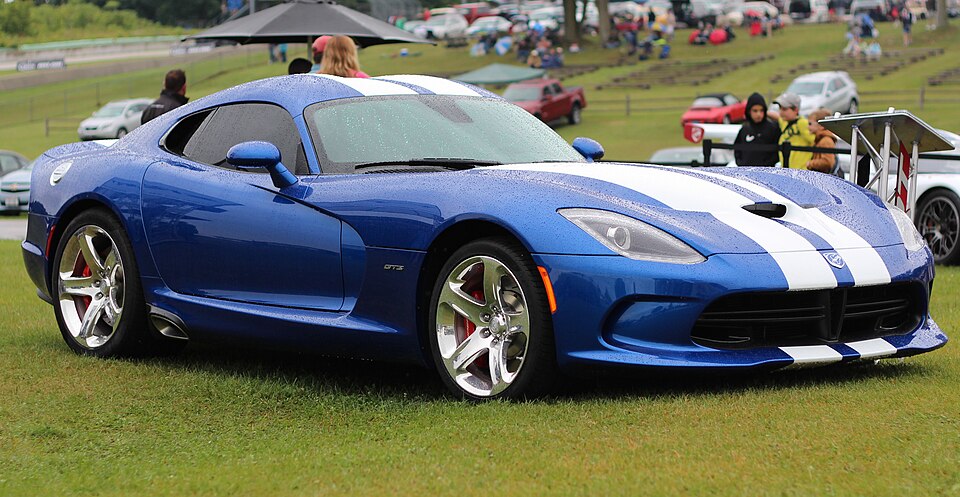
2009 Dodge Viper
Trims, performance, features, fuel economy, safety and known problems — with the pros and cons against similar 2009 models.
- Class
- Two Seaters
- Body styles
- Srt10 Coupe/Acr RWD, Srt10 Roadster 2dr Conv RWD
- Engines
- 8.4L 10-cyl
- Drivetrain
- Rear-Wheel Drive
- Fuel
- Premium Gasoline
- MPG (best)
- 16 combined · 13 city / 22 hwy
- Length
- 174.4–175.6 in
- Curb weight
- 3,439–3,448 lb
- NHTSA rating
- Not rated
- Recalls
- 0 campaigns
Pros & cons
What's good
- No recalls so far
Watch out for
- Below-average fuel economyBest version gets 16 MPG combined, 15% below the 2009 two seaters average of 18.9 MPG.
- Premium fuel requiredEvery gasoline version is rated for premium, which raises running costs.
Calculated from EPA, NHTSA and vPIC data — not a review. How we calculate this →
Overview
The 2009 Dodge Viper is a two seaters offered with a 8.4L 10-cyl engine and rear-wheel drive.
It measures about 176 inches long and 75 inches wide on a 99-inch wheelbase, with a curb weight of roughly 3,448 lb (Srt10 Coupe/Acr RWD).
EPA rates its most efficient version at 16 MPG combined (13 city / 22 highway), 15% worse than the 2009 two seaters average of 18.9 MPG, for an estimated $5,150 a year in fuel.
There are no recalls or owner complaints on file with NHTSA for this model year.
What changed for 2009
No changes to engines, powertrains, drivetrains, size, EPA ratings or NHTSA crash rating compared with the 2008 Viper — a carry-over year in the data.
Compared with 2008; trim, feature and price changes aren't covered. See the 2008 Viper →
Dimensions & weight
| Body | Length | Width | Height | Wheelbase | Track F / R | Curb weight | Weight F/R |
|---|---|---|---|---|---|---|---|
| Srt10 Coupe/Acr RWD | 175.6 in | 75.2 in | 47.6 in | 98.8 in | 60.6 / 62.2 in | 3,448 lb | 49/51 |
| Srt10 Roadster 2dr Conv RWD | 174.4 in | 75.2 in | 47.6 in | 98 in | 61.4 / 59.8 in | 3,439 lb | 48/52 |
Transport Canada CVS (Open Government Licence – Canada), Canadian-market figures.
Will it fit your garage? Check with your measurements →Engines, MPG & running costs
| Version | Engine | Transmission | Drive | City / Hwy / Comb | vs. class | Fuel / yr | CO₂ g/mi |
|---|---|---|---|---|---|---|---|
| Viper Convertible | 8.4L 10-cyl | Manual 6-spd | Rear-Wheel Drive | 13 / 22 / 16 | -15% | $5,150 | 555 |
| Viper Coupe | 8.4L 10-cyl | Manual 6-spd | Rear-Wheel Drive | 13 / 22 / 16 | -15% | $5,150 | 555 |
EPA estimates; "vs. class" is combined MPG against the 2009 EPA class average. How we calculate this →
Safety ratings & technology
NHTSA has not published 5-Star ratings for the 2009 Dodge Viper under the current (2011+) test program.
Similar 2009 two seaterss
| Model | Best MPG / range | NHTSA overall | Recalls |
|---|---|---|---|
| 2009 Dodge Viper (this car) | 16 MPG | Not rated | 0 |
| 2009 Chevrolet Corvette | 19 MPG | Not rated | 0 |
| 2009 Spyker C8 | 15 MPG | Not rated | 0 |
Recalls (0)
No vehicle recalls on file with NHTSA for the 2009 Dodge Viper.
Check your VIN for open recalls at NHTSA ↗Not every 2009 Dodge Viper is affected — only a VIN check confirms your car.
Owner-reported problems
No owner complaints for the 2009 Dodge Viper in NHTSA's database since 2015.
Used 2009 Dodge Viper buyer's checklist
- Run the VIN at nhtsa.gov/recalls. No recalls on file, but check anyway.
- Before you pay: service records, a history report and an independent inspection.
Generated by DecodedCars from NHTSA recalls and owner complaints for the 2009 Dodge Viper. Not a substitute for a professional inspection.
Other Viper years
Compare all years →| Year | MPG (best) | Length | Overall | Recalls | Complaints |
|---|---|---|---|---|---|
| 2017 Viper | 14 | 175.6 in | Not rated | 0 | 0 |
| 2016 Viper | 15 | 175.6 in | Not rated | 2 | 0 |
| 2015 Viper | 15 | 175.6 in | Not rated | 1 | 3 |
| 2010 Viper | 16 | 175.6 in | Not rated | 0 | 0 |
| 2008 Viper | 16 | 175.6 in | Not rated | 0 | 0 |
| 2006 Viper | 13 | 174.4 in | Not rated | 2 | 5 |
| 2005 Viper | 13 | 174.4 in | Not rated | 1 | 5 |
Sources: EPA, NHTSA, Transport Canada, Wikimedia Commons. Not affiliated with NHTSA, the EPA or Dodge. How we calculate this →