 DecodedCars
Audi Q5 2020
Versiones, desempeño, equipamiento, consumo, seguridad y problemas conocidos, con sus ventajas y desventajas frente a modelos similares 2020.
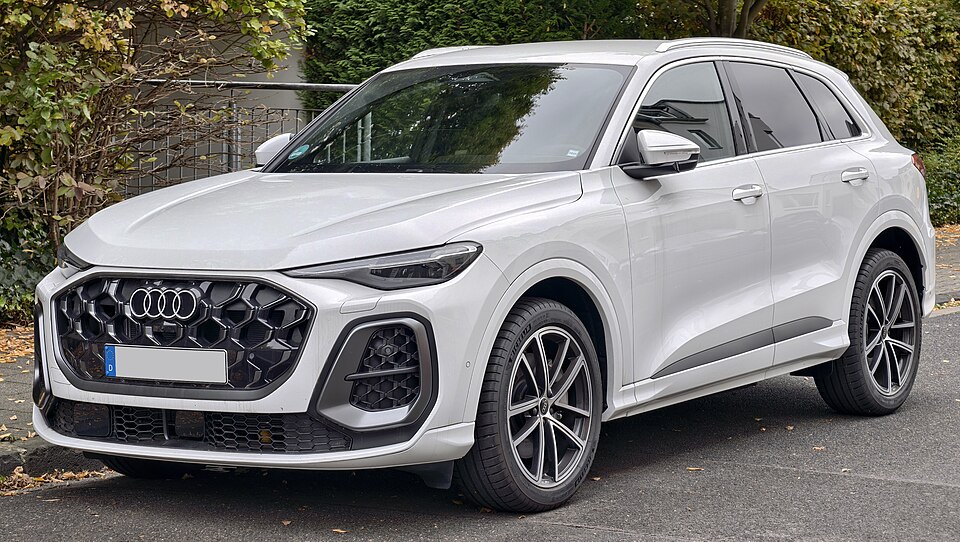
- Clase
- SUV pequeño (4WD)
- Carrocerías
- 4dr SUV, Tfsi E 4dr SUV
- Motores
- 2.0L 4 cil. turbo
- Potencia
- 248–363 hp
- Transmisión
- Automática
- Tracción
- Tracción total (AWD)
- Combustible
- Híbrido enchufable, Gasolina premium
- MPG (mejor)
- 27 combinadas · 25 ciudad / 29 carretera
- Largo
- 183.5 in
- Peso en vacío
- 4,046–4,694 lb
- Calificación NHTSA
- ★★★★★
- Retiros
- 6 campañas
Ventajas y desventajas
Lo bueno
- Excelente consumo de combustibleHasta 27 MPG combinadas: un 15 % mejor que el promedio de su clase (SUV pequeño, 2020: 23.5 MPG).
- Disponible en versión híbrida enchufableSe ofrece en versión híbrida enchufable además de gasolina.
- 5 estrellas en seguridad NHTSALa máxima calificación general en las pruebas de choque federales.
A tener en cuenta
- Requiere gasolina premiumTodas las versiones de gasolina usan premium, lo que encarece el uso diario.
Calculado con datos de la EPA, la NHTSA y vPIC frente a 22 modelos similares 2020; no es una reseña. Cómo lo calculamos →
Resumen
El Audi Q5 2020 es un SUV pequeño con motor 2.0L 4 cil. turbo, incluida una versión híbrida, con tracción total (AWD).
Mide unas 184 pulgadas de largo y 74 de ancho, con una distancia entre ejes de 111 pulgadas, y pesa alrededor de 4,046 lb (4dr SUV).
La EPA califica su versión más eficiente con 27 MPG combinadas (25 en ciudad / 29 en carretera), un 15 % mejor que el promedio de su clase (SUV pequeño, 2020: 23.5 MPG), con un gasto estimado de $3,050 al año en combustible.
En las pruebas de choque de la NHTSA obtuvo la máxima calificación general de 5 estrellas.
Tiene 6 campañas de retiro registradas y los propietarios han presentado 37 quejas ante la NHTSA desde 2015, sobre todo por problemas de sistema eléctrico.
Novedades del 2020
- Nueva versión híbrida enchufable
- Mejor consumo combinado sube de 24 a 27 MPG
Comparado con 2019; no incluye cambios de versiones, equipamiento ni precio. Ver el Q5 2019 →
Versiones, desempeño y equipamiento
Versiones
Fabricado en: San Jose Chiapa, Chiapas
NHTSA vPIC, según el fabricante, para 5 configuraciones del Q5 2020; puede no incluir todas las versiones. Cómo lo calculamos →
Dimensiones y peso
| Carrocería | Largo | Ancho | Alto | Distancia entre ejes | Vía del. / tras. | Peso en vacío | Peso del./tras. |
|---|---|---|---|---|---|---|---|
| 4dr SUV | 183.5 in | 74.4 in | 65.4 in | 111 in | 63.8 / 63.4 in | 4,046 lb | 53/47 |
| Tfsi E 4dr SUV | 183.5 in | 74.4 in | 65.4 in | 111 in | 63.8 / 63.4 in | 4,694 lb |
Transport Canada CVS (Open Government Licence – Canada), medidas del mercado canadiense.
¿Cabe en tu garaje? Compruébalo con tus medidas →Motores, consumo y costo de uso
| Versión | Motor | Transmisión | Tracción | Ciudad / Carr. / Comb. | vs. su clase | Combustible / año | CO₂ g/mi |
|---|---|---|---|---|---|---|---|
| Q5 Híbrido enchufable | 2.0L 4 cil. turbo | Automática (AM-S7) | Tracción total (AWD) | 25 / 29 / 27 | +15% | $3,050 | 165 |
| Q5 | 2.0L 4 cil. turbo | Automática (S7) | Tracción total (AWD) | 22 / 28 / 24 | +2% | $3,400 | 364 |
Estimaciones de la EPA; "vs. su clase" compara las MPG combinadas con el promedio 2020 de su clase EPA. Cómo lo calculamos →
Calificaciones de seguridad y tecnología
| Versión | General | Frontal | Conductor / pasajero | Lateral | Poste lateral | Volcadura | Riesgo de volcadura |
|---|---|---|---|---|---|---|---|
| 2020 Audi Q5 SUV AWD | ★★★★★ | ★★★★★ | 5★ / 5★ | ★★★★★ | ★★★★★ | ★★★★★ | 16.4% |


SUV pequeño similares 2020
| Modelo | Mejor MPG / autonomía | General NHTSA | Retiros |
|---|---|---|---|
| Audi Q5 2020 (este auto) | 27 MPG | ★★★★★ | 6 |
| Tesla Model Y 2020 | 316 mi | ★★★★★ | 24 |
| Land Rover Defender 2020 | 19 MPG | Sin calificar | 7 |
| BMW X3 2020 | 27 MPG | ★★★★★ | 16 |
| Lexus RX 2020 | 30 MPG | Sin calificar | 2 |
| Porsche Macan 2020 | 21 MPG | Sin calificar | 2 |
| Volvo XC60 2020 | 27 MPG | Sin calificar | 7 |
Retiros (6)
Texto oficial de la NHTSA (en inglés).
Sistema eléctrico › Propulsion System › Charging › Cable/Cord › Onboard · 13 dic 2023
Campaña NHTSA 23V842000 · 93,196 vehículos
- Problema
- Volkswagen Group of America, Inc. (Audi) is recalling certain 2022-2024 RS e-tron GT, e-tron GT, Q4 e-tron Sportback, Q4 e-tron, 2020-2021 Audi A8, 2019-2024 e-tron Quattro, 2020-2024 e-tron Sportback Quattro, Q5, and 2021-2022 A7 vehicles. When using the industrial 220V/240V plug at the 100% charge setting, some home power outlets may be incapable of handling the electrical current required to utilize the compact charging system, causing the outlet or charging cable to overheat.
- Riesgo
- An overheated outlet or charging cable can increase the risk of a fire.
- Solución
- Owners are advised not to use the 220V/240V compact/portable charging cable and only use the 110V home charging cable or public charging stations. Dealers will supply a new 220V/240V compact/portable charging cable with an incorporated temperature sensor, free of charge. Owner notification letters were mailed on March 28, 2024. Owners may contact Audi customer service at 1-800-253-2834. Audi's numbers for this recall are 93U6 and 93U8.
Neumáticos · 26 ene 2022
Campaña NHTSA 22V034000 · 31,058 vehículos
- Problema
- Volkswagen Group of America, Inc. (Audi) is recalling certain 2019-2021 Audi A5 Sportback, RS5 Coupe, RS5 Sportback, S5 Sportback, 2020-2021 A4 Allroad, A4 Sedan, A5 Cabriolet, A5 Coupe, A6 Allroad, A6 Sedan, A7, A8, Q5, S4 Sedan, S5 Coupe, S5 Cabriolet, S6 Sedan, S7, S8, SQ5, 2021 Q5 Sportback, Q7, Q8, RS6 Avant, RS7, RSQ8, SQ5 Sportback, SQ7, and SQ8 vehicles. The rear axle alignment may not have been inspected after the repairs for Recall 21V-295 (42L1) were performed.
- Riesgo
- Rear axle misalignment may cause premature or uneven tire wear, increasing the risk of a crash.
- Solución
- Dealers will inspect the rear axle, adjust the alignment as necessary, and replace any prematurely or unevenly worn tires, free of charge. Owner notification letters were mailed March 3, 2022. Owners may contact Audi customer service at 1-800-253-2834. Audi's number for this recall is 42L5.
Estructura › Carrocería · 8 dic 2021
Campaña NHTSA 21V947000 · 288,991 vehículos
- Problema
- Volkswagen Group of America, Inc. (Audi) is recalling certain 2021-2022 Q5 Sportback, SQ5 Sportback, 2018-2022 Q5, and SQ5 vehicles. A liquid spill in the rear seat, or water ingress from an insufficient body seam underneath the vehicle may allow liquid to penetrate the gateway control module, causing it to shutdown.
- Riesgo
- A gateway control module shutdown will suddenly reduce engine power, increasing the risk of a crash.
- Solución
- Dealers will install a protective cover on the gateway control module and seal an underbody seam as necessary, free of charge. Owner notification letters were mailed January 21, 2022. Owners may contact Audi customer service at 1-800-253-2834. Audi's number for this recall is 90S9.
Suspensión › Rear › Axle › Non-Powered Axle Assembly · 26 abr 2021
Campaña NHTSA 21V295000 · 40,993 vehículos
- Problema
- Volkswagen Group of America, Inc. (Audi) is recalling certain 2021 Q7, Q8, Q5 Sportback, SQ5 Sportback, RS6 Avant, RS7, RS Q8, 2020-2021 Audi S6 sedan, Q5, A8, S8, A7, A6 Allroad, A5 Cabriolet, A4 sedan, A4 Allroad, SQ5, S7, A6 sedan, S5 coupe, S4 sedan, S5 Cabriolet, A5 coupe, 2019-2021 RS5 coupe, A5 Sportback, S5 Sportback, RS5 Sportback vehicles. The lock nut on the trailing arm of the rear axle may break due to stress corrosion.
- Riesgo
- A broken lock nut may misalign the rear axle, causing a loss of control and increasing the risk of a crash.
- Solución
- Dealers will replace the lock nuts and, if necessary, the associated bolts, free of charge. Owner notification letters were mailed June 4, 2021. Owners may contact Audi customer service at 1-800-253-2834. Audi's number for this recall is 42L1.
Asientos · 26 ago 2020
Campaña NHTSA 20V505000 · 5,376 vehículos
- Problema
- Volkswagen Group of America, Inc. (Volkswagen ) is recalling certain 2020 Volkswagen Atlas Cross Sport, Jetta, Jetta GLI and Tiguan and Audi Q5 and SQ5 and 2021 Volkswagen Atlas vehicles. Parts of the front seat frame and backrest adjuster may not have been welded properly.
- Riesgo
- In the event of a rear-end crash, the backrest adjustment could break, possibly reducing the amount of occupant restraint, thus increasing risk of injury.
- Solución
- Volkswagen will notify owners, and dealers will inspect the front seats, and, as necessary, replace the seatback frames, free of charge. The recall began September 11, 2020. Volkswagen owners may contact their customer service at 1-888-241-2289. Audi owners may contact their customer service at 1-800-893-5298. Volkswagen's numbers for this recall are 72L1, 72K8, and 72K9.
Estructura › Carrocería · 16 oct 2019
Campaña NHTSA 19V737000 · 174,278 vehículos
- Problema
- Volkswagen Group of America, Inc. (Audi) is recalling certain 2018-2019 Audi SQ5 and 2018-2020 Audi Q5 vehicles. The rear wheel arch cover trim may loosen and detach from the vehicle.
- Riesgo
- The detached trim may become a road hazard, increasing the risk of crash.
- Solución
- Audi will notify owners, and dealers will replace the four clips securing the forward part of the rear wheel arch trim, free of charge. The recall began November 1, 2019. Owners may contact Audi customer service at 1-800-253-2834. Audi's number for this recall is 66K8.
No todos los Q5 2020 están afectados: solo el VIN lo confirma.
Problemas reportados por propietarios
Reportes sin verificar; los más vendidos acumulan más.
Lista para comprar un Audi Q5 2020 usado
- Consulta el VIN en nhtsa.gov/recalls. 6 retiros en este año: pide comprobantes de reparación.
- Sistema eléctrico — 12 reportes de propietarios. Prueba todas las ventanas, seguros, luces, pantallas y puertos USB; revisa la antigüedad de la batería.
- Motor — 8 reportes de propietarios. Arranca el motor en frío, escucha si golpetea y fíjate en luces de advertencia o titubeos al acelerar.
- Frenos — 5 reportes de propietarios. Frena con fuerza a velocidad; revisa si se jala hacia un lado, si el pedal vibra o si se enciende la luz del ABS.
- Millaje a vigilar. Los propietarios suelen reportar problemas alrededor de las 2,300 millas; pregunta qué se reparó cerca de ese punto.
- Sistema híbrido. Busca luces de advertencia del sistema híbrido y pregunta si la batería de alto voltaje se reemplazó o sigue en garantía.
- Antes de pagar: historial de servicio, reporte de antecedentes e inspección de un mecánico independiente.
Generado por DecodedCars a partir de retiros y quejas de propietarios ante la NHTSA para el Audi Q5 2020. No sustituye una inspección profesional.
Otros años del Q5
Comparar todos los años →| Año | MPG (mejor) | Largo | General | Retiros | Quejas |
|---|---|---|---|---|---|
| Q5 2026 | 24 | 185.8 in | Sin calificar | 0 | 4 |
| Q5 2025 | 26 | 184.3 in | ★★★★★ | 1 | 47 |
| Q5 2024 | 26 | 184.3 in | ★★★★★ | 4 | 34 |
| Q5 2023 | 26 | 184.3 in | Sin calificar | 6 | 57 |
| Q5 2022 | 26 | 184.3 in | Sin calificar | 8 | 46 |
| Q5 2021 | 27 | 184.3 in | ★★★★★ | 8 | 103 |
| Q5 2019 | 24 | 183.5 in | ★★★★★ | 5 | 53 |
| Q5 2018 | 25 | 183.5 in | ★★★★★ | 6 | 208 |
| Q5 2017 | 22 | 182.3 in | ★★★★★ | 5 | 42 |
| Q5 2016 | 26 | 182.3 in | ★★★★★ | 5 | 78 |
| Q5 2015 | 26 | 182.3 in | ★★★★★ | 6 | 99 |
| Q5 2014 | 26 | 182.3 in | ★★★★★ | 5 | 96 |
Fuentes: EPA, NHTSA, Transport Canada, Wikimedia Commons. Sin afiliación con la NHTSA, la EPA ni Audi. Cómo lo calculamos →