 DecodedCars
Ford F-150 Lightning 2023
Versiones, desempeño, equipamiento, consumo, seguridad y problemas conocidos, con sus ventajas y desventajas frente a modelos similares 2023.
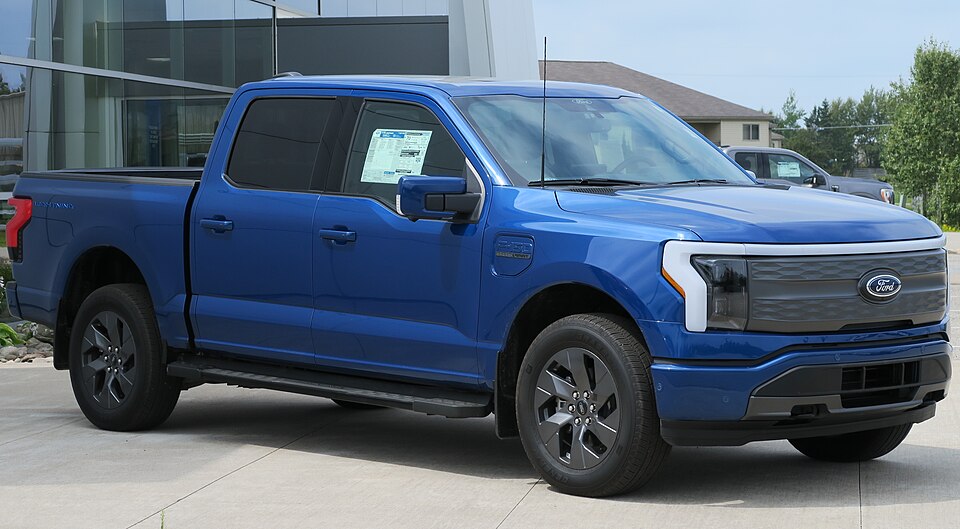
- Clase
- Pickup grande (4WD)
- Carrocerías
- EV 4dr Pickup, Extended Range EV 4dr Pickup, Platinum EV 4dr Pickup
- Motores
- Motor eléctrico
- Tracción
- Tracción total (AWD)
- Asientos
- 5
- Combustible
- Eléctrico
- Autonomía eléctrica
- 320 mi · 9.3 h a 240 V
- Largo
- 229.9 in
- Peso en vacío
- 6,021–6,901 lb
- Calificación NHTSA
- Sin calificar
- Retiros
- 11 campañas
Ventajas y desventajas
Lo bueno
- Gran autonomía eléctricaHasta 320 millas por carga (EPA).
- Mucha tecnología de seguridad de serie4 de las 5 asistencias clave, de serie en las versiones revisadas.
A tener en cuenta
- 11 retirosMás que modelos similares (unos 4). Confirma las reparaciones con el VIN.
Calculado con datos de la EPA, la NHTSA y vPIC frente a 6 modelos similares 2023; no es una reseña. Cómo lo calculamos →
Resumen
El Ford F-150 Lightning 2023 es una pickup grande 100 % eléctrico, con tracción total (AWD).
Mide unas 230 pulgadas de largo y 80 de ancho, con una distancia entre ejes de 145 pulgadas, y pesa alrededor de 6,021 lb (EV 4dr Pickup).
La versión eléctrica tiene una autonomía EPA de hasta 320 millas y tarda unas 9.3 horas en cargarse con un cargador de nivel 2 (240 V).
La NHTSA no ha publicado una calificación general de 5 estrellas para este año modelo.
Tiene 11 campañas de retiro registradas y los propietarios han presentado 113 quejas ante la NHTSA desde 2015, sobre todo por problemas de sistema eléctrico.
Novedades del 2023
Sin cambios en motores, versiones, tracción, tamaño, consumo EPA ni calificación NHTSA respecto al F-150 Lightning 2022: un año sin cambios según los datos.
Comparado con 2022; no incluye cambios de versiones, equipamiento ni precio. Ver el F-150 Lightning 2022 →
Versiones, desempeño y equipamiento
Versiones
Seguridad y asistencias al conductor
Fabricado en: Dearborn, Michigan
NHTSA vPIC, según el fabricante, para 5 configuraciones del F-150 Lightning 2023; puede no incluir todas las versiones. Cómo lo calculamos →
Dimensiones y peso
| Carrocería | Largo | Ancho | Alto | Distancia entre ejes | Vía del. / tras. | Peso en vacío | Peso del./tras. |
|---|---|---|---|---|---|---|---|
| EV 4dr Pickup | 229.9 in | 79.9 in | 75.6 in | 145.3 in | 67.7 / 68.1 in | 6,021 lb | 50/50 |
| Extended Range EV 4dr Pickup | 229.9 in | 79.9 in | 75.6 in | 145.3 in | 67.7 / 68.1 in | 6,360 lb | 50/50 |
| Platinum EV 4dr Pickup | 229.9 in | 79.9 in | 75.6 in | 145.3 in | 67.7 / 68.1 in | 6,901 lb | 50/50 |
Transport Canada CVS (Open Government Licence – Canada), medidas del mercado canadiense.
¿Cabe en tu garaje? Compruébalo con tus medidas →Motores, consumo y costo de uso
| Versión | Motor | Transmisión | Tracción | Ciudad / Carr. / Comb. | vs. su clase | Combustible / año | CO₂ g/mi |
|---|---|---|---|---|---|---|---|
| F-150 Lightning 4WD Extended Range Eléctrico | 210 and 210 kW AC PMSM | Automática (A1) | Tracción total (AWD) | 320 mi · 47.9143 kWh/100mi | – | $1,100 | – |
| F-150 Lightning 4WD Eléctrico | 358 and 358 kW AC PMSM | Automática (A1) | Tracción total (AWD) | 240 mi · 49.3643 kWh/100mi | – | $1,100 | – |
| F-150 Lightning Platinum 4WD Eléctrico | 210 and 210 kW AC PMSM | Automática (A1) | Tracción total (AWD) | 300 mi · 50.7071 kWh/100mi | – | $1,150 | – |
Estimaciones de la EPA; "vs. su clase" compara las MPG combinadas con el promedio 2023 de su clase EPA. Cómo lo calculamos →
Calificaciones de seguridad y tecnología
La NHTSA no ha publicado calificaciones de 5 estrellas para el Ford F-150 Lightning 2023.
Pickup grande similares 2023
| Modelo | Mejor MPG / autonomía | General NHTSA | Retiros |
|---|---|---|---|
| Ford F-150 Lightning 2023 (este auto) | 320 mi | Sin calificar | 11 |
| Chevrolet Silverado 2023 | 26 MPG | Sin calificar | 5 |
| Nissan Frontier 2023 | 21 MPG | Sin calificar | 1 |
| Nissan Titan 2023 | 18 MPG | Sin calificar | 2 |
| Ram 1500 2023 | 24 MPG | Sin calificar | 11 |
| Lordstown Endurance 2023 | 174 mi | Sin calificar | 3 |
| GMC Sierra 2023 | 26 MPG | Sin calificar | 4 |
Retiros (11)
Texto oficial de la NHTSA (en inglés).
Tren motriz › Transmisión automática › Internal › Park Pawl · 12 dic 2025
Campaña NHTSA 25V863000 · 272,645 vehículos
- Problema
- Ford Motor Company (Ford) is recalling certain 2022-2026 F-150 Lightning BEV, 2024-2026 Mustang Mach-E, and 2025-2026 Maverick vehicles. The integrated park module may fail to lock into the park position when the driver shifts into park. As such, these vehicles fail to comply with the requirements of Federal Motor Vehicle Safety Standard (FMVSS) number 114, "Theft Protection and Rollaway Prevention."
- Riesgo
- A loss of park function can allow the vehicle to rollaway, increasing the risk of a crash.
- Solución
- The park module software will be updated over-the-air (OTA) or by a dealer, free of charge. Owner notification letters were mailed February 3, 2026. Owners may contact Ford customer service at 1-866-436-7332. Ford's number for this recall is 25C69. Vehicle Identification Numbers (VINs) involved in this recall will be searchable on NHTSA.gov beginning January 26, 2026.
Iluminación exterior · 24 oct 2025
Campaña NHTSA 25V731000 · 14,843 vehículos
- Problema
- Ford Motor Company (Ford) is recalling certain 2022-2023 F-150 Lightning BEV vehicles previously repaired under recall number 23V418. The rear lightbar may have microcracks in the outer lens that allows moisture to accumulate, which can result in inoperative or flickering reverse lights.
- Riesgo
- Inoperative or flickering reverse lights may not alert other driver's that the vehicle is reversing, increasing the risk of injury or crash.
- Solución
- Dealers will inspect and replace the rear lightbar and fasteners as necessary, free of charge. Owner notification letters were mailed June 3, 2026. Owners may contact Ford customer service at 1-866-436-7332. Ford's number for this recall is 25SB6. Vehicle Identification Numbers (VINs) involved in this recall became searchable on NHTSA.gov on October 29, 2025.
Control de estabilidad (ESC) · 9 may 2025
Campaña NHTSA 25V313000 · 6 vehículos
- Problema
- Ford Motor Company (Ford) is recalling certain 2022-2023 F-150 Lightning vehicles previously repaired incorrectly under recall number 23V801. The SYNC software may fail to activate the electronic stability control (ESC) system at the beginning of each ignition cycle. As such, these vehicles fail to comply with the requirements of Federal Motor Vehicle Safety Standard number 126, "Electronic Stability Control Systems."
- Riesgo
- Failure to reset the ESC to active may result in the driver unknowingly operating the vehicle without electronic stability control, increasing the risk of a crash.
- Solución
- Dealers will update the Accessory Protocol Interface Module (APIM) software, free of charge. Owner notification letters were mailed June 18, 2025. Owners may contact Ford customer service at 1-866-436-7332. Ford's number for this recall is 25C15.
Sistema eléctrico › Propulsion System › Traction Battery · 23 abr 2025
Campaña NHTSA 25V272000 · 3 vehículos
- Problema
- Ford Motor Company (Ford) is recalling certain 2023 F-150 Lightning vehicles. The fasteners that secure the junction box bus bars inside the high-voltage battery pack may not have been tightened securely, which can cause electrical arcing at the busbars.
- Riesgo
- Electrical arcing increases the risk of a fire. In addition, a loss of drive power may occur, which can increase the risk of a crash.
- Solución
- Dealers will inspect and repair the busbar fasteners and replace any damaged components as necessary, free of charge. Owner notification letters were mailed on May 21, 2025. Owners may contact Ford Customer Service at 1-866-436-7332. Ford's number for this recall is 24S11. This recall expands previous recall number 24V-144.
Sistema eléctrico › Propulsion System › Traction Battery · 28 feb 2025
Campaña NHTSA 25V131000 · 950 vehículos
- Problema
- Ford Motor Company (Ford) is recalling certain 2022-2024 F-150 Lightning battery electric vehicles. A manufacturing defect in the high voltage battery cells may result in an internal short circuit.
- Riesgo
- A battery short circuit increases the risk of a fire.
- Solución
- Owners are advised to only charge their vehicles to a maximum of 80% battery capacity until the repair has been completed. Dealers will inspect and replace the high voltage battery array as necessary, free of charge. Owner notification letters were mailed June 27, 2025. Owners may contact Ford customer service at 1-866-436-7332. Ford's number for this recall is 25S18.
Suspensión › Front › Control Arm › Upper Ball Joint · 19 dic 2024
Campaña NHTSA 24V949000 · 11,922 vehículos
- Problema
- Ford Motor Company (Ford) is recalling certain 2023-2024 F-150 Lightning BEV vehicles. The front upper control arm ball joint nut may not have been tightened properly, allowing the front upper control arm to detach from the knuckle assembly.
- Riesgo
- A detached control arm can cause a loss of vehicle steering and control, increasing the risk of a crash.
- Solución
- Dealers will inspect the upper control arm ball joint nut, and replace the nut and/or knuckle assembly, as necessary, free of charge. Owner notification letters were mailed February 10, 2025. Owners may contact Ford customer service at 1-866-436-7332. Ford's number for this recall is 24S76.
Sistema eléctrico › Propulsion System › Traction Battery · 23 feb 2024
Campaña NHTSA 24V144000 · 216 vehículos
- Problema
- Ford Motor Company (Ford) is recalling certain 2023 F-150 Lightning vehicles. The fasteners that secure the junction box bus bars inside the high-voltage battery pack may not have been tightened securely, which can cause electrical arcing at the busbars.
- Riesgo
- Electrical arcing increases the risk of a fire. In addition, a loss of drive power may occur, which can increase the risk of a crash.
- Solución
- Dealers will inspect and repair the busbar fasteners and replace any damaged components as necessary, free of charge. Owner notification letters were mailed on May 31, 2024. Owners may contact Ford customer service at 1-866-436-7332. Ford's number for this recall is 24S11.
Control de estabilidad (ESC) · 28 nov 2023
Campaña NHTSA 23V801000 · 5,118 vehículos
- Problema
- Ford Motor Company (Ford) is recalling certain 2022-2023 F-150 Lightning vehicles. The SYNC software may fail to activate the electronic stability control (ESC) system at the beginning of each ignition cycle. As such, these vehicles fail to comply with the requirements of Federal Motor Vehicle Safety Standard number 126, "Electronic Stability Control Systems."
- Riesgo
- Failure to reset the ESC to active may result in the driver unknowingly operating the vehicle without electronic stability control, increasing the risk of a crash.
- Solución
- The Accessory Protocol Interface Module (APIM) software will be updated by a dealer or through an over-the-air (OTA) update, free of charge. Owner notification letters were mailed December 21, 2023. Owners may contact Ford customer service at 1-866-436-7332. Ford's number for this recall is 23C38.
Visibilidad › Defroster/Defogger/Hvac System › Windshield › Electrical Heating Element · 13 oct 2023
Campaña NHTSA 23V688000 · 931 vehículos
- Problema
- Ford Motor Company (Ford) is recalling certain 2023 F-150 Lightning pickup trucks. The electronic cabin coolant heater module may be missing a solder joint, which can cause intermittent or no cabin heat and result in an inoperative windshield defrosting and defogging system. As such, these vehicles fail to comply with the requirements of Federal Motor Vehicle Safety Standard number 103, "Windshield Defrosting and Defogging Systems."
- Riesgo
- An inoperative windshield defrosting and defogging system may decrease the driver's visibility, increasing the risk of a crash.
- Solución
- Dealers will replace the electronic cabin coolant heater, free of charge. Owner notification letters were mailed January 3, 2024. Owners may contact Ford customer service at 1-866-436-7332. Ford's number for this recall is 23C32.
Iluminación exterior · 9 jun 2023
Campaña NHTSA 23V418000 · 16,375 vehículos
- Problema
- Ford Motor Company (Ford) is recalling certain 2022-2023 F-150 BEV vehicles. The rear lightbar may have microcracks in the outer lens that allows moisture to accumulate, which can result in inoperative or flickering reverse lights.
- Riesgo
- Inoperative or flickering reverse lights may not alert other driver's that the vehicle is reversing, increasing the risk of injury or crash.
- Solución
- Dealers will replace the rear lightbar, free of charge. Owner notification letters were mailed October 9, 2023. Owners may contact Ford customer service at 1-866-436-7332. Ford's number for this recall is 23S30.
Sistema eléctrico › Propulsion System › Traction Battery · 15 mar 2023
Campaña NHTSA 23V168000 · 18 vehículos
- Problema
- Ford Motor Company (Ford) is recalling certain 2023 F-150 Lightning pickup trucks. The high-voltage battery pack may experience an electrical short-circuit when the battery is fully charged or near fully charged.
- Riesgo
- A battery short-circuit increases the risk of a fire.
- Solución
- Dealers will replace the high-voltage battery pack, free of charge. Owner notification letters were mailed March 31, 2023. Owners may contact Ford customer service at 1-866-436-7332. Ford's number for this recall is 23S15.
No todos los F-150 Lightning 2023 están afectados: solo el VIN lo confirma.
Problemas reportados por propietarios
Reportes sin verificar; los más vendidos acumulan más.
Lista para comprar un Ford F-150 Lightning 2023 usado
- Consulta el VIN en nhtsa.gov/recalls. 11 retiros en este año: pide comprobantes de reparación.
- Sistema eléctrico — 58 reportes de propietarios. Prueba todas las ventanas, seguros, luces, pantallas y puertos USB; revisa la antigüedad de la batería.
- Iluminación exterior — 25 reportes de propietarios. Revisa todas las luces exteriores, los limpiaparabrisas y que el parabrisas no tenga grietas.
- Tren motriz — 17 reportes de propietarios. Prueba todas las marchas, incluida la reversa; nota patinazos o cambios bruscos o tardíos.
- Millaje a vigilar. Los propietarios suelen reportar problemas alrededor de las 10,000 millas; pregunta qué se reparó cerca de ese punto.
- Salud de la batería. Pide un reporte del estado de la batería, revisa la garantía restante y compara la autonomía al 100 % con las 320 millas de la EPA.
- Antes de pagar: historial de servicio, reporte de antecedentes e inspección de un mecánico independiente.
Generado por DecodedCars a partir de retiros y quejas de propietarios ante la NHTSA para el Ford F-150 Lightning 2023. No sustituye una inspección profesional.
Otros años del F-150 Lightning
Comparar todos los años →| Año | MPG (mejor) | Largo | General | Retiros | Quejas |
|---|---|---|---|---|---|
| F-150 Lightning 2025 | 320 mi | 229.9 in | Sin calificar | 3 | 9 |
| F-150 Lightning 2024 | 320 mi | 229.9 in | Sin calificar | 4 | 31 |
| F-150 Lightning 2022 | 320 mi | 229.9 in | Sin calificar | 9 | 92 |
Fuentes: EPA, NHTSA, Transport Canada, Wikimedia Commons. Sin afiliación con la NHTSA, la EPA ni Ford. Cómo lo calculamos →