 DecodedCars
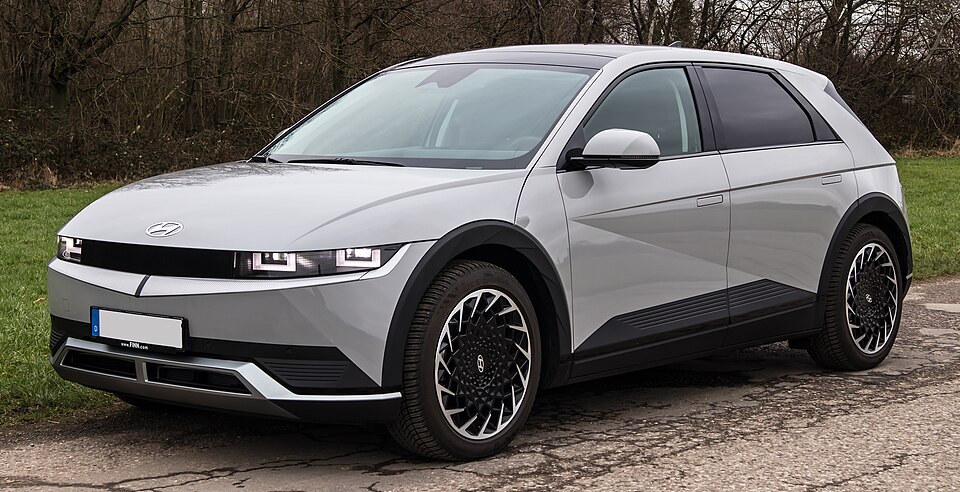
2026 Hyundai Ioniq 5
Trims, performance, features, fuel economy, safety and known problems — with the pros and cons against similar 2026 models.
- Class
- Small Sport Utility Vehicle 2WD
- Body styles
- 4dr Hatch RWD, Long Range 4dr Hatch AWD, Long Range 4dr Hatch RWD
- Engines
- Electric motor
- Drivetrain
- Rear-Wheel Drive, All-Wheel Drive
- Fuel
- EV
- EV range
- 318 mi · 6.3 h on 240 V
- Length
- 182.7 in
- Curb weight
- 3,968–4,464 lb
- NHTSA rating
- Not rated
- Recalls
- 2 campaigns
Pros & cons
What's good
- Long EV rangeUp to 318 miles on a charge (EPA).
- AWD / 4WD available
- Lots of standard safety tech5 of 5 key driver aids standard on the versions we checked.
Watch out for
No weak spots against similar models in the data.
Calculated from EPA, NHTSA and vPIC data against 43 similar 2026 models — not a review. How we calculate this →
Overview
The 2026 Hyundai Ioniq 5 is a small SUV powered by electricity and rear-wheel drive and all-wheel drive.
It measures about 183 inches long and 74 inches wide on a 118-inch wheelbase, with a curb weight of roughly 3,968 lb (4dr Hatch RWD).
The electric version has an EPA-rated range of up to 318 miles and takes about 6.3 hours to charge on a 240-volt Level 2 charger.
It has 2 recall campaigns on file and owners have filed 28 complaints with NHTSA since 2015, most often about the electrical system.
What changed for 2026
No changes to engines, powertrains, drivetrains, size, EPA ratings or NHTSA crash rating compared with the 2025 Ioniq 5 — a carry-over year in the data.
Compared with 2025; trim, feature and price changes aren't covered. See the 2025 Ioniq 5 →
Trims, performance & features
Trims
Safety & driver-assist features
Built in: Ellabell, Georgia
NHTSA vPIC, as reported by the manufacturer for 5 2026 Ioniq 5 configurations; may not list every trim. How we calculate this →
Dimensions & weight
| Body | Length | Width | Height | Wheelbase | Track F / R | Curb weight | Weight F/R |
|---|---|---|---|---|---|---|---|
| 4dr Hatch RWD | 182.7 in | 74.4 in | 63.4 in | 118.1 in | 64.6 / 65 in | 3,968 lb | 47/53 |
| Long Range 4dr Hatch AWD | 182.7 in | 74.4 in | 63.4 in | 118.1 in | 64.6 / 65 in | 4,464 lb | 50/50 |
| Long Range 4dr Hatch RWD | 182.7 in | 74.4 in | 63.4 in | 118.1 in | 64.6 / 65 in | 4,200 lb | 47/53 |
Transport Canada CVS (Open Government Licence – Canada), Canadian-market figures.
Will it fit your garage? Check with your measurements →Engines, MPG & running costs
| Version | Engine | Transmission | Drive | City / Hwy / Comb | vs. class | Fuel / yr | CO₂ g/mi |
|---|---|---|---|---|---|---|---|
| Ioniq 5 Standard range EV | 125 kW PMSM | Automatic (A1) | Rear-Wheel Drive | 245 mi · 29 kWh/100mi | – | $650 | – |
| Ioniq 5 RWD EV | 168 kW PMSM | Automatic (A1) | Rear-Wheel Drive | 318 mi · 30 kWh/100mi | – | $700 | – |
| Ioniq 5 AWD (19inch Wheels) EV | 74 and 165 kW PMSM | Automatic (A1) | All-Wheel Drive | 290 mi · 31.6676 kWh/100mi | – | $700 | – |
| Ioniq 5 AWD (20inch Wheels) EV | 74 and 165 kW PMSM | Automatic (A1) | All-Wheel Drive | 269 mi · 34.497 kWh/100mi | – | $800 | – |
| Ioniq 5 AWD XRT EV | 74 and 165 kW PMSM | Automatic (A1) | All-Wheel Drive | 259 mi · 35.7633 kWh/100mi | – | $800 | – |
| Ioniq 5 N EV | 166 and 282 kW PMSM | Automatic (A1) | All-Wheel Drive | 221 mi · 43 kWh/100mi | – | $950 | – |
| Ioniq 5 Robo taxi EV | 168 kW PMSM | Automatic (A1) | Rear-Wheel Drive | 168 mi · 47.5266 kWh/100mi | – | $1,050 | – |
EPA estimates; "vs. class" is combined MPG against the 2026 EPA class average. How we calculate this →
Safety ratings & technology
NHTSA has not published 5-Star ratings for the 2026 Hyundai Ioniq 5.
Similar 2026 small SUVs
| Model | Best MPG / range | NHTSA overall | Recalls |
|---|---|---|---|
| 2026 Hyundai Ioniq 5 (this car) | 318 mi | Not rated | 2 |
| 2026 Toyota RAV4 | 43 MPG | Not rated | 2 |
| 2026 Honda CR-V | 40 MPG | Not rated | 2 |
| 2026 Hyundai Tucson | 38 MPG | Not rated | 6 |
| 2026 Subaru Forester | 35 MPG | Not rated | 4 |
| 2026 Mazda CX-5 | 26 MPG | Not rated | 0 |
| 2026 Toyota Corolla Cross | 42 MPG | Not rated | 1 |
Recalls (2)
Electrical System › Propulsion System › Traction Battery · Feb 5, 2026
NHTSA campaign 26V068000 · 27 vehicles
- Problem
- Hyundai Motor America (Hyundai) is recalling certain 2025-2026 IONIQ 5 and 2026 IONIQ 9 vehicles. The high voltage battery system may contain an improperly tightened bus bar, which can cause a short-circuit.
- Risk
- An electrical short in the high voltage battery system increases the risk of a fire.
- Fix
- Dealers will inspect and tighten the bus bar retention bolts and replace the battery system assembly, as necessary, free of charge. Owner notification letters were mailed April 3, 2026. Owners may contact Hyundai customer service at 1-855-371-9460. Hyundai's number for this recall is 294. Vehicle Identification Numbers (VINs) involved in this recall became searchable on NHTSA.gov on February 7, 2026.
Electrical System › Instrument Cluster/Panel · Jan 26, 2026
NHTSA campaign 26V047000 · 41,651 vehicles
- Problem
- Hyundai Motor America (Hyundai) is recalling certain 2025-2026 Tucson Hybrid, Tucson Plug-In Hybrid Electric (PHEV), 2026 IONIQ 5, Santa Cruz, Kona, Palisade, Palisade Hybrid, Santa Fe, Santa Fe Hybrid, Sonata, Sonata Hybrid, and Tucson vehicles. Due to a software error, the instrument panel display may fail. As such, these vehicles fail to comply with the requirements of Federal Motor Vehicle Safety Standard (FMVSS) number 101, "Controls and Displays."
- Risk
- An instrument panel display that fails to show critical safety information, such as the speedometer or warning lights, increases the risk of a crash.
- Fix
- The instrument panel display software will be updated over-the-air (OTA) or by a dealer, free of charge. Owner notification letters were mailed March 24, 2026. Owners may contact Hyundai's customer service at 855-371-9460. Hyundai's number for this recall is 293. Vehicle Identification Numbers (VINs) involved in this recall became searchable on NHTSA.gov on January 28, 2026.
Not every 2026 Hyundai Ioniq 5 is affected — only a VIN check confirms your car.
Owner-reported problems
Unverified owner reports; best-sellers collect more.
Other Ioniq 5 years
Compare all years →| Year | MPG (best) | Length | Overall | Recalls | Complaints |
|---|---|---|---|---|---|
| 2027 Ioniq 5 | 318 mi | – | Not rated | 0 | 1 |
| 2025 Ioniq 5 | 318 mi | 182.7 in | Not rated | 9 | 317 |
| 2024 Ioniq 5 | 303 mi | 182.7 in | ★★★★★ | 3 | 226 |
| 2022 Ioniq 5 | 303 mi | 182.7 in | ★★★★★ | 3 | 407 |
Sources: EPA, NHTSA, Transport Canada, Wikimedia Commons. Not affiliated with NHTSA, the EPA or Hyundai. How we calculate this →