 DecodedCars
2020 Hyundai Kona
Trims, performance, features, fuel economy, safety and known problems — with the pros and cons against similar 2020 models.
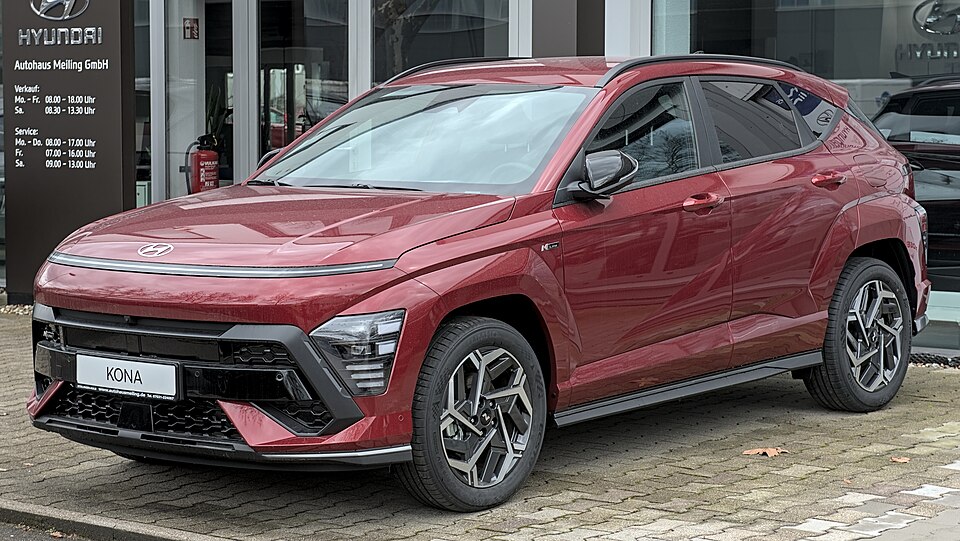
- Class
- Small Sport Utility Vehicle 2WD
- Body styles
- 2.0 AWD 4dr SUV, 2.0 FWD 4dr SUV, Electric 4dr SUV
- Engines
- 1.6L 4-cyl turbo, 2.0L 4-cyl
- Horsepower
- 147 hp
- Transmission
- 6-speed automatic, 7-speed automatic
- Drivetrain
- Front-Wheel Drive, All-Wheel Drive
- Seats
- 5
- Fuel
- EV, Regular Gasoline
- MPG (best)
- 30 combined · 28 city / 33 hwy
- EV range
- 258 mi · 9 h on 240 V
- Length
- 164.2–164.6 in
- Curb weight
- 2,890–3,715 lb
- NHTSA rating
- ★★★★★
- Recalls
- 5 campaigns
Pros & cons
What's good
- Excellent fuel economyUp to 30 MPG combined — 17% better than the average 2020 small SUV (25.6 MPG).
- Electric version availableOffered as a electric as well as gas.
- AWD / 4WD available
- 5-star NHTSA safety ratingTop overall score in federal crash tests.
Watch out for
- Modest powerUp to 147 hp, versus about 285 hp for similar 2020 models.
- "Park outside" recallCheck that the recall repair was done before buying or driving.
Calculated from EPA, NHTSA and vPIC data against 10 similar 2020 models — not a review. How we calculate this →
Overview
The 2020 Hyundai Kona is a small SUV offered with 2 engines (1.6L 4-cyl turbo and 2.0L 4-cyl) and front-wheel drive and all-wheel drive.
It measures about 164 inches long and 71 inches wide on a 102-inch wheelbase, with a curb weight of roughly 3,084 lb (2.0 AWD 4dr SUV).
EPA rates its most efficient version at 30 MPG combined (28 city / 33 highway), 17% better than the 2020 small SUV average of 25.6 MPG, for an estimated $600 a year in fuel.
The electric version has an EPA-rated range of up to 258 miles and takes about 9 hours to charge on a 240-volt Level 2 charger.
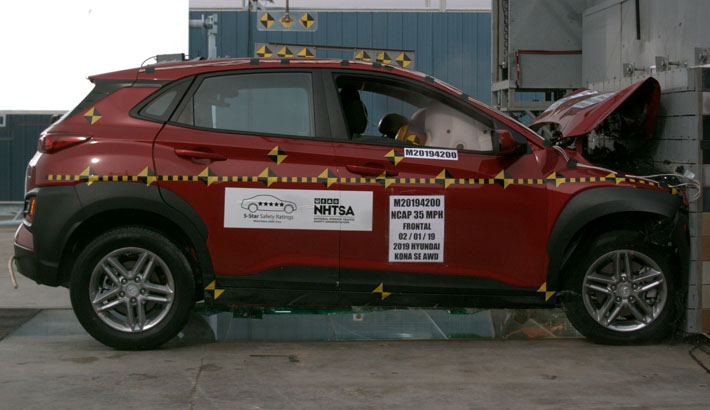
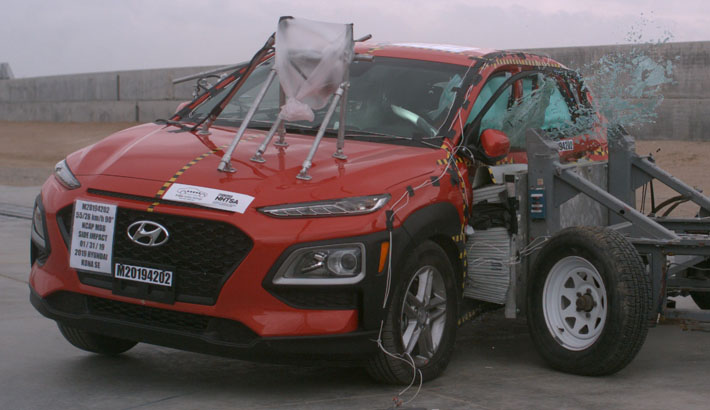
In NHTSA crash testing it earned the top 5-star overall rating.
It has 5 recall campaigns on file and owners have filed 189 complaints with NHTSA since 2015, most often about the engine.
What changed for 2020
No changes to engines, powertrains, drivetrains, size, EPA ratings or NHTSA crash rating compared with the 2019 Kona — a carry-over year in the data.
Compared with 2019; trim, feature and price changes aren't covered. See the 2019 Kona →
Trims, performance & features
Trims
Safety & driver-assist features
Built in: Ulsan, South Korea
NHTSA vPIC, as reported by the manufacturer for 5 2020 Kona configurations; may not list every trim. How we calculate this →
Dimensions & weight
| Body | Length | Width | Height | Wheelbase | Track F / R | Curb weight | Weight F/R |
|---|---|---|---|---|---|---|---|
| 2.0 AWD 4dr SUV | 164.2 in | 70.9 in | 59.1 in | 102.4 in | 61.4 / 61.4 in | 3,084 lb | 56/44 |
| 2.0 FWD 4dr SUV | 164.2 in | 70.9 in | 59.1 in | 102.4 in | 61.4 / 61.4 in | 2,890 lb | 56/44 |
| Electric 4dr SUV | 164.6 in | 70.9 in | 61.8 in | 102.4 in | 61.4 / 61.4 in | 3,715 lb | 56/44 |
Transport Canada CVS (Open Government Licence – Canada), Canadian-market figures.
Will it fit your garage? Check with your measurements →Engines, MPG & running costs
| Version | Engine | Transmission | Drive | City / Hwy / Comb | vs. class | Fuel / yr | CO₂ g/mi |
|---|---|---|---|---|---|---|---|
| Kona Electric EV | 150 kW AC PMSM | Automatic (A1) | Front-Wheel Drive | 258 mi · 27.4801 kWh/100mi | – | $600 | – |
| Kona FWD | 1.6L 4-cyl turbo | Automatic (AM7) | Front-Wheel Drive | 28 / 32 / 30 | +17% | $2,250 | 303 |
| Kona FWD | 2.0L 4-cyl | Automatic (S6) | Front-Wheel Drive | 27 / 33 / 30 | +17% | $2,250 | 300 |
| Kona AWD | 2.0L 4-cyl | Automatic (S6) | All-Wheel Drive | 26 / 30 / 28 | +19% | $2,400 | 324 |
| Kona AWD | 1.6L 4-cyl turbo | Automatic (AM7) | All-Wheel Drive | 26 / 29 / 27 | +15% | $2,500 | 324 |
EPA estimates; "vs. class" is combined MPG against the 2020 EPA class average. How we calculate this →
Safety ratings & technology
| Version | Overall | Frontal | Driver / passenger | Side | Side pole | Rollover | Rollover risk |
|---|---|---|---|---|---|---|---|
| 2020 Hyundai Kona SUV AWD | ★★★★★ | ★★★★★ | 5★ / 5★ | ★★★★★ | ★★★★★ | ★★★★★ | 13.6% |
| 2020 Hyundai Kona SUV FWD | ★★★★★ | ★★★★★ | 5★ / 5★ | ★★★★★ | ★★★★★ | ★★★★★ | 14.1% |
Similar 2020 small SUVs
| Model | Best MPG / range | NHTSA overall | Recalls |
|---|---|---|---|
| 2020 Hyundai Kona (this car) | 30 MPG | ★★★★★ | 5 |
| 2020 Jeep Wrangler | 25 MPG | Not rated | 13 |
| 2020 Jeep Compass | 26 MPG | ★★★★★ | 1 |
| 2020 Fiat 500 | 26 MPG | Not rated | 0 |
| 2020 Chevrolet Trax | 28 MPG | ★★★★★ | 0 |
| 2020 Jeep Renegade | 27 MPG | ★★★★★ | 3 |
| 2020 Mazda CX-30 | 28 MPG | ★★★★★ | 3 |
Recalls (5)
Engine · Apr 28, 2021
NHTSA campaign 21V301000 · 158,493 vehicles
- Problem
- Hyundai Motor America (Hyundai) is recalling certain 2019-2020 Elantra, 2019-2021 Kona and Veloster vehicles equipped with 2.0L Nu MPI engines. The piston oil rings may not have been properly heat-treated, which could result in engine damage.
- Risk
- A damaged engine may stall, increasing the risk of a crash. In addition, oil may leak onto hot exhaust components, increasing the risk of a fire.
- Fix
- Dealers will inspect and, if necessary, replace the engine, free of charge. In addition, Hyundai will deploy Piston Ring Noise Sensing System (PNSS) software. Owner notification letters were mailed August 24, 2021. Owners may contact Hyundai customer service at 1-855-371-9460.
Electrical System › Propulsion System › Traction Battery · Mar 1, 2021 Park outside
NHTSA campaign 21V127000 · 4,696 vehicles
- Problem
- Hyundai Motor America (Hyundai) is recalling certain 2019-2020 Kona Electric and 2020 Ioniq Electric vehicles. The lithium-ion (Li-ion) battery may short-circuit.
- Risk
- An electrical short in the Li-ion battery increases the risk of a fire.
- Fix
- Owners are advised to park their vehicles outside and away from structures until the interim action is complete. Hyundai will notify owners, and as an interim action, owners have the option to follow provided instructions to perform a battery update through the vehicle's infotainment system or request a Hyundai dealer to provide the update. Once parts are available, dealers will inspect the Battery System Assembly (BSA), and replace it if necessary. Repairs will be performed free of charge. Owners were notified of the safety risk, and the interim action, with a letter mailed April 9, 2021. Final owner notification letters were mailed June 17, 2021. Owners may contact Hyundai customer service at 1-855-371-9460. Hyundai's number for this recall is 200.
Service Brakes, Hydraulic › Power Assist › Electric › Control Module › Software · Dec 1, 2020
NHTSA campaign 20V748000 · 8,176 vehicles
- Problem
- Hyundai Motor America (Hyundai) is recalling certain 2019-2020 Nexo Fuel Cell and 2019-2021 Kona Electric vehicles. The Integrated Electronic Brake (IEB) system may detect an abnormal sensor signal and as a result, may significantly reduce braking performance.
- Risk
- Reduced braking power could lengthen the distance required to stop the vehicle, increasing the risk of a crash.
- Fix
- Hyundai will notify owners, and dealers will update the IEB software, free of charge. The recall began January 25, 2021. Owners may contact Hyundai customer service at 1-855-371-9460. Hyundai's number for this recall is 199.
Electrical System › Propulsion System › Traction Battery › Management System/Energy Control Module (Bms/Becm) › Software · Oct 13, 2020 Park outside
NHTSA campaign 20V630000 · 6,707 vehicles
- Problem
- Hyundai Motor America (Hyundai) is recalling certain 2019-2020 Kona Electric vehicles. The lithium-ion (Li-ion) battery may short-circuit.
- Risk
- An electrical short in the Li-ion battery increases the risk of a fire.
- Fix
- Hyundai will notify owners, and dealers will update the Battery Management System (BMS) software and inspect the Li-ion battery, replacing it if necessary, free of charge. Owners are advised to park their vehicles outside and away from structures until the repair is complete. The recall began November 13, 2020. Owners may contact Hyundai customer service at 1-855-371-9460. Hyundai's number for this recall is 196.
Equipment › Other › Labels · Jan 17, 2020
NHTSA campaign 20V022000 · 477 vehicles
- Problem
- Hyundai Motor America (Hyundai) is recalling certain 2020 Kona vehicles. The certification label may indicate incorrect Gross Axle Weight Rating (GAWR). As such, these vehicles fail to comply with the requirements of Federal Motor Vehicle Safety Standard (FMVSS) numbers 567, "Certification" and 110, "Tire Selection and Rims."
- Risk
- An incorrect GAWR could result in the vehicle being overloaded, increasing the risk of a crash.
- Fix
- Hyundai will notify owners, and dealers will install new label stickers displaying the correct GAWR over the affected areas of the certification label, free of charge. The recall began March 2, 2020. Owners may contact Hyundai customer service at 1-855-371-9460. Hyundai's number for this recall is 187.
Not every 2020 Hyundai Kona is affected — only a VIN check confirms your car.
Owner-reported problems
Unverified owner reports; best-sellers collect more.
Used 2020 Hyundai Kona buyer's checklist
- Run the VIN at nhtsa.gov/recalls. 5 recalls this year — ask for proof of repairs.
- Safety-critical recall. At least one recall carries a "Do Not Drive" or "Park Outside" warning. Do not buy until the VIN shows it was repaired.
- Engine — 110 owner reports. Cold-start the engine, listen for knocking, and watch for warning lights or hesitation on acceleration.
- Electrical System — 24 owner reports. Test every window, lock, light, screen and USB port; check the battery age.
- Power Train — 23 owner reports. Test-drive through all gears, including reverse; note slipping, harsh or delayed shifts.
- Mileage to watch. Owners typically reported problems around 11,000 miles; ask what was repaired near that point.
- Battery health. Ask for a battery state-of-health report, check the remaining battery warranty, and compare the displayed range at 100% charge with the EPA's 258 miles.
- Before you pay: service records, a history report and an independent inspection.
Generated by DecodedCars from NHTSA recalls and owner complaints for the 2020 Hyundai Kona. Not a substitute for a professional inspection.
Other Kona years
Compare all years →| Year | MPG (best) | Length | Overall | Recalls | Complaints |
|---|---|---|---|---|---|
| 2027 Kona | 31 | – | Not rated | 0 | 0 |
| 2026 Kona | 31 | 171.3 in | Not rated | 3 | 10 |
| 2025 Kona | 31 | 171.3 in | Not rated | 1 | 29 |
| 2024 Kona | 31 | 171.3 in | Not rated | 4 | 68 |
| 2023 Kona | 32 | 165.4 in | Not rated | 2 | 75 |
| 2022 Kona | 32 | 165.4 in | Not rated | 2 | 130 |
| 2021 Kona | 30 | 164.2 in | ★★★★★ | 3 | 147 |
| 2019 Kona | 30 | 164.2 in | ★★★★★ | 4 | 252 |
| 2018 Kona | 30 | 164.2 in | Not rated | 0 | 75 |
Sources: EPA, NHTSA, Transport Canada, Wikimedia Commons. Not affiliated with NHTSA, the EPA or Hyundai. How we calculate this →