 DecodedCars
2020 Volkswagen Golf/GTI
Trims, performance, features, fuel economy, safety and known problems — with the pros and cons against similar 2020 models.
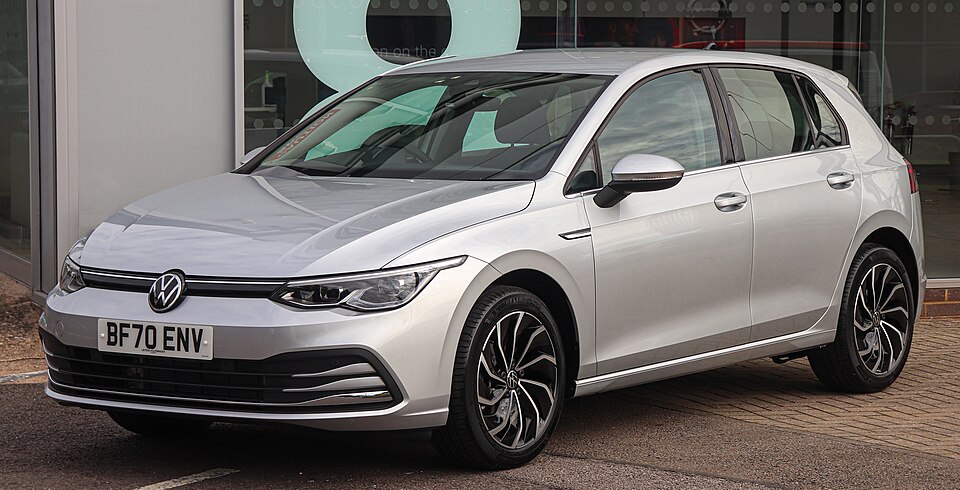
- Class
- Compact Cars
- Engines
- 1.4L 4-cyl turbo, 2.0L 4-cyl turbo
- Horsepower
- 147–228 hp
- Transmission
- 8-speed automatic, 7-speed automatic, 6-speed manual
- Drivetrain
- Front-Wheel Drive
- Seats
- 5
- Fuel
- Regular Gasoline
- MPG (best)
- 32 combined · 29 city / 36 hwy
- Length
- –
- Curb weight
- –
- NHTSA rating
- ★★★★★
- Recalls
- 2 campaigns
Pros & cons
What's good
- Excellent fuel economyUp to 32 MPG combined — 17% better than the average 2020 compact car (27.3 MPG).
- Strong performanceUp to 228 hp, versus about 169 hp for similar 2020 models.
- 5-star NHTSA safety ratingTop overall score in federal crash tests.
Watch out for
No weak spots against similar models in the data.
Calculated from EPA, NHTSA and vPIC data against 13 similar 2020 models — not a review. How we calculate this →
Overview
The 2020 Volkswagen Golf/GTI is a compact car offered with 2 engines (1.4L 4-cyl turbo and 2.0L 4-cyl turbo) and front-wheel drive.
EPA rates its most efficient version at 32 MPG combined (29 city / 36 highway), 17% better than the 2020 compact car average of 27.3 MPG, for an estimated $2,100 a year in fuel.
In NHTSA crash testing it earned the top 5-star overall rating.
It has 2 recall campaigns on file and owners have filed 6 complaints with NHTSA since 2015, most often about the electrical system.
What changed for 2020
- No all-electric version any more
- Engine dropped: 1.8L 4-cyl turbo
- All-wheel / four-wheel drive no longer offered
Compared with 2019; trim, feature and price changes aren't covered. See the 2019 Golf/GTI →
Trims, performance & features
Trims
Safety & driver-assist features
Built in: Puebla, Mexico
NHTSA vPIC, as reported by the manufacturer for 3 2020 Golf/GTI configurations; may not list every trim. How we calculate this →
Engines, MPG & running costs
| Version | Engine | Transmission | Drive | City / Hwy / Comb | vs. class | Fuel / yr | CO₂ g/mi |
|---|---|---|---|---|---|---|---|
| Golf | 1.4L 4-cyl turbo | Automatic (S8) | Front-Wheel Drive | 29 / 35 / 32 | +17% | $2,100 | 280 |
| Golf | 1.4L 4-cyl turbo | Manual 6-spd | Front-Wheel Drive | 28 / 36 / 31 | +14% | $2,150 | 285 |
| GTI | 2.0L 4-cyl turbo | Manual 6-spd | Front-Wheel Drive | 24 / 32 / 27 | -1% | $2,500 | 326 |
| GTI | 2.0L 4-cyl turbo | Automatic (AM-S7) | Front-Wheel Drive | 24 / 32 / 27 | -1% | $2,500 | 327 |
EPA estimates; "vs. class" is combined MPG against the 2020 EPA class average. How we calculate this →
Safety ratings & technology
| Version | Overall | Frontal | Driver / passenger | Side | Side pole | Rollover | Rollover risk |
|---|---|---|---|---|---|---|---|
| 2020 Volkswagen Golf 4 DR FWD | ★★★★★ | ★★★★★ | 5★ / 4★ | ★★★★★ | ★★★★★ | ★★★★★ | 13.4% |
Similar 2020 compact cars
| Model | Best MPG / range | NHTSA overall | Recalls |
|---|---|---|---|
| 2020 Volkswagen Golf/GTI (this car) | 32 MPG | ★★★★★ | 2 |
| 2020 Toyota Corolla | 52 MPG | ★★★★★ | 6 |
| 2020 Toyota Yaris | 35 MPG | ★★★★★ | 1 |
| 2020 Subaru WRX | 23 MPG | ★★★★★ | 1 |
| 2020 Mitsubishi Mirage | 39 MPG | ★★★★★ | 0 |
| 2020 Volkswagen Jetta | 34 MPG | ★★★★★ | 6 |
| 2020 Toyota C-HR | 29 MPG | ★★★★★ | 1 |
Recalls (2)
Fuel System, Gasoline · Feb 14, 2024
NHTSA campaign 24V110000 · 261,257 vehicles
- Problem
- Volkswagen Group of America, Inc. (Volkswagen) is recalling certain front-wheel drive 2015-2020 Audi A3 Sedan, 2015-2019 Audi A3 Cabriolet, 2019-2020 Volkswagen Jetta GLI, 2018 Golf Sportwagen GP, 2018-2019 Golf Sportwagen A7, 2015-2017 Golf Sportwagen, 2015-2020 Golf GTI, and 2015-2020 Golf A7 vehicles. Due to a problem with a suction jet pump seal inside the fuel tank, fuel may flow into the evaporative emissions (EVAP) system and possibly leak out of the charcoal canister.
- Risk
- A fuel leak in the presence of an ignition source increases the risk of a fire.
- Fix
- Dealers will replace the suction pump, free of charge. Final owner notification letters for Audi owners were mailed on July 25, 2024. Final owner letters for VW owners were mailed on August 13, 2024. Owners may contact Volkswagen customer service at 1-800-893-5298 or Audi customer service at 1-800-253-2834. Volkswagen's numbers for this recall are VW: 20UF/Audi: 20YF. Vehicles that were previously recalled under 16V-647 will need to have the new remedy completed. This recall expands and replaces previous recall number 16V-647.
Tires › Pressure Monitoring And Regulating Systems · Oct 31, 2022
NHTSA campaign 22V815000 · 296,044 vehicles
- Problem
- Volkswagen Group of America, Inc. (Volkswagen) is recalling certain 2019 Volkswagen Tiguan LWB, Golf Sportswagen A7, Golf Alltrack, Golf R GP, Audi Q3, Audi A3 Cabriolet, 2019-2020 Jetta NF, Jetta GLI, Golf GTI, Atlas, Golf A7, Audi A3, 2020-2021 Atlas Cross Sport, and 2021 Atlas FL vehicles. The tire pressure monitoring system may not detect an air pressure loss in adequate time when deflating occurs among all four tires simultaneously. As such, these vehicles fail to comply with the requirements of Federal Motor Vehicle Safety Standard number 138, "Tire Pressure Monitoring Systems."
- Risk
- An undetected sudden loss of pressure in all four tires increases the risk of a crash.
- Fix
- Dealers will update the TPMS software, free of charge. Owner notification letters were mailed November 18, 2022. Owners may contact Volkswagen's customer service at 1-800-893-5298 or AudiÂs customer service at 1-800-253-2834. Volkswagen's numbers for this recall are (Audi) 45J7, and (VW) 45J6 and 45J8.
Not every 2020 Volkswagen Golf/GTI is affected — only a VIN check confirms your car.
Owner-reported problems
Unverified owner reports; best-sellers collect more.
Used 2020 Volkswagen Golf/GTI buyer's checklist
- Run the VIN at nhtsa.gov/recalls. 2 recalls this year — ask for proof of repairs.
- Electrical System — 2 owner reports. Test every window, lock, light, screen and USB port; check the battery age.
- Electronic Stability Control (Esc) — 1 owner reports. Ask the seller and mechanic specifically about this system.
- Engine — 1 owner reports. Cold-start the engine, listen for knocking, and watch for warning lights or hesitation on acceleration.
- Mileage to watch. Owners typically reported problems around 17,000 miles; ask what was repaired near that point.
- Before you pay: service records, a history report and an independent inspection.
Generated by DecodedCars from NHTSA recalls and owner complaints for the 2020 Volkswagen Golf/GTI. Not a substitute for a professional inspection.
Other Golf/GTI years
Compare all years →| Year | MPG (best) | Length | Overall | Recalls | Complaints |
|---|---|---|---|---|---|
| 2027 Golf/GTI | 28 | – | Not rated | 0 | 0 |
| 2026 Golf/GTI | 27 | 168.9 in | Not rated | 0 | 0 |
| 2025 Golf/GTI | 27 | 168.9 in | Not rated | 0 | 0 |
| 2024 Golf/GTI | 27 | 168.9 in | Not rated | 0 | 0 |
| 2023 Golf/GTI | 28 | – | Not rated | 0 | 11 |
| 2022 Golf/GTI | 28 | – | Not rated | 0 | 81 |
| 2021 Golf/GTI | 33 | – | ★★★★★ | 1 | 7 |
| 2019 Golf/GTI | 32 | – | ★★★★★ | 6 | 63 |
| 2018 Golf/GTI | 29 | – | ★★★★★ | 6 | 29 |
| 2017 Golf/GTI | 29 | – | ★★★★★ | 5 | 117 |
| 2016 Golf/GTI | 29 | – | Not rated | 9 | 85 |
| 2015 Golf/GTI | 35 | – | Not rated | 12 | 131 |
Sources: EPA, NHTSA, Transport Canada, Wikimedia Commons. Not affiliated with NHTSA, the EPA or Volkswagen. How we calculate this →