 DecodedCars
BMW i3
8 model years from 2014 to 2021, compared on size, efficiency, safety and reliability.
- Model years
- 2014–2021
- Class
- Subcompact Cars
- Latest engines
- 0.6L 2-cyl
- Best MPG
- 31–39 combined, by year
- EV range
- up to 153 mi
- Latest rating
- Not rated
- Recalls
- 8 campaigns, all years
- Most complaints
- 2014 (69)
- Fewest problems
- 2020
- Interest
- 11,574 Wikipedia views / 30 days
The 2021 i3 in brief
The 2021 BMW i3 is a subcompact car offered with a 0.6L 2-cyl engine, including a hybrid version and rear-wheel drive.
EPA rates its most efficient version at 31 MPG combined (30 city / 31 highway), 32% better than the 2021 subcompact car average of 23.4 MPG, for an estimated $650 a year in fuel.
The electric version has an EPA-rated range of up to 153 miles and takes about 7 hours to charge on a 240-volt Level 2 charger.
NHTSA has not published a 5-Star overall rating for this model year.
It has 0 recall campaigns on file and owners have filed 1 complaint with NHTSA since 2015, most often about the structure.
The BMW i3 has 8 model years in our data, from 2014 to 2021.
Its most efficient year was 2016 at 39 MPG combined; across all years the best version ranged from 31 to 39 MPG.
Owners most often report problems with the steering (51), structure › body (39), power train (39).
Buying used? 2020 has the fewest problems in our data, and 2017 is the year to avoid.
2014 has the most recalls (4); all years together count 8 campaigns and 230 owner complaints.
How the 2014 i3 compares
The 2014 BMW i3 is a subcompact car offered with a 0.6L 2-cyl engine, including a hybrid version and rear-wheel drive.
EPA rates its most efficient version at 39 MPG combined (41 city / 37 highway), 67% better than the 2014 subcompact car average of 23.4 MPG, for an estimated $600 a year in fuel.
About the BMW i3
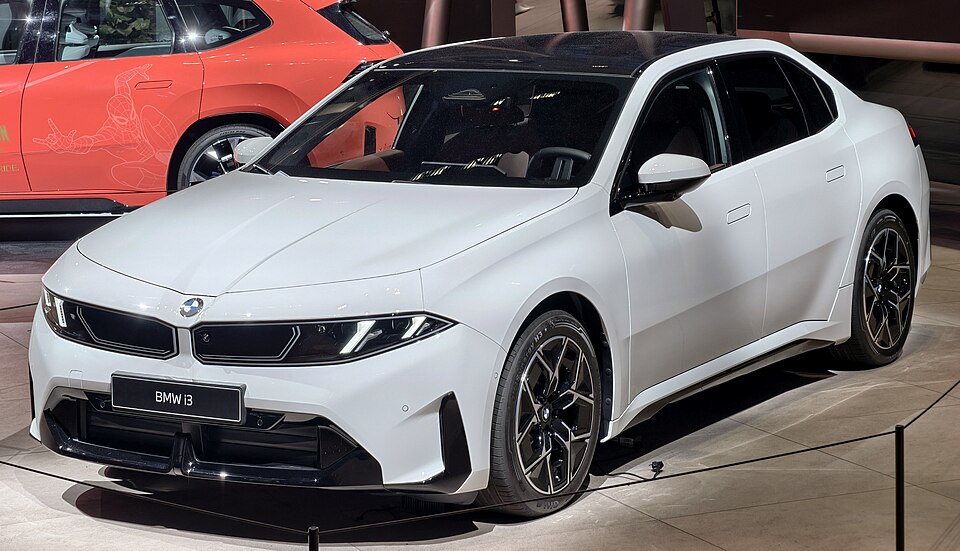
The BMW i3 (NA0) is a battery electric compact executive car manufactured by BMW. The i3 was unveiled on 18 March 2026. The i3 is the second car to be produced using its latest "Neue Klasse" modular electric vehicle platform. The iX3 was the first Neue Klasse model. It has a EPA estimated range of up to 440 miles per charge. The car is produced at BMW’s home plant in Munich.
From the Wikipedia article "BMW i3 (NA0)", licensed under CC BY-SA 4.0.
2021 i3 pros & cons
Full 2021 details →What's good
- Excellent fuel economyUp to 31 MPG combined — 32% better than the average 2021 subcompact car (23.4 MPG).
- Plug-in hybrid version availableOffered as a plug-in hybrid and electric as well as gas.
- No recalls so far
Watch out for
- Premium fuel requiredEvery gasoline version is rated for premium, which raises running costs.
Best and worst years to buy used
2020 i3
0 owner complaints · 0 recalls
Year to avoid2017 i3
53 owner complaints · 3 recalls · 1 fire report · 2 crash reports
Most reported: Unknown Or Other
NHTSA recalls and complaints for 7 model years since 2015; use it alongside a pre-purchase inspection. How we calculate this →
i3 changes by model year
- 2019
- Best combined MPG down from 35 to 31
- Longest EV range up from 114 to 153 miles
- 2017
- Best combined MPG down from 39 to 35
- Longest EV range up from 81 to 114 miles
Years without a measurable change are left out.
Show all 8 model years side by side
| Year | Latest engines | Best MPG / range | Length | Weight | Overall | Recalls | Complaints |
|---|---|---|---|---|---|---|---|
| 2021 | 0.6L 2-cyl | 31 MPG | – | – | Not rated | 0 | 1 |
| 2020 | 0.6L 2-cyl | 31 MPG | – | – | Not rated | 0 | 0 |
| 2019 | 0.6L 2-cyl | 31 MPG | – | – | Not rated | 1 | 13 |
| 2018 | 0.6L 2-cyl | 35 MPG | – | – | Not rated | 3 | 14 |
| 2017 | 0.6L 2-cyl | 35 MPG | – | – | Not rated | 3 | 53 |
| 2016 | 0.6L 2-cyl | 39 MPG | – | – | Not rated | 2 | 33 |
| 2015 | 0.6L 2-cyl | 39 MPG | – | – | Not rated | 3 | 47 |
| 2014 | 0.6L 2-cyl | 39 MPG | – | – | Not rated | 4 | 69 |
Alternatives to the 2021 i3
| Model | Best MPG / range | NHTSA overall | Recalls |
|---|---|---|---|
| 2021 Audi TTS | 25 MPG | Not rated | 0 |
| 2021 Mercedes-Benz A-Class | 29 MPG | Not rated | 0 |
| 2021 BMW 2 Series | 28 MPG | Not rated | 0 |
Most common owner-reported problems
Sources: EPA, NHTSA, Transport Canada, Wikipedia, Wikimedia Commons. Not affiliated with NHTSA, the EPA or BMW. How we calculate this →