 DecodedCars
2015 BMW i3
Trims, performance, features, fuel economy, safety and known problems — with the pros and cons against similar 2015 models.
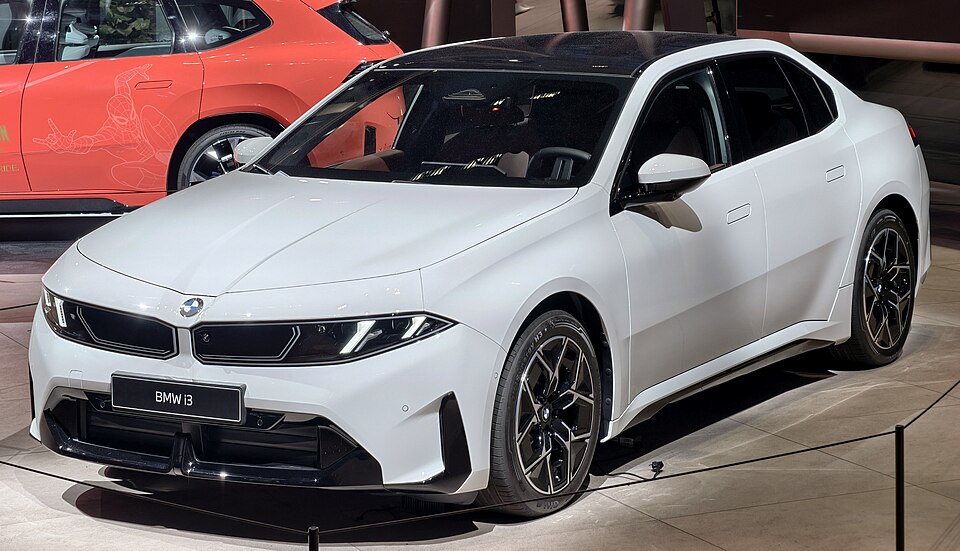
- Class
- Subcompact Cars
- Engines
- 0.6L 2-cyl
- Drivetrain
- Rear-Wheel Drive
- Fuel
- EV, Plug-in Hybrid
- MPG (best)
- 39 combined · 41 city / 37 hwy
- EV range
- 81 mi · 4 h on 240 V
- Length
- –
- Curb weight
- –
- NHTSA rating
- Not rated
- Recalls
- 3 campaigns
Pros & cons
What's good
- Excellent fuel economyUp to 39 MPG combined — 65% better than the average 2015 subcompact car (23.7 MPG).
- Plug-in hybrid version availableOffered as a plug-in hybrid and electric as well as gas.
Watch out for
- Premium fuel requiredEvery gasoline version is rated for premium, which raises running costs.
Calculated from EPA, NHTSA and vPIC data against 6 similar 2015 models — not a review. How we calculate this →
Overview
The 2015 BMW i3 is a subcompact car offered with a 0.6L 2-cyl engine, including a hybrid version and rear-wheel drive.
EPA rates its most efficient version at 39 MPG combined (41 city / 37 highway), 65% better than the 2015 subcompact car average of 23.7 MPG, for an estimated $600 a year in fuel.
The electric version has an EPA-rated range of up to 81 miles and takes about 4 hours to charge on a 240-volt Level 2 charger.
NHTSA has not published a 5-Star overall rating for this model year.
It has 3 recall campaigns on file and owners have filed 47 complaints with NHTSA since 2015, most often about the steering.
What changed for 2015
No changes to engines, powertrains, drivetrains, size, EPA ratings or NHTSA crash rating compared with the 2014 i3 — a carry-over year in the data.
Compared with 2014; trim, feature and price changes aren't covered. See the 2014 i3 →
Engines, MPG & running costs
| Version | Engine | Transmission | Drive | City / Hwy / Comb | vs. class | Fuel / yr | CO₂ g/mi |
|---|---|---|---|---|---|---|---|
| i3 BEV EV | 125 kW AC Induction | Automatic (A1) | Rear-Wheel Drive | 81 mi · 27 kWh/100mi | – | $600 | – |
| i3 REX Plug-in Hybrid | 0.6L 2-cyl | Automatic (A1) | Rear-Wheel Drive | 41 / 37 / 39 | +65% | $2,100 | 40 |
EPA estimates; "vs. class" is combined MPG against the 2015 EPA class average. How we calculate this →
Safety ratings & technology
NHTSA has not published 5-Star ratings for the 2015 BMW i3.
Similar 2015 subcompact cars
| Model | Best MPG / range | NHTSA overall | Recalls |
|---|---|---|---|
| 2015 BMW i3 (this car) | 39 MPG | Not rated | 3 |
| 2015 Audi A3 | 35 MPG | Not rated | 7 |
| 2015 Audi A5 | 26 MPG | Not rated | 3 |
| 2015 BMW i8 | 28 MPG | Not rated | 1 |
| 2015 Audi S3 | 26 MPG | Not rated | 2 |
| 2015 Cadillac ELR | 33 MPG | Not rated | 0 |
| 2015 Audi TT Coupe | 26 MPG | Not rated | 0 |
Recalls (3)
Air Bags › Frontal · Nov 16, 2017
NHTSA campaign 17V720000 · 32,000 vehicles
- Problem
- BMW of North America, LLC (BMW) is recalling certain 2014-2018 BMW i3 electric and hybrid electric vehicles. Unbelted, small adult, drivers may be at a higher risk of neck injury in the event of a frontal crash. These vehicles fail to comply with the requirements of Federal Motor Vehicle Safety Standard (FMVSS) number 208, "Occupant Crash Protection."
- Risk
- During a frontal impact, unbelted, small adult, drivers could be at a higher risk of neck injury.
- Fix
- BMW will notify owners, and dealers will update the Driver air bag control unit software, free of charge. The recall is expected to begin January 8, 2018. Owners may contact BMW customer service at the dedicated i3 recall number 1-855-269-3361.
Fuel System, Gasoline › Delivery › Hoses, Lines/Piping, And Fittings · Feb 9, 2017
NHTSA campaign 17V088000 · 19,130 vehicles
- Problem
- BMW of North America, LLC (BMW) is recalling certain 2014-2017 i3 REx hybrid electric vehicles. The fuel tank vent line may rub against the ribbed wire protection sleeve of the battery positive (B+) cable, creating a hole in the vent line and causing a fuel vapor leak.
- Risk
- A fuel vapor leak in the presence of an ignition source can increase the risk of a fire.
- Fix
- BMW will notify owners, and dealers will inspect the fuel vent line, replacing it as necessary, and install a clip to prevent it from chafing, free of charge. The recall beganApril 3, 2017. Owners may contact BMW customer service at 1-800-525-7417.
Air Bags › Frontal › Passenger Side › Inflator Module · Oct 7, 2015
NHTSA campaign 15V628000 · 6,073 vehicles
- Problem
- BMW of North America, LLC (BMW) is recalling certain model year 2014-2016 MINI Cooper S and MINI Cooper two-door vehicles, 2015-2016 MINI John Cooper Works and MINI Cooper S and MINI Cooper four-door vehicles and 2014-2015 BMW i3 vehicles. Due to a manufacturing error, the passenger frontal air bag may not deploy properly in a low speed crash. As such, these vehicles fail to comply with the requirements of Federal Motor Vehicle Safety Standard (FMVSS) number 208, "Occupant Crash Protection."
- Risk
- In the event of a vehicle crash, an air bag that does not deploy properly increases the risk of injury to the front seat passenger.
- Fix
- MINI and BMW will notify owners, and dealers will replace the passenger frontal air bag module, free of charge. The recall began on November 25, 2015. Owners may contact MINI customer service at 1-866-825-1525 and BMW customer service at 1-800-525-7417.
Not every 2015 BMW i3 is affected — only a VIN check confirms your car.
Owner-reported problems
Unverified owner reports; best-sellers collect more.
Used 2015 BMW i3 buyer's checklist
- Run the VIN at nhtsa.gov/recalls. 3 recalls this year — ask for proof of repairs.
- Steering — 15 owner reports. Turn lock-to-lock while parked and on the road; listen for noises and feel for heavy or loose steering.
- Air Bags — 7 owner reports. Confirm the airbag warning light turns off after start-up and any airbag recall was completed.
- Structure › Body — 7 owner reports. Open and close every door, the hood and tailgate; look for rust or misaligned panels.
- Mileage to watch. Owners typically reported problems around 30,000 miles; ask what was repaired near that point.
- Battery health. Ask for a battery state-of-health report, check the remaining battery warranty, and compare the displayed range at 100% charge with the EPA's 81 miles.
- Before you pay: service records, a history report and an independent inspection.
Generated by DecodedCars from NHTSA recalls and owner complaints for the 2015 BMW i3. Not a substitute for a professional inspection.
Other i3 years
Compare all years →Sources: EPA, NHTSA, Transport Canada, Wikimedia Commons. Not affiliated with NHTSA, the EPA or BMW. How we calculate this →