 DecodedCars
2019 BMW i3
Trims, performance, features, fuel economy, safety and known problems — with the pros and cons against similar 2019 models.
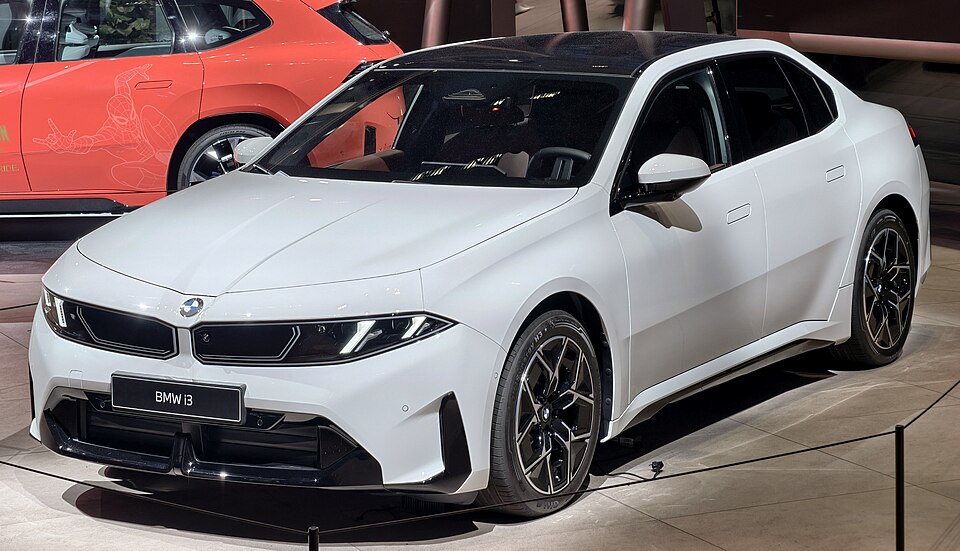
- Class
- Subcompact Cars
- Engines
- 0.6L 2-cyl
- Horsepower
- 170 hp
- Transmission
- 1-speed automatic
- Drivetrain
- Rear-Wheel Drive
- Seats
- 4
- Fuel
- EV, Plug-in Hybrid
- MPG (best)
- 31 combined · 30 city / 31 hwy
- EV range
- 153 mi · 5 h on 240 V
- Length
- –
- Curb weight
- –
- NHTSA rating
- Not rated
- Recalls
- 1 campaign
Pros & cons
What's good
- Excellent fuel economyUp to 31 MPG combined — 32% better than the average 2019 subcompact car (23.5 MPG).
- Plug-in hybrid version availableOffered as a plug-in hybrid and electric as well as gas.
Watch out for
- Premium fuel requiredEvery gasoline version is rated for premium, which raises running costs.
- Modest powerUp to 170 hp, versus about 248 hp for similar 2019 models.
- Emergency braking not standardAutomatic emergency braking is optional or limited to some trims.
Calculated from EPA, NHTSA and vPIC data against 7 similar 2019 models — not a review. How we calculate this →
Overview
The 2019 BMW i3 is a subcompact car offered with a 0.6L 2-cyl engine, including a hybrid version and rear-wheel drive.
EPA rates its most efficient version at 31 MPG combined (30 city / 31 highway), 32% better than the 2019 subcompact car average of 23.5 MPG, for an estimated $650 a year in fuel.
The electric version has an EPA-rated range of up to 153 miles and takes about 5 hours to charge on a 240-volt Level 2 charger.
NHTSA has not published a 5-Star overall rating for this model year.
It has 1 recall campaign on file and owners have filed 13 complaints with NHTSA since 2015, most often about the electrical system.
What changed for 2019
- Best combined MPG down from 35 to 31
- Longest EV range up from 114 to 153 miles
Compared with 2018; trim, feature and price changes aren't covered. See the 2018 i3 →
Trims, performance & features
Trims
Safety & driver-assist features
Built in: Leipzig, Germany
NHTSA vPIC, as reported by the manufacturer for 4 2019 i3 configurations; may not list every trim. How we calculate this →
Engines, MPG & running costs
| Version | Engine | Transmission | Drive | City / Hwy / Comb | vs. class | Fuel / yr | CO₂ g/mi |
|---|---|---|---|---|---|---|---|
| i3 EV | 125 kW AC Induction | Automatic (A1) | Rear-Wheel Drive | 153 mi · 29.7947 kWh/100mi | – | $650 | – |
| i3s EV | 135 kW AC Induction | Automatic (A1) | Rear-Wheel Drive | 153 mi · 29.7947 kWh/100mi | – | $650 | – |
| i3 with Range Extender Plug-in Hybrid | 0.6L 2-cyl | Automatic (A1) | Rear-Wheel Drive | 30 / 31 / 31 | +32% | $2,650 | 22 |
| i3s with Range Extender Plug-in Hybrid | 0.6L 2-cyl | Automatic (A1) | Rear-Wheel Drive | 30 / 31 / 31 | +32% | $2,650 | 22 |
EPA estimates; "vs. class" is combined MPG against the 2019 EPA class average. How we calculate this →
Safety ratings & technology
NHTSA has not published 5-Star ratings for the 2019 BMW i3.
Similar 2019 subcompact cars
| Model | Best MPG / range | NHTSA overall | Recalls |
|---|---|---|---|
| 2019 BMW i3 (this car) | 31 MPG | Not rated | 1 |
| 2019 Audi A3 | 29 MPG | ★★★★★ | 4 |
| 2019 Audi A5 | 27 MPG | Not rated | 3 |
| 2019 Mercedes-Benz A-Class | 28 MPG | Not rated | 0 |
| 2019 BMW 2 Series | 28 MPG | Not rated | 0 |
| 2019 Audi S3 | 25 MPG | ★★★★★ | 1 |
| 2019 Audi TTS Coupe | 25 MPG | Not rated | 0 |
Recalls (1)
Electrical System · Aug 14, 2019
NHTSA campaign 19V599000 · 139 vehicles
- Problem
- BMW of North America, LLC (BMW) is recalling certain 2019 i3 BEV, i3 REx, and i8 vehicles. A circuit board problem within the Electric Motor Electronics (EME) module may shutdown the supply of high-voltage electrical power.
- Risk
- A shut down of high-voltage electrical power would result in a loss of propulsion, increasing the risk of a crash.
- Fix
- BMW will notify owners, and dealers will replace the EME module, free of charge. The recall began October 11, 2019. Owners may contact BMW customer service at 1-800-525-7417.
Not every 2019 BMW i3 is affected — only a VIN check confirms your car.
Owner-reported problems
Unverified owner reports; best-sellers collect more.
Used 2019 BMW i3 buyer's checklist
- Run the VIN at nhtsa.gov/recalls. 1 recall this year — ask for proof of repairs.
- Electrical System — 6 owner reports. Test every window, lock, light, screen and USB port; check the battery age.
- Steering — 4 owner reports. Turn lock-to-lock while parked and on the road; listen for noises and feel for heavy or loose steering.
- Power Train — 3 owner reports. Test-drive through all gears, including reverse; note slipping, harsh or delayed shifts.
- Mileage to watch. Owners typically reported problems around 7,400 miles; ask what was repaired near that point.
- Battery health. Ask for a battery state-of-health report, check the remaining battery warranty, and compare the displayed range at 100% charge with the EPA's 153 miles.
- Before you pay: service records, a history report and an independent inspection.
Generated by DecodedCars from NHTSA recalls and owner complaints for the 2019 BMW i3. Not a substitute for a professional inspection.
Other i3 years
Compare all years →Sources: EPA, NHTSA, Transport Canada, Wikimedia Commons. Not affiliated with NHTSA, the EPA or BMW. How we calculate this →