 DecodedCars
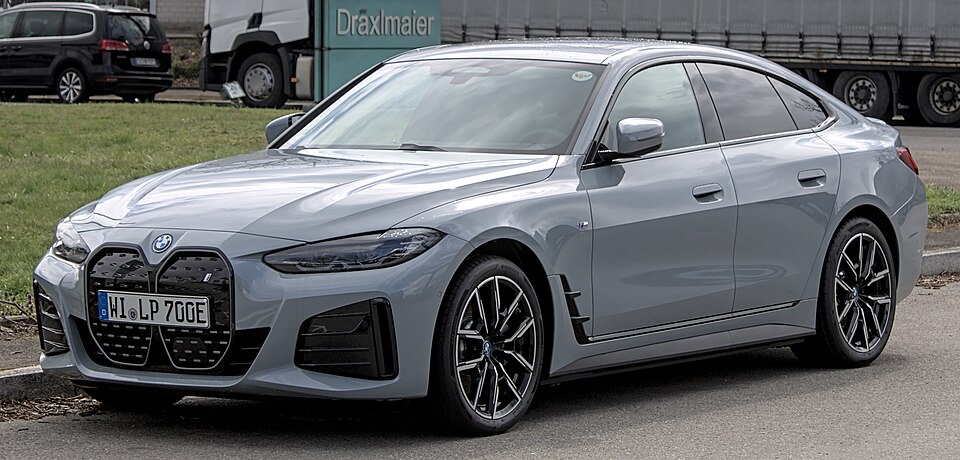
2023 BMW i4
Trims, performance, features, fuel economy, safety and known problems — with the pros and cons against similar 2023 models.
- Class
- Subcompact Cars
- Engines
- Electric motor
- Horsepower
- 335–536 hp
- Drivetrain
- Rear-Wheel Drive, All-Wheel Drive
- Fuel
- EV
- EV range
- 301 mi · 8 h on 240 V
- Length
- –
- Curb weight
- –
- NHTSA rating
- Not rated
- Recalls
- 7 campaigns
Pros & cons
What's good
- Long EV rangeUp to 301 miles on a charge (EPA).
- Strong performanceUp to 536 hp, versus about 349 hp for similar 2023 models.
- AWD / 4WD available
Watch out for
- 7 recallsMore than similar models (about 1). Confirm repairs with the VIN.
Calculated from EPA, NHTSA and vPIC data against 10 similar 2023 models — not a review. How we calculate this →
Overview
The 2023 BMW i4 is a subcompact car powered by electricity and rear-wheel drive and all-wheel drive.
The electric version has an EPA-rated range of up to 301 miles and takes about 8 hours to charge on a 240-volt Level 2 charger.
NHTSA has not published a 5-Star overall rating for this model year.
It has 7 recall campaigns on file and owners have filed 46 complaints with NHTSA since 2015, most often about the electrical system.
What changed for 2023
No changes to engines, powertrains, drivetrains, size, EPA ratings or NHTSA crash rating compared with the 2022 i4 — a carry-over year in the data.
Compared with 2022; trim, feature and price changes aren't covered. See the 2022 i4 →
Trims, performance & features
Trims
Safety & driver-assist features
Built in: Munich, Germany
NHTSA vPIC, as reported by the manufacturer for 3 2023 i4 configurations; may not list every trim. How we calculate this →
Engines, MPG & running costs
| Version | Engine | Transmission | Drive | City / Hwy / Comb | vs. class | Fuel / yr | CO₂ g/mi |
|---|---|---|---|---|---|---|---|
| i4 eDrive35 Gran Coupe (18 inch Wheels) EV | 250 kW EESM | Automatic (A1) | Rear-Wheel Drive | 256 mi · 29.832 kWh/100mi | – | $650 | – |
| i4 eDrive40 Gran Coupe (18 inch wheels) EV | TBD | Automatic (A1) | Rear-Wheel Drive | 301 mi · 33.9144 kWh/100mi | – | $750 | – |
| i4 eDrive35 Gran Coupe (19 inch Wheels) EV | 250 kW EESM | Automatic (A1) | Rear-Wheel Drive | 235 mi · 32.2177 kWh/100mi | – | $700 | – |
| i4 eDrive40 Gran Coupe (19 inch Wheels) EV | 250 kW EESM | Automatic (A1) | Rear-Wheel Drive | 282 mi · 33.9144 kWh/100mi | – | $750 | – |
| i4 M50 Gran Coupe (19 inch wheels) EV | TBD | Automatic (A1) | All-Wheel Drive | 271 mi · 35.2249 kWh/100mi | – | $800 | – |
| i4 M50 Gran Coupe (20 inch wheels) EV | TBD | Automatic (A1) | All-Wheel Drive | 227 mi · 42.3096 kWh/100mi | – | $950 | – |
EPA estimates; "vs. class" is combined MPG against the 2023 EPA class average. How we calculate this →
Safety ratings & technology
NHTSA has not published 5-Star ratings for the 2023 BMW i4.
Similar 2023 subcompact cars
| Model | Best MPG / range | NHTSA overall | Recalls |
|---|---|---|---|
| 2023 BMW i4 (this car) | 301 mi | Not rated | 7 |
| 2023 Audi A3 | 32 MPG | Not rated | 2 |
| 2023 BMW 2 Series | 29 MPG | Not rated | 0 |
| 2023 BMW 4 Series | 28 MPG | Not rated | 1 |
| 2023 Lexus RC | 25 MPG | Not rated | 0 |
| 2023 BMW 8 Series | 24 MPG | Not rated | 1 |
| 2023 BMW M | 19 MPG | Not rated | 0 |
Recalls (7)
Electrical System › Propulsion System › Traction Motor › Controller › Software · Jul 23, 2025
NHTSA campaign 25V395000 · 71,286 vehicles
- Problem
- BMW of North America, LLC (BMW) is recalling certain 2022-2025 i4, 2022-2024 IX, 2023-2024 I7, and 2024 I5 vehicles. The electric drive motor software may shut down the high-voltage system, causing a loss of drive power.
- Risk
- A loss of drive power increases the risk of a crash.
- Fix
- The electric drive motor software will be updated over-the-air (OTA) or by a dealer, free of charge. Owner notification letters are expected to be mailed August 5, 2025. Owners may contact BMW customer service at 1-800-525-7417.
Electrical System › Propulsion System › Traction Battery · Jul 16, 2025
NHTSA campaign 25V470000 · 136 vehicles
- Problem
- BMW of North America, LLC (BMW) is recalling certain 2022-2025 IX, 2023-2024 I7, and 2022-2023 i4 vehicles. The high-voltage battery cell modules may not have been assembled properly, resulting in stress on the module frame and possible module failure.
- Risk
- Battery module failure may lead to a shutdown of the high-voltage system which can result in a loss of drive power, increasing the risk of a crash. In addition, module failure increases the risk of a fire.
- Fix
- Dealers will replace specific high-voltage battery cell modules, free of charge. Interim owner notification letters explaining the safety risk were mailed September 11, 2025. Another notice will be sent once the remedy becomes available, anticipated December 31, 2025Owners may contact BMW customer service at 1-800-525-7417.
Electrical System › Propulsion System › Hybrid Management · Jun 28, 2023
NHTSA campaign 23V449000 · 69 vehicles
- Problem
- BMW of North America, LLC (BMW) is recalling certain 2022-2023 iX xDrive50, iX M60, i4 eDrive40, i4 M50, and 2023 i760 xDrive hybrid electric vehicles. The high voltage battery combined charging unit (CCU) may not have been manufactured correctly, resulting in improperly connected and/or assembled components inside the CCU.
- Risk
- An improperly connected or assembled CCU can interrupt electrical power while driving and result in an engine stall, increasing the risk of a crash.
- Fix
- Dealers will replace the high voltage battery combined charging unit (CCU), free of charge. Owner notification letters were mailed August 23, 2023. Owners may contact BMW customer service at 1-800-525-7417.
Electrical System › Propulsion System › Traction Battery · Apr 26, 2023
NHTSA campaign 23V295000 · 31 vehicles
- Problem
- BMW of North America, LLC (BMW) is recalling certain 2022-2024 iX xDrive50 and 2023 i4 eDrive35, i4 eDrive40, and i4 M50 Hybrid Electric vehicles. The high voltage battery cell monitoring circuit may have improperly secured electrical connections which can result in an engine stall.
- Risk
- An engine stall increases the risk of a crash.
- Fix
- Dealers will replace the high voltage battery cell monitoring circuit, free of charge. Owner notification letters were mailed June 22, 2023. Owners may contact BMW customer service at 1-800-525-7417.
Electrical System › Body Control Module › Software · Feb 23, 2023
NHTSA campaign 23V118000 · 120 vehicles
- Problem
- BMW of North America, LLC (BMW) is recalling certain 2023 330i, 330i xDrive, M340i, M340i xDrive, M3, 330e, 330e xDrive, 430i Convertible, 430i xDrive, M440i, 2022-2023 430i, 430i xDrive, M440i xDrive, i4 eDrive40, and i4 M50 vehicles. During a service visit, a replacement electronic control unit (ECU) may have been installed with incorrect programming, which can cause the automatic door locking (ADL) function to not lock the doors as intended.
- Risk
- Doors that do not lock as intended while the vehicle is in motion may open during a crash, increasing the risk of injury.
- Fix
- Dealers will update the ECU software, free of charge. Owner notification letters were mailed April 10, 2023. Owners may contact BMW customer service at 1-800-525-7417.
Forward Collision Avoidance › Warnings › External/Pedestrian Alert · Jan 25, 2023
NHTSA campaign 23V026000 · 3,431 vehicles
- Problem
- BMW of North America, LLC (BMW) is recalling certain 2022-2023 i4 eDrive40 and iX xDrive50 electric vehicles. During vehicle start-up, the artificial sound generator control unit may experience a fault and fail to generate the external pedestrian warning sound. As such, these vehicles fail to comply with the requirements of Federal Motor Vehicle Safety Standard number 141, "Minimum Sound Requirements for Hybrid and Electric Vehicles."
- Risk
- Without external warning sounds, pedestrians may be unaware of an approaching vehicle, increasing the risk of injury.
- Fix
- Dealers will update the external artificial sound generator software, free of charge. Owner notification letters were mailed March 9, 2023. Owners may contact BMW customer service at 1-800-525-7417.
Electrical System › Propulsion System › Traction Battery Thermal › Management › Software · Dec 20, 2022
NHTSA campaign 22V944000 · 14,086 vehicles
- Problem
- BMW of North America, LLC (BMW) is recalling certain 2022-2023 iX xDrive40, iX xDrive50, iX M60, i4 eDrive35, i4 eDrive40, i4 M50, and 2023 i7 xDrive60 vehicles. The high voltage battery electronic control unit (ECU) software may cause an interruption of electrical power.
- Risk
- An interruption of electrical power may result in a sudden loss of drive power, increasing the risk of a crash.
- Fix
- Dealers will update the high voltage battery ECU software, free of charge. Owner notification letters are expected to be mailed February 10, 2023. Owners may contact BMW customer service at 1-800-525-7417.
Not every 2023 BMW i4 is affected — only a VIN check confirms your car.
Owner-reported problems
Unverified owner reports; best-sellers collect more.
Used 2023 BMW i4 buyer's checklist
- Run the VIN at nhtsa.gov/recalls. 7 recalls this year — ask for proof of repairs.
- Electrical System — 18 owner reports. Test every window, lock, light, screen and USB port; check the battery age.
- Power Train — 11 owner reports. Test-drive through all gears, including reverse; note slipping, harsh or delayed shifts.
- Fuel/Propulsion System — 7 owner reports. Smell for fuel around the car and in the cabin, check that it starts easily when warm, and look at the oil dipstick for a fuel smell or rising level.
- Mileage to watch. Owners typically reported problems around 16,000 miles; ask what was repaired near that point.
- Battery health. Ask for a battery state-of-health report, check the remaining battery warranty, and compare the displayed range at 100% charge with the EPA's 301 miles.
- Before you pay: service records, a history report and an independent inspection.
Generated by DecodedCars from NHTSA recalls and owner complaints for the 2023 BMW i4. Not a substitute for a professional inspection.
Other i4 years
Compare all years →Sources: EPA, NHTSA, Transport Canada, Wikimedia Commons. Not affiliated with NHTSA, the EPA or BMW. How we calculate this →