 DecodedCars
Honda CR-V 2017
Versiones, desempeño, equipamiento, consumo, seguridad y problemas conocidos, con sus ventajas y desventajas frente a modelos similares 2017.
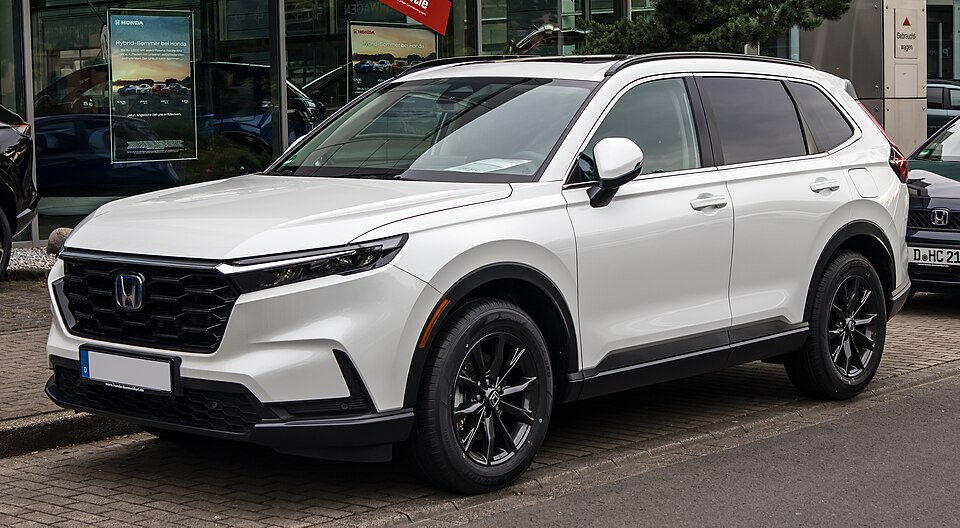
- Clase
- SUV pequeño (2WD)
- Carrocerías
- 4dr SUV AWD, 4dr SUV FWD
- Motores
- 1.5L 4 cil. turbo, 2.4L 4 cil.
- Potencia
- 190 hp
- Transmisión
- CVT
- Tracción
- Tracción delantera, Tracción total (AWD)
- Asientos
- 5
- Combustible
- Gasolina regular
- MPG (mejor)
- 30 combinadas · 28 ciudad / 34 carretera
- Largo
- 180.7 in
- Peso en vacío
- 3,311–3,483 lb
- Calificación NHTSA
- ★★★★★
- Retiros
- 7 campañas
Ventajas y desventajas
Lo bueno
- Excelente consumo de combustibleHasta 30 MPG combinadas: un 23 % mejor que el promedio de su clase (SUV pequeño, 2017: 24.3 MPG).
- Tracción total / 4x4 disponible
- 5 estrellas en seguridad NHTSALa máxima calificación general en las pruebas de choque federales.
A tener en cuenta
- Potencia modestaHasta 190 hp, frente a unos 240 hp de modelos similares 2017.
- Muchas quejas de propietarios1,777 quejas ante la NHTSA frente a unas 276 de modelos similares; sobre todo por problemas de motor.
Calculado con datos de la EPA, la NHTSA y vPIC frente a 22 modelos similares 2017; no es una reseña. Cómo lo calculamos →
Resumen
El Honda CR-V 2017 es un SUV pequeño disponible con 2 motores (1.5L 4 cil. turbo y 2.4L 4 cil.), con tracción delantera y tracción total (AWD).
Mide unas 181 pulgadas de largo y 73 de ancho, con una distancia entre ejes de 105 pulgadas, y pesa alrededor de 3,483 lb (4dr SUV AWD).
La EPA califica su versión más eficiente con 30 MPG combinadas (28 en ciudad / 34 en carretera), un 23 % mejor que el promedio de su clase (SUV pequeño, 2017: 24.3 MPG), con un gasto estimado de $2,250 al año en combustible.
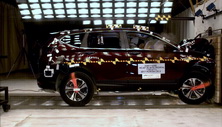
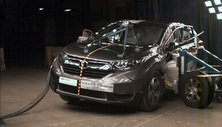
En las pruebas de choque de la NHTSA obtuvo la máxima calificación general de 5 estrellas.
Tiene 7 campañas de retiro registradas y los propietarios han presentado 1,777 quejas ante la NHTSA desde 2015, sobre todo por problemas de motor.
Novedades del 2017
- Nuevas dimensiones: 1.2 in más largo, distancia entre ejes +1.6 in — probablemente un rediseño o nueva generación
- Motor nuevo: 1.5L 4 cil. turbo
- Ya probado por la NHTSA: 5 estrellas en general
Comparado con 2016; no incluye cambios de versiones, equipamiento ni precio. Ver el CR-V 2016 →
Versiones, desempeño y equipamiento
Versiones
Seguridad y asistencias al conductor
Fabricado en: Alliston, Ontario · East Liberty, Ohio · Greensburg, Indiana
NHTSA vPIC, según el fabricante, para 5 configuraciones del CR-V 2017; puede no incluir todas las versiones. Cómo lo calculamos →
Dimensiones y peso
| Carrocería | Largo | Ancho | Alto | Distancia entre ejes | Vía del. / tras. | Peso en vacío | Peso del./tras. |
|---|---|---|---|---|---|---|---|
| 4dr SUV AWD | 180.7 in | 72.8 in | 66.1 in | 104.7 in | 63 / 63.8 in | 3,483 lb | 58/42 |
| 4dr SUV FWD | 180.7 in | 72.8 in | 66.1 in | 104.7 in | 63 / 63.8 in | 3,311 lb | 58/42 |
Transport Canada CVS (Open Government Licence – Canada), medidas del mercado canadiense.
¿Cabe en tu garaje? Compruébalo con tus medidas →Motores, consumo y costo de uso
| Versión | Motor | Transmisión | Tracción | Ciudad / Carr. / Comb. | vs. su clase | Combustible / año | CO₂ g/mi |
|---|---|---|---|---|---|---|---|
| CR-V FWD | 1.5L 4 cil. turbo | Automática (relación variable) | Tracción delantera | 28 / 34 / 30 | +23% | $2,250 | 292 |
| CR-V AWD | 1.5L 4 cil. turbo | Automática (relación variable) | Tracción total (AWD) | 27 / 33 / 29 | +27% | $2,300 | 303 |
| CR-V FWD | 2.4L 4 cil. | Automática (relación variable) | Tracción delantera | 26 / 32 / 28 | +15% | $2,400 | 312 |
| CR-V AWD | 2.4L 4 cil. | Automática (relación variable) | Tracción total (AWD) | 25 / 31 / 27 | +18% | $2,500 | 328 |
Estimaciones de la EPA; "vs. su clase" compara las MPG combinadas con el promedio 2017 de su clase EPA. Cómo lo calculamos →
Calificaciones de seguridad y tecnología
| Versión | General | Frontal | Conductor / pasajero | Lateral | Poste lateral | Volcadura | Riesgo de volcadura |
|---|---|---|---|---|---|---|---|
| 2017 Honda CR-V SUV AWD | ★★★★★ | ★★★★★ | 5★ / 5★ | ★★★★★ | ★★★★★ | ★★★★★ | 16.2% |
| 2017 Honda CR-V SUV FWD | ★★★★★ | ★★★★★ | 5★ / 5★ | ★★★★★ | ★★★★★ | ★★★★★ | 16.3% |
SUV pequeño similares 2017
| Modelo | Mejor MPG / autonomía | General NHTSA | Retiros |
|---|---|---|---|
| Honda CR-V 2017 (este auto) | 30 MPG | ★★★★★ | 7 |
| Toyota RAV4 2017 | 32 MPG | Sin calificar | 3 |
| Toyota 4Runner 2017 | 18 MPG | Sin calificar | 5 |
| Hyundai Tucson 2017 | 28 MPG | ★★★★★ | 3 |
| Subaru Forester 2017 | 28 MPG | Sin calificar | 1 |
| Mazda CX-5 2017 | 27 MPG | Sin calificar | 1 |
| Volkswagen Tiguan 2017 | 22 MPG | Sin calificar | 4 |
Retiros (7)
Texto oficial de la NHTSA (en inglés).
Bolsas de aire › Sensor › Occupant Classification › Front Passenger · 21 may 2026
Campaña NHTSA 26V332000 · 98,892 vehículos
- Problema
- Honda (American Honda Motor Co.) is recalling certain 2018-2021, 2023 Acura TLX, 2019-2024 RDX, 2017-2020, 2022-2026 MDX, 2017-2021, 2023, 2025 Honda Ridgeline, 2017-2022 Pilot, 2019-2021 Passport, 2018-2026 Odyssey, 2019-2022 Insight, 2019-2021 HR-V, 2018-2020 Fit, 2020-2022 CR-V Hybrid, 2017-2022 CR-V, 2017-2018, 2021 Civic Type R, 2017-2021 Civic hatchback, 2016-2020 Civic coupe, 2016-2022 Civic, 2017-2022 Accord Hybrid, and 2016-2022 Accord vehicles. The front passenger seat weight sensor may crack and short circuit, which can cause the air bags to deploy unintentionally during a crash.
- Riesgo
- Air bags that deploy unintentionally during a crash increase the risk of injury.
- Solución
- Dealers will replace the seat weight sensors, free of charge. Owner notification letters were mailed July 7, 2026. Owners may contact Honda's customer service at 1-888-234-2138. Honda's numbers for this recall are BOL, WO9, OOA, WOM, XOH, NOC, POD, BOE, UOF, POB, EOG, AOI, QO8, TOJ, DO7, and SOK. This recall expands previous NHTSA recall number 24V064. Vehicle Identification Numbers (VINs) involved in this recall will be searchable on NHTSA.gov beginning May 29, 2026.
Combustible (gasolina) › Delivery › Fuel Pump · 18 dic 2023
Campaña NHTSA 23V858000 · 2,490,460 vehículos
- Problema
- Honda (American Honda Motor Co.) is recalling certain 2013-2023 Honda Accord, Civic Coupe, Civic Sedan, Civic Hatchback, Civic Type R, CR-V, HR-V, Ridgeline, Odyssey, Acura ILX, MDX, MDX Hybrid, RDX, RLX, TLX, 2019-2022 Honda Insight, Passport, 2020 Honda CR-V Hybrid, 2018-2019 Honda Clarity PHEV, Fit, and 2015-2020 Honda Accord Hybrid, Pilot, Acura NSX vehicles. The fuel pump inside the fuel tank may fail.
- Riesgo
- Fuel pump failure can cause an engine stall while driving, increasing the risk of a crash.
- Solución
- Dealers will replace the fuel pump module, free of charge. Owner letters were mailed September 6, 2024. Owners may contact Honda customer service at 1-888-234-2138. Honda's numbers for this recall are KGC and KGD. This recall is an expansion of NHTSA recall numbers 21V-215 and 20V-314.
Equipamiento › Other › Labels · 27 jul 2023
Campaña NHTSA 23V524000 · 5 vehículos
- Problema
- Honda (American Honda Motor Co.) is recalling certain 2017, 2020, and 2022 CR-V vehicles. The certification label on the driver's side door states incorrect Gross Vehicle Weight Rating (GVWR), Gross Axle Weight Rating (GAWR), and tire size information. As such, these vehicles fail to comply with the requirements of Federal Motor Vehicle Safety Standard number 110, "Tire Selection and Rims."
- Riesgo
- An incorrectly sized tire may cause premature tread wear, or a tire blow out, increasing the risk of a crash.
- Solución
- Dealers will install a new corrected label, free of charge. Owner notification letters were mailed September 18, 2023. Owners may contact Honda customer service at 1-888-234-2138. Honda's number for this recall is CF7.
Cinturones de seguridad › Front › Buckle Assembly · 9 mar 2023
Campaña NHTSA 23V158000 · 448,613 vehículos
- Problema
- Honda (American Honda Motor Co.) is recalling certain 2017-2020 CR-V, 2018-2019 Accord and Accord Hybrid, 2018-2020 Odyssey, 2019 Insight, and 2019-2020 Acura RDX vehicles. A manufacturing issue with the front seat belts may cause the seat belt buckle channel to interfere with the release button, preventing the seat belt buckle from latching.
- Riesgo
- An unlatched seat belt cannot properly restrain the seat occupant during a crash, increasing their risk of injury.
- Solución
- Dealers will replace the driver and front passenger seat belt buckle release buttons or the buckle assemblies as necessary, free of charge. Owner notification letters were mailed April 18, 2023. Owners may contact Honda customer service at 1-888-234-2138. Honda's numbers for this recall are NDA, QDB, BDC, MDD, LD9. TDF, FDG, ODH, YDI, ZDE.
Dirección › Electric Power Assist System · 27 sept 2018
Campaña NHTSA 18V663000 · 54 vehículos
- Problema
- Honda (American Honda Motor Co.) is recalling certain 2017-2018 Honda Civic and CR-V vehicles. The magnet that controls the torque sensor output signal for the electronic power steering system may not be properly secured, allowing the magnet to become dislodged. During a full lock turn, the dislodged magnet may cause steering assist to be applied in the opposite direction.
- Riesgo
- The unintended steering input reduces vehicle maneuverability and increases the risk of a crash.
- Solución
- Honda will notify owners, and dealers will replace the steering gearbox assembly, free of charge. The recall began November 9, 2018. Owners may contact Honda customer service at 1-888-234-2138. Honda's numbers for this recall are C2N, P2O.
Combustible (gasolina) › Delivery › Hoses, Lines/Piping, And Fittings · 13 jul 2017
Campaña NHTSA 17V442000 · 32,233 vehículos
- Problema
- Honda (American Honda Motor Co.) is recalling certain 2017 Honda CR-V 2WD and AWD vehicles. The affected vehicles have a fuel supply pipe that may have been improperly manufactured, possibly resulting in the pipe disconnecting and leaking while driving.
- Riesgo
- If the pipe disconnects, the engine will stall, increasing the risk of a crash. Additionally, the disconnected pipe may leak fuel, which, in the presence of an ignition source, can increase the risk of a fire.
- Solución
- Honda will notify owners, and dealers will replace the fuel supply pipe, free of charge. The recall began August 31, 2017. Owners may contact Honda customer service at 1-888-234-2138. Honda's number for this recall is KH1.
Equipamiento › Other › Labels · 18 abr 2017
Campaña NHTSA 17V256000 · 1,425 vehículos
- Problema
- Honda (American Honda Motor Co.) is recalling certain 2017 CR-V and Acura RDX vehicles. The Certification Labels on the affected vehicles were printed with ink that may be inadvertently wiped away with an alcohol solvent. As such, these vehicles fail to comply with the requirements of 49 CFR Part 567, "Certification."
- Riesgo
- If the label information can be wiped away, the operator may not be able to refer to the information, possibly resulting in the vehicle being overloaded, which can increase the risk of a crash.
- Solución
- Honda and Acura will notify owners, and dealers will replace the Certification Label, free of charge. The recall began June 2017. Owners may contact Honda customer service at 1-888-234-2138. Honda's numbers for this recall are KF3 (CR-V)and KF4 (RDX).
No todos los CR-V 2017 están afectados: solo el VIN lo confirma.
Problemas reportados por propietarios
Reportes sin verificar; los más vendidos acumulan más.
Lista para comprar un Honda CR-V 2017 usado
- Consulta el VIN en nhtsa.gov/recalls. 7 retiros en este año: pide comprobantes de reparación.
- Motor — 531 reportes de propietarios. Arranca el motor en frío, escucha si golpetea y fíjate en luces de advertencia o titubeos al acelerar.
- Sistema eléctrico — 394 reportes de propietarios. Prueba todas las ventanas, seguros, luces, pantallas y puertos USB; revisa la antigüedad de la batería.
- Combustible / propulsión — 348 reportes de propietarios. Busca olor a combustible alrededor del auto y en la cabina, comprueba que arranque bien en caliente y revisa la varilla del aceite por olor a gasolina o nivel en aumento.
- Millaje a vigilar. Los propietarios suelen reportar problemas alrededor de las 8,850 millas; pregunta qué se reparó cerca de ese punto.
- Antes de pagar: historial de servicio, reporte de antecedentes e inspección de un mecánico independiente.
Generado por DecodedCars a partir de retiros y quejas de propietarios ante la NHTSA para el Honda CR-V 2017. No sustituye una inspección profesional.
Otros años del CR-V
Comparar todos los años →| Año | MPG (mejor) | Largo | General | Retiros | Quejas |
|---|---|---|---|---|---|
| CR-V 2027 | 40 | – | Sin calificar | 0 | 0 |
| CR-V 2026 | 40 | 184.6 in | Sin calificar | 2 | 177 |
| CR-V 2025 | 40 | 184.6 in | ★★★★★ | 6 | 290 |
| CR-V 2024 | 40 | 184.6 in | ★★★★★ | 5 | 481 |
| CR-V 2023 | 40 | 184.6 in | ★★★★★ | 8 | 633 |
| CR-V 2022 | 38 | 180.7 in | ★★★★★ | 6 | 348 |
| CR-V 2021 | 38 | 180.7 in | ★★★★★ | 5 | 444 |
| CR-V 2020 | 38 | 180.7 in | ★★★★★ | 9 | 444 |
| CR-V 2019 | 30 | 180.7 in | ★★★★★ | 8 | 1,107 |
| CR-V 2018 | 30 | 180.7 in | ★★★★★ | 5 | 2,161 |
| CR-V 2016 | 29 | 179.5 in | Sin calificar | 3 | 394 |
| CR-V 2015 | 29 | 179.5 in | Sin calificar | 3 | 670 |
Fuentes: EPA, NHTSA, Transport Canada, Wikimedia Commons. Sin afiliación con la NHTSA, la EPA ni Honda. Cómo lo calculamos →