 DecodedCars
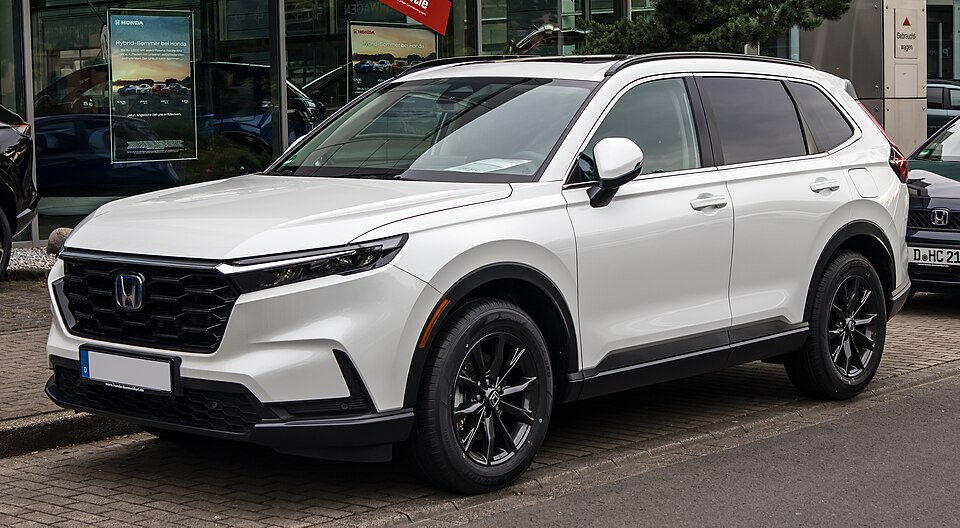
2017 Honda CR-V
Trims, performance, features, fuel economy, safety and known problems — with the pros and cons against similar 2017 models.
- Class
- Small Sport Utility Vehicle 2WD
- Body styles
- 4dr SUV AWD, 4dr SUV FWD
- Engines
- 1.5L 4-cyl turbo, 2.4L 4-cyl
- Horsepower
- 190 hp
- Transmission
- CVT
- Drivetrain
- Front-Wheel Drive, All-Wheel Drive
- Seats
- 5
- Fuel
- Regular Gasoline
- MPG (best)
- 30 combined · 28 city / 34 hwy
- Length
- 180.7 in
- Curb weight
- 3,311–3,483 lb
- NHTSA rating
- ★★★★★
- Recalls
- 7 campaigns
Pros & cons
What's good
- Excellent fuel economyUp to 30 MPG combined — 23% better than the average 2017 small SUV (24.3 MPG).
- AWD / 4WD available
- 5-star NHTSA safety ratingTop overall score in federal crash tests.
Watch out for
- Modest powerUp to 190 hp, versus about 240 hp for similar 2017 models.
- Many owner complaints1,777 complaints filed with NHTSA versus about 276 for similar models — most often about the engine.
Calculated from EPA, NHTSA and vPIC data against 22 similar 2017 models — not a review. How we calculate this →
Overview
The 2017 Honda CR-V is a small SUV offered with 2 engines (1.5L 4-cyl turbo and 2.4L 4-cyl) and front-wheel drive and all-wheel drive.
It measures about 181 inches long and 73 inches wide on a 105-inch wheelbase, with a curb weight of roughly 3,483 lb (4dr SUV AWD).
EPA rates its most efficient version at 30 MPG combined (28 city / 34 highway), 23% better than the 2017 small SUV average of 24.3 MPG, for an estimated $2,250 a year in fuel.
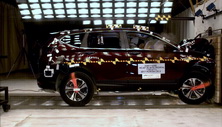
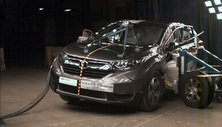
In NHTSA crash testing it earned the top 5-star overall rating.
It has 7 recall campaigns on file and owners have filed 1777 complaints with NHTSA since 2015, most often about the engine.
What changed for 2017
- New body dimensions: 1.2 in longer, wheelbase +1.6 in — most likely a redesign or new generation
- Engine added: 1.5L 4-cyl turbo
- Now crash-tested by NHTSA: 5 stars overall
Compared with 2016; trim, feature and price changes aren't covered. See the 2016 CR-V →
Trims, performance & features
Trims
Safety & driver-assist features
Built in: Alliston, Ontario · East Liberty, Ohio · Greensburg, Indiana
NHTSA vPIC, as reported by the manufacturer for 5 2017 CR-V configurations; may not list every trim. How we calculate this →
Dimensions & weight
| Body | Length | Width | Height | Wheelbase | Track F / R | Curb weight | Weight F/R |
|---|---|---|---|---|---|---|---|
| 4dr SUV AWD | 180.7 in | 72.8 in | 66.1 in | 104.7 in | 63 / 63.8 in | 3,483 lb | 58/42 |
| 4dr SUV FWD | 180.7 in | 72.8 in | 66.1 in | 104.7 in | 63 / 63.8 in | 3,311 lb | 58/42 |
Transport Canada CVS (Open Government Licence – Canada), Canadian-market figures.
Will it fit your garage? Check with your measurements →Engines, MPG & running costs
| Version | Engine | Transmission | Drive | City / Hwy / Comb | vs. class | Fuel / yr | CO₂ g/mi |
|---|---|---|---|---|---|---|---|
| CR-V FWD | 1.5L 4-cyl turbo | Automatic (variable gear ratios) | Front-Wheel Drive | 28 / 34 / 30 | +23% | $2,250 | 292 |
| CR-V AWD | 1.5L 4-cyl turbo | Automatic (variable gear ratios) | All-Wheel Drive | 27 / 33 / 29 | +27% | $2,300 | 303 |
| CR-V FWD | 2.4L 4-cyl | Automatic (variable gear ratios) | Front-Wheel Drive | 26 / 32 / 28 | +15% | $2,400 | 312 |
| CR-V AWD | 2.4L 4-cyl | Automatic (variable gear ratios) | All-Wheel Drive | 25 / 31 / 27 | +18% | $2,500 | 328 |
EPA estimates; "vs. class" is combined MPG against the 2017 EPA class average. How we calculate this →
Safety ratings & technology
| Version | Overall | Frontal | Driver / passenger | Side | Side pole | Rollover | Rollover risk |
|---|---|---|---|---|---|---|---|
| 2017 Honda CR-V SUV AWD | ★★★★★ | ★★★★★ | 5★ / 5★ | ★★★★★ | ★★★★★ | ★★★★★ | 16.2% |
| 2017 Honda CR-V SUV FWD | ★★★★★ | ★★★★★ | 5★ / 5★ | ★★★★★ | ★★★★★ | ★★★★★ | 16.3% |
Similar 2017 small SUVs
| Model | Best MPG / range | NHTSA overall | Recalls |
|---|---|---|---|
| 2017 Honda CR-V (this car) | 30 MPG | ★★★★★ | 7 |
| 2017 Toyota RAV4 | 32 MPG | Not rated | 3 |
| 2017 Toyota 4Runner | 18 MPG | Not rated | 5 |
| 2017 Hyundai Tucson | 28 MPG | ★★★★★ | 3 |
| 2017 Subaru Forester | 28 MPG | Not rated | 1 |
| 2017 Mazda CX-5 | 27 MPG | Not rated | 1 |
| 2017 Volkswagen Tiguan | 22 MPG | Not rated | 4 |
Recalls (7)
Air Bags › Sensor › Occupant Classification › Front Passenger · May 21, 2026
NHTSA campaign 26V332000 · 98,892 vehicles
- Problem
- Honda (American Honda Motor Co.) is recalling certain 2018-2021, 2023 Acura TLX, 2019-2024 RDX, 2017-2020, 2022-2026 MDX, 2017-2021, 2023, 2025 Honda Ridgeline, 2017-2022 Pilot, 2019-2021 Passport, 2018-2026 Odyssey, 2019-2022 Insight, 2019-2021 HR-V, 2018-2020 Fit, 2020-2022 CR-V Hybrid, 2017-2022 CR-V, 2017-2018, 2021 Civic Type R, 2017-2021 Civic hatchback, 2016-2020 Civic coupe, 2016-2022 Civic, 2017-2022 Accord Hybrid, and 2016-2022 Accord vehicles. The front passenger seat weight sensor may crack and short circuit, which can cause the air bags to deploy unintentionally during a crash.
- Risk
- Air bags that deploy unintentionally during a crash increase the risk of injury.
- Fix
- Dealers will replace the seat weight sensors, free of charge. Owner notification letters were mailed July 7, 2026. Owners may contact Honda's customer service at 1-888-234-2138. Honda's numbers for this recall are BOL, WO9, OOA, WOM, XOH, NOC, POD, BOE, UOF, POB, EOG, AOI, QO8, TOJ, DO7, and SOK. This recall expands previous NHTSA recall number 24V064. Vehicle Identification Numbers (VINs) involved in this recall will be searchable on NHTSA.gov beginning May 29, 2026.
Fuel System, Gasoline › Delivery › Fuel Pump · Dec 18, 2023
NHTSA campaign 23V858000 · 2,490,460 vehicles
- Problem
- Honda (American Honda Motor Co.) is recalling certain 2013-2023 Honda Accord, Civic Coupe, Civic Sedan, Civic Hatchback, Civic Type R, CR-V, HR-V, Ridgeline, Odyssey, Acura ILX, MDX, MDX Hybrid, RDX, RLX, TLX, 2019-2022 Honda Insight, Passport, 2020 Honda CR-V Hybrid, 2018-2019 Honda Clarity PHEV, Fit, and 2015-2020 Honda Accord Hybrid, Pilot, Acura NSX vehicles. The fuel pump inside the fuel tank may fail.
- Risk
- Fuel pump failure can cause an engine stall while driving, increasing the risk of a crash.
- Fix
- Dealers will replace the fuel pump module, free of charge. Owner letters were mailed September 6, 2024. Owners may contact Honda customer service at 1-888-234-2138. Honda's numbers for this recall are KGC and KGD. This recall is an expansion of NHTSA recall numbers 21V-215 and 20V-314.
Equipment › Other › Labels · Jul 27, 2023
NHTSA campaign 23V524000 · 5 vehicles
- Problem
- Honda (American Honda Motor Co.) is recalling certain 2017, 2020, and 2022 CR-V vehicles. The certification label on the driver's side door states incorrect Gross Vehicle Weight Rating (GVWR), Gross Axle Weight Rating (GAWR), and tire size information. As such, these vehicles fail to comply with the requirements of Federal Motor Vehicle Safety Standard number 110, "Tire Selection and Rims."
- Risk
- An incorrectly sized tire may cause premature tread wear, or a tire blow out, increasing the risk of a crash.
- Fix
- Dealers will install a new corrected label, free of charge. Owner notification letters were mailed September 18, 2023. Owners may contact Honda customer service at 1-888-234-2138. Honda's number for this recall is CF7.
Seat Belts › Front › Buckle Assembly · Mar 9, 2023
NHTSA campaign 23V158000 · 448,613 vehicles
- Problem
- Honda (American Honda Motor Co.) is recalling certain 2017-2020 CR-V, 2018-2019 Accord and Accord Hybrid, 2018-2020 Odyssey, 2019 Insight, and 2019-2020 Acura RDX vehicles. A manufacturing issue with the front seat belts may cause the seat belt buckle channel to interfere with the release button, preventing the seat belt buckle from latching.
- Risk
- An unlatched seat belt cannot properly restrain the seat occupant during a crash, increasing their risk of injury.
- Fix
- Dealers will replace the driver and front passenger seat belt buckle release buttons or the buckle assemblies as necessary, free of charge. Owner notification letters were mailed April 18, 2023. Owners may contact Honda customer service at 1-888-234-2138. Honda's numbers for this recall are NDA, QDB, BDC, MDD, LD9. TDF, FDG, ODH, YDI, ZDE.
Steering › Electric Power Assist System · Sep 27, 2018
NHTSA campaign 18V663000 · 54 vehicles
- Problem
- Honda (American Honda Motor Co.) is recalling certain 2017-2018 Honda Civic and CR-V vehicles. The magnet that controls the torque sensor output signal for the electronic power steering system may not be properly secured, allowing the magnet to become dislodged. During a full lock turn, the dislodged magnet may cause steering assist to be applied in the opposite direction.
- Risk
- The unintended steering input reduces vehicle maneuverability and increases the risk of a crash.
- Fix
- Honda will notify owners, and dealers will replace the steering gearbox assembly, free of charge. The recall began November 9, 2018. Owners may contact Honda customer service at 1-888-234-2138. Honda's numbers for this recall are C2N, P2O.
Fuel System, Gasoline › Delivery › Hoses, Lines/Piping, And Fittings · Jul 13, 2017
NHTSA campaign 17V442000 · 32,233 vehicles
- Problem
- Honda (American Honda Motor Co.) is recalling certain 2017 Honda CR-V 2WD and AWD vehicles. The affected vehicles have a fuel supply pipe that may have been improperly manufactured, possibly resulting in the pipe disconnecting and leaking while driving.
- Risk
- If the pipe disconnects, the engine will stall, increasing the risk of a crash. Additionally, the disconnected pipe may leak fuel, which, in the presence of an ignition source, can increase the risk of a fire.
- Fix
- Honda will notify owners, and dealers will replace the fuel supply pipe, free of charge. The recall began August 31, 2017. Owners may contact Honda customer service at 1-888-234-2138. Honda's number for this recall is KH1.
Equipment › Other › Labels · Apr 18, 2017
NHTSA campaign 17V256000 · 1,425 vehicles
- Problem
- Honda (American Honda Motor Co.) is recalling certain 2017 CR-V and Acura RDX vehicles. The Certification Labels on the affected vehicles were printed with ink that may be inadvertently wiped away with an alcohol solvent. As such, these vehicles fail to comply with the requirements of 49 CFR Part 567, "Certification."
- Risk
- If the label information can be wiped away, the operator may not be able to refer to the information, possibly resulting in the vehicle being overloaded, which can increase the risk of a crash.
- Fix
- Honda and Acura will notify owners, and dealers will replace the Certification Label, free of charge. The recall began June 2017. Owners may contact Honda customer service at 1-888-234-2138. Honda's numbers for this recall are KF3 (CR-V)and KF4 (RDX).
Not every 2017 Honda CR-V is affected — only a VIN check confirms your car.
Owner-reported problems
Unverified owner reports; best-sellers collect more.
Used 2017 Honda CR-V buyer's checklist
- Run the VIN at nhtsa.gov/recalls. 7 recalls this year — ask for proof of repairs.
- Engine — 531 owner reports. Cold-start the engine, listen for knocking, and watch for warning lights or hesitation on acceleration.
- Electrical System — 394 owner reports. Test every window, lock, light, screen and USB port; check the battery age.
- Fuel/Propulsion System — 348 owner reports. Smell for fuel around the car and in the cabin, check that it starts easily when warm, and look at the oil dipstick for a fuel smell or rising level.
- Mileage to watch. Owners typically reported problems around 8,850 miles; ask what was repaired near that point.
- Before you pay: service records, a history report and an independent inspection.
Generated by DecodedCars from NHTSA recalls and owner complaints for the 2017 Honda CR-V. Not a substitute for a professional inspection.
Other CR-V years
Compare all years →| Year | MPG (best) | Length | Overall | Recalls | Complaints |
|---|---|---|---|---|---|
| 2027 CR-V | 40 | – | Not rated | 0 | 0 |
| 2026 CR-V | 40 | 184.6 in | Not rated | 2 | 177 |
| 2025 CR-V | 40 | 184.6 in | ★★★★★ | 6 | 290 |
| 2024 CR-V | 40 | 184.6 in | ★★★★★ | 5 | 481 |
| 2023 CR-V | 40 | 184.6 in | ★★★★★ | 8 | 633 |
| 2022 CR-V | 38 | 180.7 in | ★★★★★ | 6 | 348 |
| 2021 CR-V | 38 | 180.7 in | ★★★★★ | 5 | 444 |
| 2020 CR-V | 38 | 180.7 in | ★★★★★ | 9 | 444 |
| 2019 CR-V | 30 | 180.7 in | ★★★★★ | 8 | 1,107 |
| 2018 CR-V | 30 | 180.7 in | ★★★★★ | 5 | 2,161 |
| 2016 CR-V | 29 | 179.5 in | Not rated | 3 | 394 |
| 2015 CR-V | 29 | 179.5 in | Not rated | 3 | 670 |
Sources: EPA, NHTSA, Transport Canada, Wikimedia Commons. Not affiliated with NHTSA, the EPA or Honda. How we calculate this →