 DecodedCars
Hyundai Genesis 2011
Versiones, desempeño, equipamiento, consumo, seguridad y problemas conocidos, con sus ventajas y desventajas frente a modelos similares 2011.
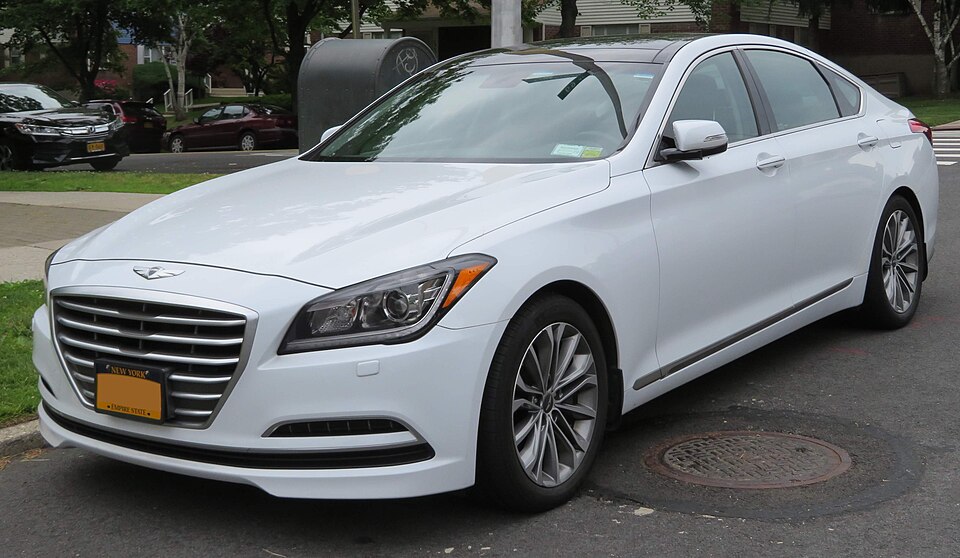
- Clase
- Auto subcompacto
- Carrocerías
- 2dr Coupe RWD 2.0t/2.0t Premium/2.0t, 2dr Coupe RWD 3.8/3.8 GT, 4dr Sedan RWD 3.8/3.8 Premium/3.8 Tec, 4dr Sedan RWD 4.6
- Motores
- 2.0L 4 cil. turbo, 3.8L 6 cil., 4.6L 8 cil.
- Tracción
- Tracción trasera
- Combustible
- Gasolina premium, Gasolina regular
- MPG (mejor)
- 24 combinadas · 21 ciudad / 30 carretera
- Largo
- 182.3–196.1 in
- Peso en vacío
- 3,303–4,006 lb
- Calificación NHTSA
- Sin calificar
- Retiros
- 6 campañas
Ventajas y desventajas
Lo bueno
Nada destaca frente a modelos similares en los datos.
A tener en cuenta
- Retiro con aviso de "estacionar afuera"Verifica que la reparación del retiro esté hecha antes de comprarlo o manejarlo.
Calculado con datos de la EPA, la NHTSA y vPIC frente a 12 modelos similares 2011; no es una reseña. Cómo lo calculamos →
Resumen
El Hyundai Genesis 2011 es un auto subcompacto disponible con 3 motores (2.0L 4 cil. turbo, 3.8L 6 cil. y 4.6L 8 cil.), con tracción trasera.
Mide unas 182 pulgadas de largo y 73 de ancho, con una distancia entre ejes de 111 pulgadas, y pesa alrededor de 3,303 lb (2dr Coupe RWD 2.0t/2.0t Premium/2.0t).
La EPA califica su versión más eficiente con 24 MPG combinadas (21 en ciudad / 30 en carretera), un 8 % mejor que el promedio de su clase (auto subcompacto, 2011: 22.2 MPG), con un gasto estimado de $3,200 al año en combustible.
La NHTSA no ha publicado una calificación general de 5 estrellas para este año modelo.
Tiene 6 campañas de retiro registradas y los propietarios han presentado 116 quejas ante la NHTSA desde 2015, sobre todo por problemas de otro o desconocido.
Novedades del 2011
Sin cambios en motores, versiones, tracción, tamaño, consumo EPA ni calificación NHTSA respecto al Genesis 2010: un año sin cambios según los datos.
Comparado con 2010; no incluye cambios de versiones, equipamiento ni precio. Ver el Genesis 2010 →
Dimensiones y peso
| Carrocería | Largo | Ancho | Alto | Distancia entre ejes | Vía del. / tras. | Peso en vacío | Peso del./tras. |
|---|---|---|---|---|---|---|---|
| 2dr Coupe RWD 2.0t/2.0t Premium/2.0t | 182.3 in | 73.2 in | 54.3 in | 111 in | 64.2 / 63.8 in | 3,303 lb | 55/45 |
| 2dr Coupe RWD 3.8/3.8 GT | 182.3 in | 73.2 in | 54.3 in | 111 in | 64.2 / 63.8 in | 3,411 lb | 55/45 |
| 4dr Sedan RWD 3.8/3.8 Premium/3.8 Tec | 196.1 in | 74.4 in | 58.3 in | 115.7 in | 63.4 / 63.8 in | 3,834 lb | 52/48 |
| 4dr Sedan RWD 4.6 | 196.1 in | 74.4 in | 58.3 in | 115.7 in | 63.4 / 63.8 in | 4,006 lb | 52/48 |
Transport Canada CVS (Open Government Licence – Canada), medidas del mercado canadiense.
¿Cabe en tu garaje? Compruébalo con tus medidas →Motores, consumo y costo de uso
| Versión | Motor | Transmisión | Tracción | Ciudad / Carr. / Comb. | vs. su clase | Combustible / año | CO₂ g/mi |
|---|---|---|---|---|---|---|---|
| Genesis Coupe | 2.0L 4 cil. turbo | Manual 6-spd | Tracción trasera | 21 / 30 / 24 | +8% | $3,400 | 370 |
| Genesis Coupe | 2.0L 4 cil. turbo | Automática 5-spd | Tracción trasera | 20 / 29 / 23 | +4% | $3,550 | 386 |
| Genesis | 3.8L 6 cil. | Automática 6-spd | Tracción trasera | 18 / 27 / 21 | +12% | $3,200 | 423 |
| Genesis Coupe | 3.8L 6 cil. | Automática 6-spd | Tracción trasera | 17 / 27 / 20 | -10% | $3,350 | 444 |
| Genesis Coupe | 3.8L 6 cil. | Manual 6-spd | Tracción trasera | 17 / 26 / 20 | -10% | $3,350 | 444 |
| Genesis | 4.6L 8 cil. | Automática 6-spd | Tracción trasera | 17 / 24 / 20 | +6% | $4,100 | 444 |
Estimaciones de la EPA; "vs. su clase" compara las MPG combinadas con el promedio 2011 de su clase EPA. Cómo lo calculamos →
Calificaciones de seguridad y tecnología
La NHTSA no ha publicado calificaciones de 5 estrellas para el Hyundai Genesis 2011.
Auto subcompacto similares 2011
| Modelo | Mejor MPG / autonomía | General NHTSA | Retiros |
|---|---|---|---|
| Hyundai Genesis 2011 (este auto) | 24 MPG | Sin calificar | 6 |
| Ford Mustang 2011 | 23 MPG | Sin calificar | 4 |
| Honda Accord 2011 | 26 MPG | Sin calificar | 9 |
| Toyota Camry 2011 | 33 MPG | Sin calificar | 5 |
| Chevrolet Camaro 2011 | 22 MPG | Sin calificar | 2 |
| Nissan GT-R 2011 | 17 MPG | Sin calificar | 0 |
| Chevrolet Malibu 2011 | 26 MPG | Sin calificar | 3 |
Retiros (6)
Texto oficial de la NHTSA (en inglés).
Sistema eléctrico › Ignition › Interlock/Lockout · 25 jul 2024
Campaña NHTSA 24V562000 · 12,612 vehículos
- Problema
- Hyundai Motor America (Hyundai) is recalling certain 2010-2013 Genesis Coupe vehicles. A return spring in the ignition lock switch may fracture, which can result in unintended vehicle movement when the vehicle is started in gear, without the parking brake applied.
- Riesgo
- Unintended vehicle movement can increase the risk of a crash.
- Solución
- Dealers will replace the ignition lock switch, free of charge. Owner notification letters were mailed September 4, 2024. Owners may contact Hyundai customer service at 1-855-371-9460. Hyundai's number for this recall is 266.
Frenos hidráulicos › Antilock/Traction Control/Electronic Limited Slip › Control Unit/Module · 22 sept 2023 Estacionar afuera
Campaña NHTSA 23V651000 · 1,649,478 vehículos
- Problema
- Hyundai Motor America (Hyundai) is recalling certain 2011-2015 Elantra, Genesis Coupe, Sonata Hybrid, 2012-2015 Accent, Azera, Veloster, 2013-2015 Elantra Coupe, Santa Fe, 2014-2015 Equus, 2010-2012 Veracruz, 2010-2013 Tucson, 2015 Tucson Fuel Cell, and 2013 Santa Fe Sport vehicles. The Anti-Lock Brake System (ABS) module may leak brake fluid internally and cause an electrical short, which can result in an engine compartment fire while parked or driving.
- Riesgo
- An engine compartment fire while parked or driving can increase the risk of injury.
- Solución
- Owners are advised to park outside and away from structures until the recall repair is complete. Dealers will replace the ABS fuse, free of charge. Owner notification letters were mailed April 10, 2024 through October 11, 2024. Owners may contact Hyundai customer service at 1-855-371-9460. Hyundai's number for this recall is 251.
Bolsas de aire › Sensor › Occupant Classification · 7 oct 2016
Campaña NHTSA 16V722000 · 84,500 vehículos
- Problema
- Hyundai Motor America (Hyundai) is recalling certain model year 2010-2016 Genesis Coupe vehicles manufactured December 12, 2008, to June 11, 2016. The electrical harness connector for the front passenger seat Occupant Classification System (OCS) may dislodge when the seat is moved.
- Riesgo
- In the event of a crash necessitating deployment of the passenger frontal air bag, the disconnected OCS would, by default, cause the first stage, and only the first stage, of the air bag to deploy, whether there is a child seat in the front seat and the bag should not deploy or if the crash is severe and both stages should deploy. Either scenario increases the risk of injury to the front seat occupant.
- Solución
- Hyundai will notify owners, and dealers will secure the OCS connector to prevent it from disconnecting, free of charge. Parts are not currently available and a second letter will be sent to owners when parts are available. Owners may contact Hyundai customer service at 1-855-371-9460. Hyundai's number for this recall is 151.
Iluminación exterior › Brake Lights › Switch · 7 nov 2014
Campaña NHTSA 14V713000 · 42,925 vehículos
- Problema
- Hyundai Motor America (Hyundai) is recalling certain 2009-2011 Hyundai Genesis vehicles manufactured April 30, 2008, to November 21, 2010, and 2011 Hyundai Equus vehicles manufactured July 31, 2010, to November 21, 2010. Due to a circuit failure, the stop lamps in the affected vehicles may not illuminate.
- Riesgo
- A following vehicle may not recognize that the vehicle is slowing or coming to a stop if the stop lamps on the vehicle do not illuminate as expected. There is an increased risk of a rear-end crash as a result.
- Solución
- Hyundai will notify owners, and dealers will repair the stop lamp switch circuit, free of charge. Hyundai issued an interim notification to owners on January 6, 2015. The recall began on March 23, 2015. Owners may contact Hyundai customer service at 1-855-671-3059. Hyundai's number for this recall is 125.
Frenos hidráulicos › Fluid · 29 oct 2013
Campaña NHTSA 13V489000 · 43,500 vehículos
- Problema
- Hyundai is recalling certain model year 2009-2012 Genesis vehicles manufactured April 30, 2008, through March 28, 2012. The vehicles may contain brake fluid which does not protect against corrosion of the Hydraulic Electronic Control Unit (HECU).
- Riesgo
- If the module corrodes, reduced brake effectiveness may result, increasing the risk of a crash.
- Solución
- Hyundai will notify owners and instruct them to bring their vehicle to a dealer for service. Hyundai will inspect the HECU module for proper operation, and will replace the modules as necessary. Hyundai will replace the factory brake fluid in those vehicles that have not previously had the factory brake fluid replaced. These repairs will be done free of charge. The recall began on December 24, 2013. Owners may contact Hyundai at 1-800-633-5151 or by email at [email protected]. Hyundai's recall number is 114.
Iluminación exterior › Brake Lights › Switch · 1 abr 2013
Campaña NHTSA 13V113000 · 1,712,336 vehículos
- Problema
- Hyundai Motor Company (Hyundai) is recalling certain model year 2006-2009 Accent, model year 2007-2011 Azera, Sonata and Sante Fe,2006-2011 Tucson, 2009-2011 Elantra Touring, 2007-2010 Elantra, 2008-2011 Veracruz, 2009-2011 Genesis, 2010-2011 Genesis Coupe, 2007-2008 Entourage, and 2006-2008 Tiburon vehicles. Originally, in April 2013, Hyundai recalled 1,059,824 model year 2007-2009 Accent and Tucson, model year 2007-2010 Elantra, model year 2007-2011 Santa Fe, model year 2008-2009 Veracruz, model year 2010-2011 Genesis Coupe, and model year 2011 Sonata vehicles. In September 2013, Hyundai informed the agency that it was adding more vehicles to this campaign, representing an additional 652,512 units. The total number of vehicles being recalled is now 1,712,336. In the affected vehicles, the stop lamp switch may malfunction. A malfunctioning stop lamp switch may cause the brake lights to not illuminate when the brake pedal is depressed or may cause an inability to deactivate the cruise control by depressing the brake pedal. Additionally, a malfunctioning stop lamp switch may also result in intermittent operation of the push-button start feature, affect the operation of the brake transmission shift interlock feature, preventing the shifter from being moved out of the PARK position and cause the Electronic Stability Control (ESC) malfunction light to illuminate.
- Riesgo
- Failure to illuminate the stop lamps during braking or inability to disengage the cruise control could increase the risk of a crash. Additionally, when the ignition is in the 'ON' position, the transmission shifter may be able to be moved out of Park without first applying the brake. This may lead to unintentional movement of the car which may increase the risk of a crash.
- Solución
- Hyundai will notify owners, and dealers will replace the stop lamp switch, free of charge. The safety recall began on April 22, 2013. Owners may contact Hyundai at 1-800-633-5151. Hyundai's recall campaign number is 110.
No todos los Genesis 2011 están afectados: solo el VIN lo confirma.
Problemas reportados por propietarios
Reportes sin verificar; los más vendidos acumulan más.
Lista para comprar un Hyundai Genesis 2011 usado
- Consulta el VIN en nhtsa.gov/recalls. 6 retiros en este año: pide comprobantes de reparación.
- Retiro crítico de seguridad. Al menos un retiro tiene aviso de "no conducir" o "estacionar afuera". No lo compres hasta que el VIN muestre que se reparó.
- Sistema eléctrico — 18 reportes de propietarios. Prueba todas las ventanas, seguros, luces, pantallas y puertos USB; revisa la antigüedad de la batería.
- Motor — 16 reportes de propietarios. Arranca el motor en frío, escucha si golpetea y fíjate en luces de advertencia o titubeos al acelerar.
- Frenos — 13 reportes de propietarios. Frena con fuerza a velocidad; revisa si se jala hacia un lado, si el pedal vibra o si se enciende la luz del ABS.
- Millaje a vigilar. Los propietarios suelen reportar problemas alrededor de las 73,888 millas; pregunta qué se reparó cerca de ese punto.
- Antes de pagar: historial de servicio, reporte de antecedentes e inspección de un mecánico independiente.
Generado por DecodedCars a partir de retiros y quejas de propietarios ante la NHTSA para el Hyundai Genesis 2011. No sustituye una inspección profesional.
Otros años del Genesis
Comparar todos los años →| Año | MPG (mejor) | Largo | General | Retiros | Quejas |
|---|---|---|---|---|---|
| Genesis 2016 | 22 | 182.3 in | ★★★★★ | 6 | 104 |
| Genesis 2015 | 22 | 182.3 in | ★★★★★ | 10 | 306 |
| Genesis 2014 | 22 | 182.3 in | Sin calificar | 3 | 44 |
| Genesis 2013 | 24 | 182.3 in | Sin calificar | 4 | 162 |
| Genesis 2012 | 24 | 182.3 in | Sin calificar | 5 | 229 |
| Genesis 2010 | 24 | 182.3 in | Sin calificar | 5 | 85 |
| Genesis 2009 | 21 | 182.3 in | Sin calificar | 3 | 98 |
Fuentes: EPA, NHTSA, Transport Canada, Wikimedia Commons. Sin afiliación con la NHTSA, la EPA ni Hyundai. Cómo lo calculamos →