 DecodedCars
Nissan Leaf 2013
Versiones, desempeño, equipamiento, consumo, seguridad y problemas conocidos, con sus ventajas y desventajas frente a modelos similares 2013.
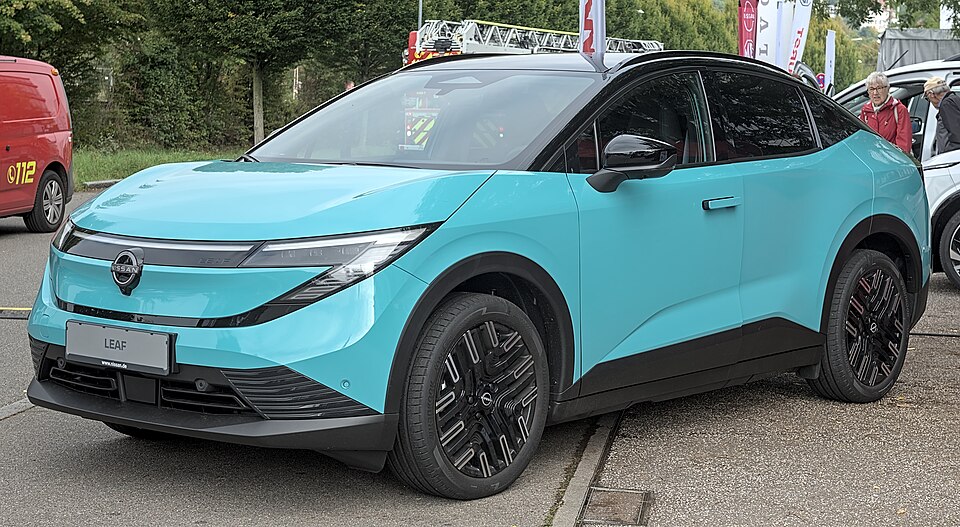
- Clase
- Auto mediano
- Carrocerías
- 4dr Hatchback Sv/Sl
- Motores
- Motor eléctrico
- Tracción
- Tracción delantera
- Combustible
- Eléctrico
- Autonomía eléctrica
- 75 mi · 7 h a 240 V
- Largo
- 175.2 in
- Peso en vacío
- 3,384 lb
- Calificación NHTSA
- Sin calificar
- Retiros
- 5 campañas
Ventajas y desventajas
Lo bueno
- Pocas quejas de propietarios57 quejas ante la NHTSA frente a unas 167 de modelos similares.
A tener en cuenta
- Autonomía eléctrica cortaHasta 75 millas por carga (EPA): habrá que planificar la recarga.
Calculado con datos de la EPA, la NHTSA y vPIC frente a 27 modelos similares 2013; no es una reseña. Cómo lo calculamos →
Resumen
El Nissan Leaf 2013 es un auto mediano 100 % eléctrico, con tracción delantera.
Mide unas 175 pulgadas de largo y 70 de ancho, con una distancia entre ejes de 106 pulgadas, y pesa alrededor de 3,384 lb.
La versión eléctrica tiene una autonomía EPA de hasta 75 millas y tarda unas 7 horas en cargarse con un cargador de nivel 2 (240 V).
La NHTSA no ha publicado una calificación general de 5 estrellas para este año modelo.
Tiene 5 campañas de retiro registradas y los propietarios han presentado 57 quejas ante la NHTSA desde 2015, sobre todo por problemas de frenos.
Novedades del 2013
Sin cambios en motores, versiones, tracción, tamaño, consumo EPA ni calificación NHTSA respecto al Leaf 2012: un año sin cambios según los datos.
Comparado con 2012; no incluye cambios de versiones, equipamiento ni precio. Ver el Leaf 2012 →
Dimensiones y peso
| Carrocería | Largo | Ancho | Alto | Distancia entre ejes | Vía del. / tras. | Peso en vacío | Peso del./tras. |
|---|---|---|---|---|---|---|---|
| 4dr Hatchback Sv/Sl | 175.2 in | 69.7 in | 61 in | 106.3 in | 60.6 / 60.2 in | 3,384 lb | 56/44 |
Transport Canada CVS (Open Government Licence – Canada), medidas del mercado canadiense.
¿Cabe en tu garaje? Compruébalo con tus medidas →Motores, consumo y costo de uso
| Versión | Motor | Transmisión | Tracción | Ciudad / Carr. / Comb. | vs. su clase | Combustible / año | CO₂ g/mi |
|---|---|---|---|---|---|---|---|
| Leaf Eléctrico | 80 kW DCPM | Automática (A1) | Tracción delantera | 75 mi · 29 kWh/100mi | – | $650 | – |
Estimaciones de la EPA; "vs. su clase" compara las MPG combinadas con el promedio 2013 de su clase EPA. Cómo lo calculamos →
Calificaciones de seguridad y tecnología
La NHTSA no ha publicado calificaciones de 5 estrellas para el Nissan Leaf 2013.
Auto mediano similares 2013
| Modelo | Mejor MPG / autonomía | General NHTSA | Retiros |
|---|---|---|---|
| Nissan Leaf 2013 (este auto) | 75 mi | Sin calificar | 5 |
| Toyota Corolla 2013 | 29 MPG | Sin calificar | 5 |
| Honda Civic 2013 | 44 MPG | Sin calificar | 0 |
| Nissan GT-R 2013 | 19 MPG | Sin calificar | 0 |
| Toyota Prius 2013 | 50 MPG | Sin calificar | 4 |
| Hyundai Elantra 2013 | 32 MPG | Sin calificar | 4 |
| Ford Focus 2013 | 32 MPG | Sin calificar | 14 |
Retiros (5)
Texto oficial de la NHTSA (en inglés).
Equipamiento › Other › Owners/Service/Other Manual · 26 abr 2023
Campaña NHTSA 23V296000 · 94,343 vehículos
- Problema
- Nissan North America, Inc. (Nissan) is recalling certain 2013-2017 LEAF vehicles. The Owner's Manual instructions for defroster operation are incorrect and may result in reduced defroster performance under specific conditions. As such, these vehicles fail to comply with the requirements of Federal Motor Vehicle Safety Standard number 103, "Windshield Defrosting and Defogging Systems."
- Riesgo
- Reduced defroster performance can limit visibility out of the windshield, increasing the risk of a crash.
- Solución
- Nissan will mail an addendum with updated instructions on how to operate the defroster, free of charge. Owner notification letters are expected to be mailed May 26, 2023. Owners may contact Nissan's customer service at 1-800-867-7669. Nissan's number for this recall is R23A1.
Bolsas de aire › Sensor › Occupant Classification · 26 abr 2016
Campaña NHTSA 16V244000 · 3,296,947 vehículos
- Problema
- Nissan North America, Inc. (Nissan) is recalling certain model year 2016-2017 Nissan Maxima, 2013-2016 Nissan Altima, NV200, LEAF, Sentra, and Pathfinder, 2014-2016 Nissan NV200 Taxi, Infiniti QX60, QX60 Hybrid, and Q50 Hybrid, 2014-2017 Nissan Rogue and Infiniti Q50, 2015-2016 Nissan Murano, Murano Hybrid, and Chevrolet City Express, 2014-2015 Nissan Pathfinder Hybrid, and 2013 Infiniti JX35 vehicles. In these vehicles, the front seat passenger Occupant Classification System (OCS) may incorrectly classify an adult passenger as a child or classify the seat as empty despite it being occupied. As a result, the passenger frontal air bag may be turned off and not deploy in the event of a crash.
- Riesgo
- If the passenger frontal air bag does not deploy as intended in the event of a crash, the passenger is at an increased risk of injury.
- Solución
- Nissan will notify their owners. Chevrolet City Express owners will be notified by General Motors. Dealers will reprogram the Air Bag Control Unit (ACU) and OCS Electronic Control Unit (ECU) in Altima, Maxima, Murano, Rogue, and Sentra vehicles, and replace the OCS ECU in LEAF, NV200, NV200 Taxi, Pathfinder, Infiniti Q50, JX35, and QX60 and Chevrolet City Express vehicles, free of charge. Interim notices were sent to owners on May 31, 2016. Owners will receive a second notice when remedy parts become available. Owners may contact Nissan customer service at 1-800-867-7669, Infiniti customer service at 1-888-833-3216 or Chevrolet customer service at 1-800-222-1020.
Frenos · 29 feb 2016
Campaña NHTSA 16V119000 · 46,859 vehículos
- Problema
- Nissan North America, Inc. (Nissan) is recalling certain model year 2013-2015 LEAF vehicles manufactured November 19, 2012, to July 31, 2015. During very cold temperatures, the relay inside the electronic brake booster may freeze, requiring the driver to exert more effort to slow the vehicle down.
- Riesgo
- If the brake relay fails, longer distances or additional brake effort would be required to stop the vehicle, increasing the risk of a crash.
- Solución
- Nissan will notify owners, and dealers will reprogram the Intelligent Brake Control Unit software, free of charge. The recall began on March 28, 2016. Owners may contact Nissan customer service at 1-800-647-7261.
Sistema eléctrico › Software · 25 mar 2014
Campaña NHTSA 14V138000 · 989,701 vehículos
- Problema
- Nissan North America, Inc. (Nissan) is recalling certain model year 2013-2014 Altima, LEAF, Pathfinder, and Sentra, model year 2013 NV200 (aka Taxi) and Infiniti JX35 and model year 2014 Infiniti Q50 and QX60 vehicles. In the affected vehicles, the occupant classification system (OCS) software may incorrectly classify the passenger seat as empty, when it is occupied by an adult.
- Riesgo
- If the OCS does not detect an adult occupant in the passenger seat, the passenger airbag would be deactivated. Failure of the passenger airbag to deploy during a crash (where deployment is warranted) could increase the risk of injury to the passenger.
- Solución
- Nissan will notify owners, and dealers will update the OCS software, free of charge. The recall began on April 14, 2014. Owners may contact Nissan at 1-800-647-7261.
Bolsas de aire · 1 mar 2013
Campaña NHTSA 13V069000 · 82,038 vehículos
- Problema
- Nissan is recalling certain model year 2013 Altima, LEAF, Pathfinder, Sentra, and Infiniti JX35 vehicles. Sensors within the passenger Occupant Detection System (ODS) may have been manufactured out of specification. This may cause the system to malfunction and permanently suppress the passenger airbag.
- Riesgo
- If the vehicle is involved in a crash necessitating airbag deployment and the passenger airbag is suppressed, there may be an increased risk of personal injury.
- Solución
- Nissan will notify owners, and dealers will inspect the ODS sensors and replace them as neccessary, free of charge. The recall began on May 6, 2013. Owners may contact Nissan Customer Service at 1-800-647-7261.
No todos los Leaf 2013 están afectados: solo el VIN lo confirma.
Problemas reportados por propietarios
Reportes sin verificar; los más vendidos acumulan más.
Lista para comprar un Nissan Leaf 2013 usado
- Consulta el VIN en nhtsa.gov/recalls. 5 retiros en este año: pide comprobantes de reparación.
- Frenos — 27 reportes de propietarios. Frena con fuerza a velocidad; revisa si se jala hacia un lado, si el pedal vibra o si se enciende la luz del ABS.
- Bolsas de aire — 13 reportes de propietarios. Confirma que la luz de advertencia de las bolsas de aire se apague al arrancar y que cualquier retiro de bolsas de aire esté reparado.
- Sistema eléctrico — 8 reportes de propietarios. Prueba todas las ventanas, seguros, luces, pantallas y puertos USB; revisa la antigüedad de la batería.
- Millaje a vigilar. Los propietarios suelen reportar problemas alrededor de las 37,000 millas; pregunta qué se reparó cerca de ese punto.
- Salud de la batería. Pide un reporte del estado de la batería, revisa la garantía restante y compara la autonomía al 100 % con las 75 millas de la EPA.
- Antes de pagar: historial de servicio, reporte de antecedentes e inspección de un mecánico independiente.
Generado por DecodedCars a partir de retiros y quejas de propietarios ante la NHTSA para el Nissan Leaf 2013. No sustituye una inspección profesional.
Otros años del Leaf
Comparar todos los años →| Año | MPG (mejor) | Largo | General | Retiros | Quejas |
|---|---|---|---|---|---|
| Leaf 2026 | 303 mi | 173.6 in | Sin calificar | 2 | 3 |
| Leaf 2025 | 212 mi | 176.4 in | Sin calificar | 0 | 7 |
| Leaf 2024 | 212 mi | 176.4 in | Sin calificar | 0 | 5 |
| Leaf 2023 | 212 mi | 176.4 in | Sin calificar | 3 | 22 |
| Leaf 2022 | 226 mi | 176.4 in | Sin calificar | 4 | 96 |
| Leaf 2021 | 226 mi | 176.4 in | ★★★★★ | 4 | 57 |
| Leaf 2020 | 226 mi | 176.4 in | ★★★★★ | 6 | 167 |
| Leaf 2019 | 226 mi | 176.4 in | Sin calificar | 5 | 260 |
| Leaf 2018 | 151 mi | 176.4 in | Sin calificar | 4 | 67 |
| Leaf 2017 | 107 mi | 175.2 in | Sin calificar | 2 | 17 |
| Leaf 2016 | 107 mi | 175.2 in | Sin calificar | 4 | 36 |
| Leaf 2015 | 84 mi | 175.2 in | Sin calificar | 4 | 109 |
Fuentes: EPA, NHTSA, Transport Canada, Wikimedia Commons. Sin afiliación con la NHTSA, la EPA ni Nissan. Cómo lo calculamos →