 DecodedCars
Toyota Prius 2013
Versiones, desempeño, equipamiento, consumo, seguridad y problemas conocidos, con sus ventajas y desventajas frente a modelos similares 2013.
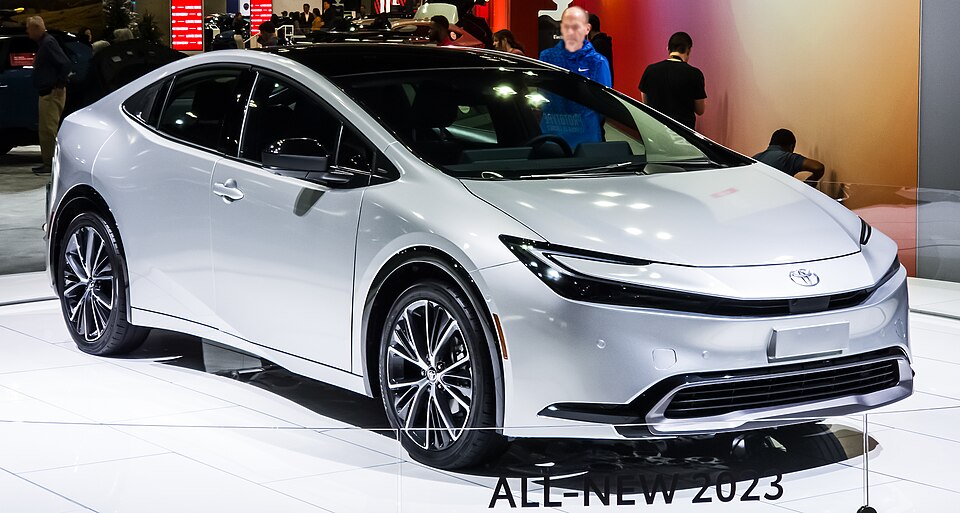
- Clase
- Auto mediano
- Carrocerías
- 4dr Liftback, Plug-In Hybrid 4dr Liftback
- Motores
- 1.8L 4 cil.
- Potencia
- 96 hp
- Tracción
- Tracción delantera
- Combustible
- Híbrido enchufable, Híbrido
- MPG (mejor)
- 50 combinadas · 51 ciudad / 49 carretera
- Largo
- 175.6 in
- Peso en vacío
- 3,042–3,164 lb
- Calificación NHTSA
- Sin calificar
- Retiros
- 4 campañas
Ventajas y desventajas
Lo bueno
- Excelente consumo de combustibleHasta 50 MPG combinadas: un 98 % mejor que el promedio de su clase (auto mediano, 2013: 25.3 MPG).
- Disponible en versión híbridaSe ofrece en versión híbrida y híbrida enchufable además de gasolina.
A tener en cuenta
- Potencia modestaHasta 96 hp, frente a unos 140 hp de modelos similares 2013.
Calculado con datos de la EPA, la NHTSA y vPIC frente a 26 modelos similares 2013; no es una reseña. Cómo lo calculamos →
Resumen
El Toyota Prius 2013 es un auto mediano con motor 1.8L 4 cil., incluida una versión híbrida, con tracción delantera.
Mide unas 176 pulgadas de largo y 69 de ancho, con una distancia entre ejes de 107 pulgadas, y pesa alrededor de 3,042 lb (4dr Liftback).
La EPA califica su versión más eficiente con 50 MPG combinadas (51 en ciudad / 49 en carretera), un 98 % mejor que el promedio de su clase (auto mediano, 2013: 25.3 MPG), con un gasto estimado de $1,350 al año en combustible.
La NHTSA no ha publicado una calificación general de 5 estrellas para este año modelo.
Tiene 4 campañas de retiro registradas y los propietarios han presentado 369 quejas ante la NHTSA desde 2015, sobre todo por problemas de frenos.
Novedades del 2013
Sin cambios en motores, versiones, tracción, tamaño, consumo EPA ni calificación NHTSA respecto al Prius 2012: un año sin cambios según los datos.
Comparado con 2012; no incluye cambios de versiones, equipamiento ni precio. Ver el Prius 2012 →
Versiones, desempeño y equipamiento
Versiones
Fabricado en: Kariya, Aichi · Toyota City, Aichi
NHTSA vPIC, según el fabricante, para 5 configuraciones del Prius 2013; puede no incluir todas las versiones. Cómo lo calculamos →
Dimensiones y peso
| Carrocería | Largo | Ancho | Alto | Distancia entre ejes | Vía del. / tras. | Peso en vacío | Peso del./tras. |
|---|---|---|---|---|---|---|---|
| 4dr Liftback | 175.6 in | 68.9 in | 58.3 in | 106.7 in | 59.8 / 60.2 in | 3,042 lb | 60/40 |
| Plug-In Hybrid 4dr Liftback | 175.6 in | 68.9 in | 58.3 in | 106.7 in | 59.8 / 60.2 in | 3,164 lb | 60/40 |
Transport Canada CVS (Open Government Licence – Canada), medidas del mercado canadiense.
¿Cabe en tu garaje? Compruébalo con tus medidas →Motores, consumo y costo de uso
| Versión | Motor | Transmisión | Tracción | Ciudad / Carr. / Comb. | vs. su clase | Combustible / año | CO₂ g/mi |
|---|---|---|---|---|---|---|---|
| Prius Plug-in Hybrid Híbrido enchufable | 1.8L 4 cil. | Automática (relación variable) | Tracción delantera | 51 / 49 / 50 | +98% | $1,350 | 133 |
| Prius Híbrido | 1.8L 4 cil. | Automática (relación variable) | Tracción delantera | 49 / 46 / 48 | +90% | $1,400 | 186 |
Estimaciones de la EPA; "vs. su clase" compara las MPG combinadas con el promedio 2013 de su clase EPA. Cómo lo calculamos →
Calificaciones de seguridad y tecnología
La NHTSA no ha publicado calificaciones de 5 estrellas para el Toyota Prius 2013.
Auto mediano similares 2013
| Modelo | Mejor MPG / autonomía | General NHTSA | Retiros |
|---|---|---|---|
| Toyota Prius 2013 (este auto) | 50 MPG | Sin calificar | 4 |
| Toyota Corolla 2013 | 29 MPG | Sin calificar | 5 |
| Honda Civic 2013 | 44 MPG | Sin calificar | 0 |
| Nissan GT-R 2013 | 19 MPG | Sin calificar | 0 |
| Hyundai Elantra 2013 | 32 MPG | Sin calificar | 4 |
| Ford Focus 2013 | 32 MPG | Sin calificar | 14 |
| Mitsubishi Lancer 2013 | 28 MPG | Sin calificar | 1 |
Retiros (4)
Texto oficial de la NHTSA (en inglés).
Propulsión híbrida › Inverter · 24 jun 2020
Campaña NHTSA 20V369000 · 266,638 vehículos
- Problema
- Toyota Motor Engineering & Manufacturing (Toyota) is recalling certain 2013-2015 Prius and 2014-2017 Prius V vehicles not included in recall 18V-684. Excessive voltage in the Intelligent Power Module (IPM) within the inverter may cause the hybrid system to shut down, causing the vehicle to stall while being driven.
- Riesgo
- An unexpected hybrid power system shut down may increase the risk of a crash.
- Solución
- Toyota will notify owners, and dealers will perform a software update for the hybrid system. If the vehicle has experienced an inverter failure with certain hybrid system faults related to this condition, the inverter assembly will be repaired or replaced, prior to software update. All repairs will be performed free of charge. This recall began July 24, 2020. Owners may contact Toyota customer service at 1-888-270-9371. Toyota's number for this recall is 20TB10 / 20TA10.
Propulsión híbrida · 4 oct 2018
Campaña NHTSA 18V684000 · 807,329 vehículos
- Problema
- Toyota Motor Engineering & Manufacturing (Toyota) is recalling certain 2010-2014 Toyota Prius and 2012-2014 Toyota Prius V vehicles. Excessive voltage in the Intelligent Power Module (IPM) within the inverter may cause the hybrid system to shut down, causing the vehicle to stall while being driven.
- Riesgo
- If the hybrid system shuts down unexpectedly, it can increase the risk of a crash.
- Solución
- Toyota will notify owners, and dealers will update the software for the motor/generator control electronic control unit (ECU) and the hybrid control ECU as necessary, free of charge. The recall began January 22, 2019. Owners may contact Toyota customer service at 1-888-270-9371. Toyota's number for this recall is J0V. Note: The software updates in this recall are needed even if the vehicle had the software previously updated under recalls 14V-053 or 15V-449.
Propulsión híbrida · 15 nov 2017
Campaña NHTSA 17V718000 · 39,915 vehículos
- Problema
- Toyota Motor Engineering & Manufacturing (Toyota) is recalling certain 2012-2015 Prius Plug-in Hybrid vehicles. The hybrid battery contains an Electric Vehicle (EV) fuse that may fracture after repeated high-load driving conditions such as climbing long hills.
- Riesgo
- The failed fuse may cause the hybrid system to shut down resulting in the loss of power. Loss of power while driving at higher speeds can increase the risk of a crash.
- Solución
- Toyota will notify owners, and dealers will replace the EV fuse, free of charge. The recall is expected to begin January 8, 2018. Owners may contact Toyota customer service at 1-800-331-4331. Toyota's number for this recall is H0R.
Sistema eléctrico › Software · 12 feb 2014
Campaña NHTSA 14V053000 · 698,457 vehículos
- Problema
- Toyota is recalling certain model year 2010 through 2014 Prius vehicles. In the affected vehicles, the Intelligent Power Module (IPM) inside the inverter module (a component of the hybrid system) contains transistors that may become damaged from high operating temperatures. If this occurs, various warning lamps will be illuminated on the instrument panel and the vehicle will have reduced power allowing it to only drive a short distance.
- Riesgo
- The vehicle may enter a fail-safe/limp-home mode that limits the drivability of the vehicle. The hybrid system could also shut down completely resulting in a vehicle stall, increasing the risk of a crash.
- Solución
- Toyota will notify owners and dealers will update the software for both the motor/generator control electronic control unit (ECU) and the hybrid control ECU, free of charge. If an owner experiences a failure of the inverter before the vehicle receives updated software, the dealer will repair or replace the inverter assembly with a new one at no charge. The recall began on March 21, 2014. Owners may contact Toyota at 1-800-331-4331.
No todos los Prius 2013 están afectados: solo el VIN lo confirma.
Problemas reportados por propietarios
Reportes sin verificar; los más vendidos acumulan más.
Lista para comprar un Toyota Prius 2013 usado
- Consulta el VIN en nhtsa.gov/recalls. 4 retiros en este año: pide comprobantes de reparación.
- Frenos — 231 reportes de propietarios. Frena con fuerza a velocidad; revisa si se jala hacia un lado, si el pedal vibra o si se enciende la luz del ABS.
- Sistema eléctrico — 42 reportes de propietarios. Prueba todas las ventanas, seguros, luces, pantallas y puertos USB; revisa la antigüedad de la batería.
- Motor — 31 reportes de propietarios. Arranca el motor en frío, escucha si golpetea y fíjate en luces de advertencia o titubeos al acelerar.
- Millaje a vigilar. Los propietarios suelen reportar problemas alrededor de las 80,000 millas; pregunta qué se reparó cerca de ese punto.
- Sistema híbrido. Busca luces de advertencia del sistema híbrido y pregunta si la batería de alto voltaje se reemplazó o sigue en garantía.
- Antes de pagar: historial de servicio, reporte de antecedentes e inspección de un mecánico independiente.
Generado por DecodedCars a partir de retiros y quejas de propietarios ante la NHTSA para el Toyota Prius 2013. No sustituye una inspección profesional.
Otros años del Prius
Comparar todos los años →| Año | MPG (mejor) | Largo | General | Retiros | Quejas |
|---|---|---|---|---|---|
| Prius 2027 | 55 | – | Sin calificar | 0 | 0 |
| Prius 2026 | 57 | 181.1 in | Sin calificar | 1 | 10 |
| Prius 2025 | 57 | 181.1 in | ★★★★★ | 2 | 18 |
| Prius 2024 | 57 | 181.1 in | ★★★★★ | 4 | 27 |
| Prius 2023 | 57 | 181.1 in | ★★★★★ | 4 | 21 |
| Prius 2022 | 56 | 178.7 in | ★★★★★ | 1 | 24 |
| Prius 2021 | 56 | 178.7 in | ★★★★★ | 0 | 6 |
| Prius 2020 | 56 | 178.7 in | ★★★★★ | 0 | 14 |
| Prius 2019 | 56 | 178.7 in | ★★★★★ | 3 | 30 |
| Prius 2018 | 56 | 178.7 in | ★★★★★ | 1 | 37 |
| Prius 2017 | 56 | 178.7 in | ★★★★★ | 3 | 91 |
| Prius 2016 | 56 | 178.7 in | Sin calificar | 5 | 155 |
Fuentes: EPA, NHTSA, Transport Canada, Wikimedia Commons. Sin afiliación con la NHTSA, la EPA ni Toyota. Cómo lo calculamos →