 DecodedCars
2021 Ford Ranger
Trims, performance, features, fuel economy, safety and known problems — with the pros and cons against similar 2021 models.
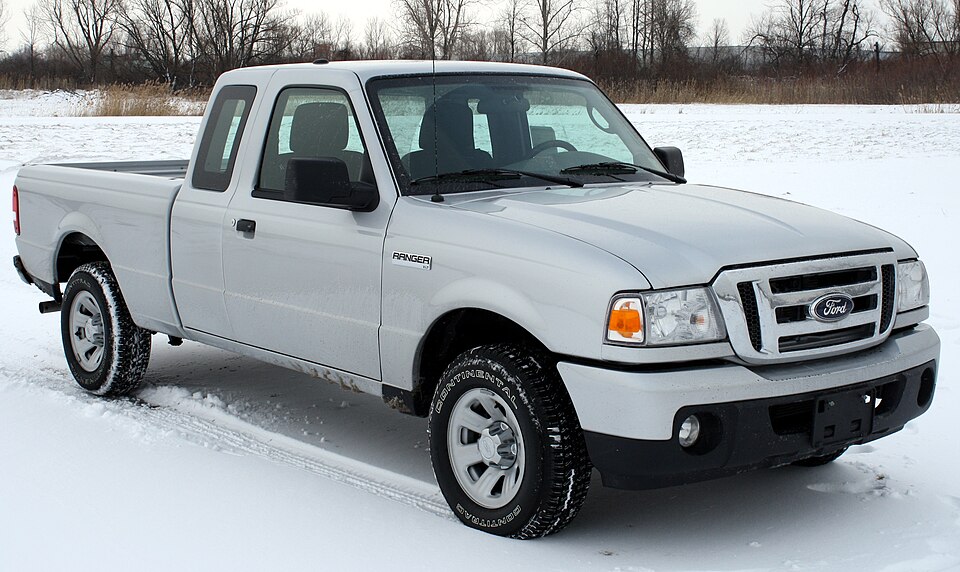
- Class
- Standard Pickup Trucks 2WD
- Body styles
- Supercab 4WD, Supercrew 4WD
- Engines
- 2.3L 4-cyl turbo
- Drivetrain
- Rear-Wheel Drive, Part-time 4-Wheel Drive
- Fuel
- Regular Gasoline
- MPG (best)
- 23 combined · 21 city / 26 hwy
- Length
- 211 in
- Curb weight
- 4,352–4,440 lb
- NHTSA rating
- Not rated
- Recalls
- 6 campaigns
Pros & cons
What's good
- Excellent fuel economyUp to 23 MPG combined — 16% better than the average 2021 standard pickup truck (19.8 MPG).
- AWD / 4WD available
Watch out for
No weak spots against similar models in the data.
Calculated from EPA, NHTSA and vPIC data against 4 similar 2021 models — not a review. How we calculate this →
Overview
The 2021 Ford Ranger is a standard pickup truck offered with a 2.3L 4-cyl turbo engine and rear-wheel drive and part-time 4-wheel drive.
It measures about 211 inches long and 73 inches wide on a 127-inch wheelbase, with a curb weight of roughly 4,352 lb (Supercab 4WD).
EPA rates its most efficient version at 23 MPG combined (21 city / 26 highway), 16% better than the 2021 standard pickup truck average of 19.8 MPG, for an estimated $2,900 a year in fuel.
NHTSA has not published a 5-Star overall rating for this model year.
It has 6 recall campaigns on file and owners have filed 119 complaints with NHTSA since 2015, most often about the power train.
What changed for 2021
No changes to engines, powertrains, drivetrains, size, EPA ratings or NHTSA crash rating compared with the 2020 Ranger — a carry-over year in the data.
Compared with 2020; trim, feature and price changes aren't covered. See the 2020 Ranger →
Trims, performance & features
Trims
Safety & driver-assist features
Built in: Wayne, Michigan
NHTSA vPIC, as reported by the manufacturer for 4 2021 Ranger configurations; may not list every trim. How we calculate this →
Dimensions & weight
| Body | Length | Width | Height | Wheelbase | Track F / R | Curb weight | Weight F/R |
|---|---|---|---|---|---|---|---|
| Supercab 4WD | 211 in | 73.2 in | 71.3 in | 126.8 in | 61.4 / 61.4 in | 4,352 lb | 57/43 |
| Supercrew 4WD | 211 in | 73.2 in | 71.3 in | 126.8 in | 61.4 / 61.4 in | 4,440 lb | 57/43 |
Transport Canada CVS (Open Government Licence – Canada), Canadian-market figures.
Will it fit your garage? Check with your measurements →Engines, MPG & running costs
| Version | Engine | Transmission | Drive | City / Hwy / Comb | vs. class | Fuel / yr | CO₂ g/mi |
|---|---|---|---|---|---|---|---|
| Ranger 2WD | 2.3L 4-cyl turbo | Automatic (S10) | Rear-Wheel Drive | 21 / 26 / 23 | +16% | $2,900 | 387 |
| Ranger 4WD | 2.3L 4-cyl turbo | Automatic (S10) | Part-time 4-Wheel Drive | 20 / 24 / 22 | +21% | $3,050 | 404 |
| Ranger Tremor 4WD | 2.3L 4-cyl turbo | Automatic (S10) | Part-time 4-Wheel Drive | 19 / 19 / 19 | +4% | $3,550 | 462 |
| Ranger 2WD Incomplete | 2.3L 4-cyl turbo | Automatic (S10) | Rear-Wheel Drive | 19 / 18 / 18 | -14% | $3,700 | 486 |
EPA estimates; "vs. class" is combined MPG against the 2021 EPA class average. How we calculate this →
Safety ratings & technology
NHTSA has not published 5-Star ratings for the 2021 Ford Ranger.
Similar 2021 standard pickup trucks
| Model | Best MPG / range | NHTSA overall | Recalls |
|---|---|---|---|
| 2021 Ford Ranger (this car) | 23 MPG | Not rated | 6 |
| 2021 Toyota Tacoma | 21 MPG | ★★★★★ | 0 |
| 2021 Nissan Frontier | 20 MPG | Not rated | 2 |
| 2021 Honda Ridgeline | 21 MPG | ★★★★★ | 7 |
| 2021 Jeep Gladiator | 24 MPG | Not rated | 8 |
Recalls (6)
Equipment › Electrical › Engine Block Heater · Oct 10, 2025
NHTSA campaign 25V685000 · 59,006 vehicles
- Problem
- Ford Motor Company (Ford) is recalling certain 2016-2019 Lincoln MKC, 2016-2023 Explorer, 2019-2020 Fusion, 2019-2024 Ranger, 2020-2022 Lincoln Corsair, Escape, 2021-2024 Bronco, Bronco Sport, and 2022-2024 Maverick vehicles. The engine block heater may crack and develop a coolant leak, causing it to short circuit when the block heater is plugged in.
- Risk
- An electrical short circuit can increase the risk of a fire.
- Fix
- Owners are advised not to plug in their block heater until the vehicle is remedied. Dealers will replace the block heater, free of charge. Owners will also have a alternative option to replace engine block heater element with a threaded blanking plug, and remove the block heater electrical cord. Interim letters, notifying owners of the safety risk, were mailed December 3, 2025. Additional letters will be sent once the final remedy is available, anticipated December 2026. Owners may contact Ford customer service at 1-866-436-7332. Ford's number for this recall is 25SA4. Vehicle Identification Numbers (VINs) involved in this recall became searchable on NHTSA.gov on October 15, 2025.
Back Over Prevention › Software · Jun 27, 2025
NHTSA campaign 25V442000 · 200,237 vehicles
- Problem
- Ford Motor Company (Ford) is recalling certain 2018-2022 Transit Connect, 2019-2020 MKZ, MKX, Edge, Continental, F-150, Nautilus, Fusion, 2019-2023 Ranger, Mustang, 2020-2021 EcoSport, Expedition, Navigator, 2020-2022 Escape, F-250 SD, Corsair, 2020-2023 Aviator, Transit, 2020-2024 Explorer, 2021-2024 Bronco Sport, and 2022-2024 Maverick vehicles. A software error may cause the rearview camera to display a blank image, or the image may remain on the display after the backing event has ended.
- Risk
- A rearview camera that displays a blank image can reduce the driver's view behind the vehicle. A rearview image that continues to be displayed after the vehicle is shifted out of reverse may distract the driver. Both of these situations can increase the risk of a crash.
- Fix
- Dealers will update the rearview camera software, free of charge. Owner notification letters were mailed September 4, 2025. Owners may contact Ford customer service at 1-866-436-7332. Ford's number for this recall is 25S72.
Equipment › Other › Labels · May 26, 2023
NHTSA campaign 23V379000 · 29,607 vehicles
- Problem
- Ford Motor Company (Ford) is recalling certain 2022-2023 Bronco, 2023 Super Duty F-250, and 2019-2023 Ranger vehicles. The Tire and Loading Information (TREAD) label states the incorrect load carrying capacity, which can result in an overloaded vehicle. As such, these vehicles fail to comply with the requirements of Federal Motor Vehicle Safety Standard number 110, "Tire Selection and Rims."
- Risk
- An overloaded vehicle increases the risk of a crash.
- Fix
- Ford will mail a new TREAD label to install over the existing label, free of charge. Owners will also have the option to take their vehicle to a Ford or Lincoln dealer to have the new label installed, free of charge. Owner notification letters were mailed July 21, 2023. Owners may contact Ford customer service at 1-866-436-7332. Ford's number for this recall is 23C18.
Forward Collision Avoidance › Sensing System › Radar · Dec 16, 2021
NHTSA campaign 21V982000 · 839 vehicles
- Problem
- Ford Motor Company (Ford) is recalling certain 2021 Ranger and Bronco vehicles. The cruise control radar module was misaligned during production.
- Risk
- A misaligned radar module may prevent the vehicle from maintaining a safe distance from other vehicles when adaptive cruise control is active. In addition, the automatic emergency braking (AEB) system may react slowly, or not react at all, during a pre-collision assist braking event. Any of these scenarios can increase the risk of a crash.
- Fix
- Dealers will adjust the angle of the cruise control radar module, free of charge. Owner notification letters were mailed January 21, 2022. Owners may contact Ford customer service at 1-866-436-7332. Ford's number for this recall is 21S52.
Seat Belts › Front › Webbing · Oct 15, 2021
NHTSA campaign 21V811000 · 47,683 vehicles
- Problem
- Ford Motor Company (Ford) is recalling certain 2019-2021 Ford Ranger Super Cab vehicles. The front passenger outboard seat belt may not have been assembled properly, allowing the seat belt to be misrouted. As such, these vehicles fail to comply with the requirements of Federal Motor Vehicle Safety Standard numbers 208, "Occupant Crash Protection" and 209, "Seat Belt Assemblies."
- Risk
- A misrouted seat belt may not adequately restrain an occupant in a crash, increasing the risk of injury.
- Fix
- Ford will provide owners with instructions to perform a preliminary inspection of their front seat belts. Owners that detect an issue with the driver's seat belt, are unsure of the results, or do not want to perform an inspection, should not drive their vehicles and contact a Ford dealership. Dealers will inspect the front row outboard seat belts and replace them, if necessary, free of charge. Interim owner notification letters were mailed on November 5, 2021. Owner notification letters were mailed December 22, 2021. Owners may contact Ford customer service at 1-866-436-7332. Ford's number for this recall is 21C25.
Child Seat › Vehicle Latch Anchor · Sep 30, 2021
NHTSA campaign 21V765000 · 37,625 vehicles
- Problem
- Ford Motor Company (Ford) is recalling certain 2020-2021 Ranger Super Cab vehicles equipped with rear seats containing fixed head restraints. The fixed head restraints may interfere with proper installation of certain types of child seats. Additionally, the child seat may not attach properly to the lower-rear anchors. As such, these vehicles fail to comply with the requirements of Federal Motor Vehicle Safety Standard number 225, "Child Restraint Anchorage System."
- Risk
- An improperly attached child seat can increase the risk of injury in a crash.
- Fix
- Dealers will inspect the rear-lower child restraint anchorages for correct alignment and adjust as necessary. Separately, dealers will replace the non-removable head restraints with removable head restraints, free of charge. Interim owner notification letters were mailed on November 5, 2021. Owner notification letters were mailed on March 17, 2022. Owners may contact Ford customer service at 1-866-436-7332. Ford's number for this recall is 21C24.
Not every 2021 Ford Ranger is affected — only a VIN check confirms your car.
Owner-reported problems
Unverified owner reports; best-sellers collect more.
Used 2021 Ford Ranger buyer's checklist
- Run the VIN at nhtsa.gov/recalls. 6 recalls this year — ask for proof of repairs.
- Power Train — 60 owner reports. Test-drive through all gears, including reverse; note slipping, harsh or delayed shifts.
- Service Brakes — 14 owner reports. Brake firmly from speed; check for pulling, pulsing pedal or ABS warning light.
- Engine — 13 owner reports. Cold-start the engine, listen for knocking, and watch for warning lights or hesitation on acceleration.
- Mileage to watch. Owners typically reported problems around 35,600 miles; ask what was repaired near that point.
- Before you pay: service records, a history report and an independent inspection.
Generated by DecodedCars from NHTSA recalls and owner complaints for the 2021 Ford Ranger. Not a substitute for a professional inspection.
Other Ranger years
Compare all years →| Year | MPG (best) | Length | Overall | Recalls | Complaints |
|---|---|---|---|---|---|
| 2026 Ranger | 23 | 210.6 in | Not rated | 8 | 8 |
| 2025 Ranger | 23 | 210.6 in | Not rated | 13 | 44 |
| 2024 Ranger | 22 | 210.6 in | Not rated | 13 | 95 |
| 2023 Ranger | 23 | 211 in | Not rated | 4 | 18 |
| 2022 Ranger | 23 | 211 in | Not rated | 5 | 38 |
| 2020 Ranger | 23 | 211 in | ★★★★★ | 7 | 130 |
| 2019 Ranger | 23 | 211 in | ★★★★★ | 11 | 270 |
| 2011 Ranger | 24 | 187.4 in | Not rated | 5 | 223 |
| 2010 Ranger | 24 | 187.4 in | Not rated | 8 | 140 |
| 2009 Ranger | 23 | 187.4 in | Not rated | 6 | 152 |
| 2008 Ranger | 23 | 187.4 in | Not rated | 5 | 306 |
| 2007 Ranger | 23 | 187.4 in | Not rated | 5 | 243 |
Sources: EPA, NHTSA, Transport Canada, Wikimedia Commons. Not affiliated with NHTSA, the EPA or Ford. How we calculate this →