 DecodedCars
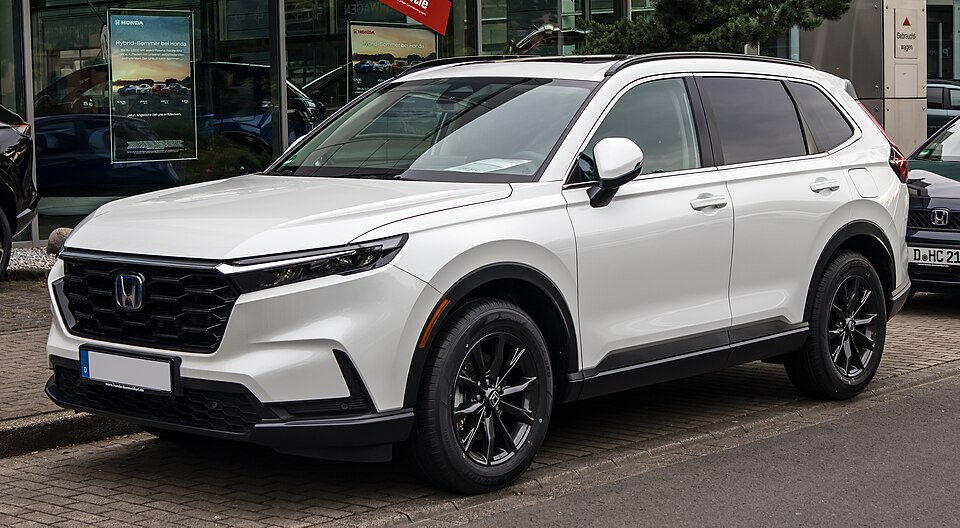
2025 Honda CR-V
Trims, performance, features, fuel economy, safety and known problems — with the pros and cons against similar 2025 models.
- Class
- Small Sport Utility Vehicle 2WD
- Body styles
- 4dr SUV AWD, 4dr SUV FWD
- Engines
- 2.0L 4-cyl, 1.5L 4-cyl turbo
- Horsepower
- 145–190 hp
- Transmission
- e-CVT, CVT
- Drivetrain
- Front-Wheel Drive, All-Wheel Drive
- Fuel
- Hybrid, eFCV, Regular Gasoline
- MPG (best)
- 40 combined · 43 city / 43 hwy
- Length
- 184.6 in
- Curb weight
- 3,525–3,635 lb
- NHTSA rating
- ★★★★★
- Recalls
- 6 campaigns
Pros & cons
What's good
- Excellent fuel economyUp to 40 MPG combined — 38% better than the average 2025 small SUV (29 MPG).
- Hybrid version availableOffered as a hybrid as well as gas.
- AWD / 4WD available
- 5-star NHTSA safety ratingTop overall score in federal crash tests.
Watch out for
- Many owner complaints290 complaints filed with NHTSA versus about 48 for similar models — most often about the steering.
- 6 recallsMore than similar models (about 2). Confirm repairs with the VIN.
Calculated from EPA, NHTSA and vPIC data against 36 similar 2025 models — not a review. How we calculate this →
Overview
The 2025 Honda CR-V is a small SUV offered with 2 engines (2.0L 4-cyl and 1.5L 4-cyl turbo), including a hybrid version and front-wheel drive and all-wheel drive.
It measures about 185 inches long and 74 inches wide on a 106-inch wheelbase, with a curb weight of roughly 3,635 lb (4dr SUV AWD).
EPA rates its most efficient version at 40 MPG combined (43 city / 43 highway), 38% better than the 2025 small SUV average of 29 MPG, for an estimated $1,700 a year in fuel.
In NHTSA crash testing it earned the top 5-star overall rating.
It has 6 recall campaigns on file and owners have filed 290 complaints with NHTSA since 2015, most often about the steering.
What changed for 2025
- New hydrogen fuel-cell version
Compared with 2024; trim, feature and price changes aren't covered. See the 2024 CR-V →
Trims, performance & features
Trims
Safety & driver-assist features
Built in: Greensburg, Indiana · Alliston, Ontario · East Liberty, Ohio
NHTSA vPIC, as reported by the manufacturer for 5 2025 CR-V configurations; may not list every trim. How we calculate this →
Dimensions & weight
| Body | Length | Width | Height | Wheelbase | Track F / R | Curb weight | Weight F/R |
|---|---|---|---|---|---|---|---|
| 4dr SUV AWD | 184.6 in | 73.6 in | 66.1 in | 106.3 in | 63.4 / 64.2 in | 3,635 lb | 57/43 |
| 4dr SUV FWD | 184.6 in | 73.6 in | 66.1 in | 106.3 in | 63.4 / 64.2 in | 3,525 lb | 58/42 |
Transport Canada CVS (Open Government Licence – Canada), Canadian-market figures.
Will it fit your garage? Check with your measurements →Engines, MPG & running costs
| Version | Engine | Transmission | Drive | City / Hwy / Comb | vs. class | Fuel / yr | CO₂ g/mi |
|---|---|---|---|---|---|---|---|
| CR-V FWD Hybrid | 2.0L 4-cyl | Automatic (variable gear ratios) | Front-Wheel Drive | 43 / 36 / 40 | +38% | $1,700 | 223 |
| CR-V e-FCEV eFCV | Automatic (A1) | Front-Wheel Drive | 36 / 43 / 39 | +34% | – | – | |
| CR-V AWD Hybrid | 2.0L 4-cyl | Automatic (variable gear ratios) | All-Wheel Drive | 40 / 34 / 37 | +45% | $1,800 | 237 |
| CR-V FWD | 1.5L 4-cyl turbo | Automatic (variable gear ratios) | Front-Wheel Drive | 28 / 34 / 30 | +3% | $2,250 | 290 |
| CR-V AWD | 1.5L 4-cyl turbo | Automatic (variable gear ratios) | All-Wheel Drive | 26 / 31 / 28 | +9% | $2,400 | 312 |
EPA estimates; "vs. class" is combined MPG against the 2025 EPA class average. How we calculate this →
Safety ratings & technology
| Version | Overall | Frontal | Driver / passenger | Side | Side pole | Rollover | Rollover risk |
|---|---|---|---|---|---|---|---|
| 2025 Honda CR-V SUV FWD | ★★★★★ | ★★★★★ | 5★ / 4★ | ★★★★★ | ★★★★★ | ★★★★★ | 15.5% |
| 2025 Honda CR-V SUV AWD | ★★★★★ | ★★★★★ | 5★ / 4★ | ★★★★★ | ★★★★★ | ★★★★★ | 15.5% |


Similar 2025 small SUVs
| Model | Best MPG / range | NHTSA overall | Recalls |
|---|---|---|---|
| 2025 Honda CR-V (this car) | 40 MPG | ★★★★★ | 6 |
| 2025 Toyota RAV4 | 39 MPG | ★★★★★ | 4 |
| 2025 Ford Bronco | 20 MPG | Not rated | 19 |
| 2025 Hyundai Tucson | 38 MPG | ★★★★★ | 7 |
| 2025 Subaru Forester | 35 MPG | ★★★★★ | 4 |
| 2025 Mazda CX-5 | 28 MPG | ★★★★★ | 0 |
| 2025 Jeep Grand Cherokee | 23 MPG | ★★★★★ | 5 |
Recalls (6)
Tires › Temporary/Emergency Spare Tire · Oct 8, 2026
NHTSA campaign 26V663000 · 4,804 vehicles
- Problem
- Honda (American Honda Motor Co.) is recalling certain 2023-2026 CR-V Hybrid, Accord Hybrid, and 2025 CR-V Fuel Cell EV vehicles that were previously remedied under NHTSA recall number 26V366. When using the tire repair kit, pressure may build within the sealant bottle, causing the bottle cap to detach.
- Risk
- A detached bottle cap can become a projectile and strike the user or others nearby, increasing the risk of injury.
- Fix
- Dealers will inspect and replace the tire repair kit nozzle, as necessary, free of charge. Owner notification letters are expected to be mailed November 16, 2026. Owners may contact Honda's customer service at 1-866-784-1870. Honda's number for this recall is PPW. Vehicle Identification Numbers (VINs) involved in this recall will be searchable on NHTSA.gov beginning October 17, 2026. Vehicles previously repaired under recall 26V366 will need to have the new remedy completed.
Tires › Temporary/Emergency Spare Tire · Jun 4, 2026
NHTSA campaign 26V366000 · 1,048,613 vehicles
- Problem
- Honda (American Honda Motor Co.) is recalling certain 2023-2026 CR-V Hybrid, Accord Hybrid, and 2025-2026 CR-V Fuel Cell EV vehicles. When using the tire repair kit, pressure may build within the sealant bottle, causing the bottle cap to detach.
- Risk
- A detached bottle cap can become a projectile and strike the user or others nearby, increasing the risk of injury.
- Fix
- Dealers will replace the tire repair kit nozzle or sealant bottle, free of charge. Interim letters notifying owners of the safety risk were mailed July 27, 2026. Additional letters will be sent once the final remedy is available, anticipated in Fall 2026. Owners may contact Honda's customer service at 1-866-784-1870. Honda's number for this recall is DOV. Vehicle Identification Numbers (VINs) involved in this recall will be searchable on NHTSA.gov beginning June 11, 2026.
Electrical System › Propulsion System › Fuel Cell · Dec 11, 2025
NHTSA campaign 25V858000 · 388 vehicles
- Problem
- Honda (American Honda Motor Co.) is recalling certain 2025 Honda CR-V Fuel Cell EV vehicles. Coolant inside the fuel cell stack may leak into the fuel cell stack case, causing an internal short circuit. As such, these vehicles fail to comply with the requirements of Federal Motor Vehicle Safety Standard number 305, "Electric-powered vehicles: Electrolyte Spillage and Electrical Shock Protection."
- Risk
- An internal short circuit in a fuel cell can cause a loss of drive power, increasing the risk of a crash or injury.
- Fix
- Dealers will replace the fuel cell stack assembly, free of charge. Owner notification letters were mailed February 3 2026. Owners may contact Honda's customer service at 1-888-234-2138. Honda's number for this recall is CN4. Vehicle Identification Numbers (VINs) involved in this recall will be searchable on NHTSA.gov beginning December 16, 2025.
Fuel System, Gasoline › Delivery › Hoses, Lines/Piping, And Fittings · Jun 5, 2025
NHTSA campaign 25V378000 · 6 vehicles
- Problem
- Honda (American Honda Motor Co.) is recalling certain 2025 Honda CR-V Hybrid vehicles. The fuel feed hose may have been improperly installed, allowing fuel to leak. As such, these vehicles fail to comply with the requirements of Federal Motor Vehicle Safety Standard number 301, "Fuel System Integrity."
- Risk
- A fuel leak in the presence of an ignition source increases the risk of a fire.
- Fix
- Dealers will install a new fuel feed hose and connector cover, free of charge. Owners may contact Honda's customer service at 1-888-234-2138. Honda's number for this recall is TLS.
Fuel System, Gasoline › Delivery › Fuel Pump · Oct 14, 2024
NHTSA campaign 24V763000 · 720,810 vehicles
- Problem
- Honda (American Honda Motor Co.) is recalling certain 2023-2024 Honda Accord, Accord Hybrid, 2023-2025 Honda CR-V Hybrid, and 2025 Honda Civic and Civic Hybrid vehicles. The high-pressure fuel pump may crack and leak fuel.
- Risk
- A fuel leak in the presence of an ignition source can increase the risk of a fire.
- Fix
- Dealers will inspect and replace the high-pressure fuel pump as necessary, free of charge. Owner letters were mailed February 20, 2025. Owners may contact Honda customer service at 1-888-234-2138. Honda's number for this recall is PJW.
Steering · Oct 3, 2024
NHTSA campaign 24V744000 · 1,693,199 vehicles
- Problem
- Honda (American Honda Motor Co.) is recalling certain 2023-2025 Acura Integra, Civic Type R, CR-V Hybrid, CR-V, HR-V, 2022-2025 Civic, Civic Hatchback, 2024-2025 Acura Integra Type S, 2025 CR-V Fuel Cell EV, Civic Hybrid, and Civic Hatchback Hybrid vehicles. The steering gearbox assembly may have been manufactured incorrectly, which can cause excessive internal friction and lead to difficulty steering the vehicle.
- Risk
- Difficulty steering can increase the risk of a crash.
- Fix
- Dealers will replace the worm gear spring and redistribute or add grease as necessary, free of charge. Owner notification letters were mailed November 18, 2024. Owners may contact Honda Customer Service at 1-888-234-2138. Honda's numbers for this recall are SJS, MJU, QJT and VJV.
Not every 2025 Honda CR-V is affected — only a VIN check confirms your car.
Owner-reported problems
Unverified owner reports; best-sellers collect more.
Used 2025 Honda CR-V buyer's checklist
- Run the VIN at nhtsa.gov/recalls. 6 recalls this year — ask for proof of repairs.
- Steering — 66 owner reports. Turn lock-to-lock while parked and on the road; listen for noises and feel for heavy or loose steering.
- Visibility/Wiper — 35 owner reports. Check all exterior lights, wipers and the windshield for cracks.
- Service Brakes — 33 owner reports. Brake firmly from speed; check for pulling, pulsing pedal or ABS warning light.
- Mileage to watch. Owners typically reported problems around 10,000 miles; ask what was repaired near that point.
- Hybrid system. Check for hybrid-system warning lights and ask whether the high-voltage battery has been replaced or is still under warranty.
- Before you pay: service records, a history report and an independent inspection.
Generated by DecodedCars from NHTSA recalls and owner complaints for the 2025 Honda CR-V. Not a substitute for a professional inspection.
Other CR-V years
Compare all years →| Year | MPG (best) | Length | Overall | Recalls | Complaints |
|---|---|---|---|---|---|
| 2027 CR-V | 40 | – | Not rated | 0 | 0 |
| 2026 CR-V | 40 | 184.6 in | Not rated | 2 | 177 |
| 2024 CR-V | 40 | 184.6 in | ★★★★★ | 5 | 481 |
| 2023 CR-V | 40 | 184.6 in | ★★★★★ | 8 | 633 |
| 2022 CR-V | 38 | 180.7 in | ★★★★★ | 6 | 348 |
| 2021 CR-V | 38 | 180.7 in | ★★★★★ | 5 | 444 |
| 2020 CR-V | 38 | 180.7 in | ★★★★★ | 9 | 444 |
| 2019 CR-V | 30 | 180.7 in | ★★★★★ | 8 | 1,107 |
| 2018 CR-V | 30 | 180.7 in | ★★★★★ | 5 | 2,161 |
| 2017 CR-V | 30 | 180.7 in | ★★★★★ | 7 | 1,777 |
| 2016 CR-V | 29 | 179.5 in | Not rated | 3 | 394 |
| 2015 CR-V | 29 | 179.5 in | Not rated | 3 | 670 |
Sources: EPA, NHTSA, Transport Canada, Wikimedia Commons. Not affiliated with NHTSA, the EPA or Honda. How we calculate this →