 DecodedCars
2027 Ram 1500
Trims, performance, features, fuel economy, safety and known problems — with the pros and cons against similar 2027 models.
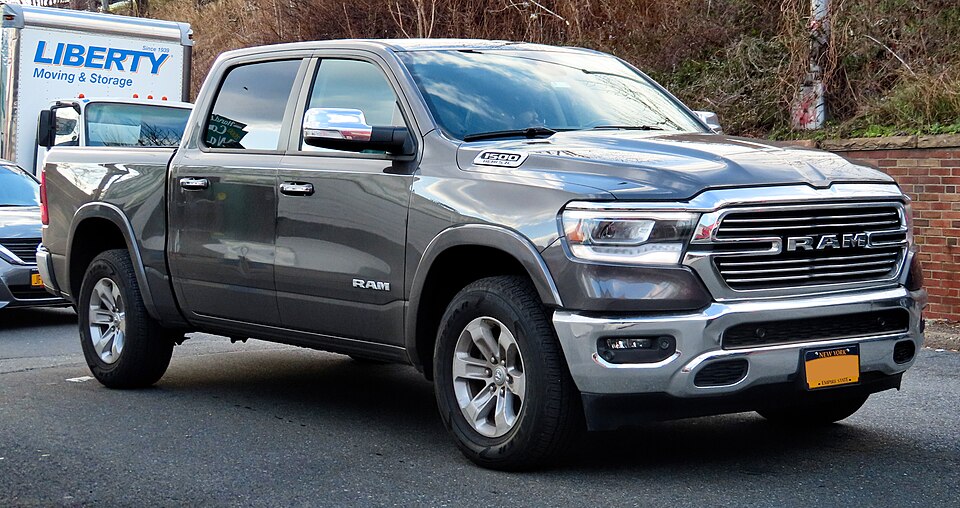
- Class
- Standard Pickup Trucks 2WD
- Engines
- 3.6L 6-cyl, 3.0L 6-cyl turbo, 5.7L 8-cyl, 6.2L 8-cyl
- Drivetrain
- Rear-Wheel Drive, 4-Wheel Drive, All-Wheel Drive
- Fuel
- Hybrid, Regular Gasoline, Midgrade Gasoline, Premium Gasoline
- MPG (best)
- 22 combined · 20 city / 25 hwy
- Length
- –
- Curb weight
- –
- NHTSA rating
- Not rated
- Recalls
- 0 campaigns
Pros & cons
What's good
- Hybrid version availableOffered as a hybrid as well as gas.
- AWD / 4WD available
Watch out for
No weak spots against similar models in the data.
Calculated from EPA, NHTSA and vPIC data against 3 similar 2027 models — not a review. How we calculate this →
Overview
The 2027 Ram 1500 is a standard pickup truck offered with 4 engines (3.6L 6-cyl, 3.0L 6-cyl turbo, 5.7L 8-cyl and 6.2L 8-cyl), including a hybrid version and rear-wheel drive, 4-wheel drive and all-wheel drive.
EPA rates its most efficient version at 22 MPG combined (20 city / 25 highway), 11% better than the 2027 standard pickup truck average of 19.8 MPG, for an estimated $3,050 a year in fuel.
There are no recalls or owner complaints on file with NHTSA for this model year.
What changed for 2027
No changes to engines, powertrains, drivetrains, size, EPA ratings or NHTSA crash rating compared with the 2026 1500 — a carry-over year in the data.
Compared with 2026; trim, feature and price changes aren't covered. See the 2026 1500 →
Engines, MPG & running costs
| Version | Engine | Transmission | Drive | City / Hwy / Comb | vs. class | Fuel / yr | CO₂ g/mi |
|---|---|---|---|---|---|---|---|
| 1500 2WD Hybrid | 3.6L 6-cyl | Automatic 8-spd | Rear-Wheel Drive | 20 / 25 / 22 | +11% | $3,050 | 407 |
| 1500 4WD Hybrid | 3.6L 6-cyl | Automatic 8-spd | 4-Wheel Drive | 19 / 24 / 21 | +20% | $3,200 | 418 |
| 1500 2WD | 3.0L 6-cyl turbo | Automatic 8-spd | Rear-Wheel Drive | 17 / 24 / 20 | +1% | $3,350 | 453 |
| 1500 4WD | 3.0L 6-cyl turbo | Automatic 8-spd | 4-Wheel Drive | 17 / 23 / 19 | +9% | $3,550 | 463 |
| 1500 2WD Hybrid | 5.7L 8-cyl | Automatic 8-spd | Rear-Wheel Drive | 17 / 22 / 19 | -4% | $4,000 | 470 |
| 1500 4WD Hybrid | 5.7L 8-cyl | Automatic 8-spd | 4-Wheel Drive | 16 / 20 / 18 | +3% | $4,200 | 502 |
| 1500 2WD | 5.7L 8-cyl | Automatic 8-spd | Rear-Wheel Drive | 15 / 23 / 17 | -14% | $4,450 | 510 |
| 1500 4WD | 5.7L 8-cyl | Automatic 8-spd | 4-Wheel Drive | 15 / 22 / 17 | -3% | $4,450 | 518 |
| 1500 HO 4WD | 3.0L 6-cyl turbo | Automatic 8-spd | 4-Wheel Drive | 15 / 21 / 17 | -3% | $4,850 | 521 |
| 1500 Warlock 4WD Hybrid | 3.6L 6-cyl | Automatic 8-spd | 4-Wheel Drive | 17 / 18 / 17 | -3% | $3,950 | 512 |
| 1500 RHO 4WD | 3.0L 6-cyl turbo | Automatic 8-spd | 4-Wheel Drive | 14 / 16 / 15 | -14% | $5,500 | 602 |
| 1500 4WD | 6.2L 8-cyl | Automatic 8-spd | All-Wheel Drive | 10 / 14 / 12 | -31% | $6,850 | 748 |
EPA estimates; "vs. class" is combined MPG against the 2027 EPA class average. How we calculate this →
Safety ratings & technology
NHTSA has not published 5-Star ratings for the 2027 Ram 1500.
Similar 2027 standard pickup trucks
| Model | Best MPG / range | NHTSA overall | Recalls |
|---|---|---|---|
| 2027 Ram 1500 (this car) | 22 MPG | Not rated | 0 |
| 2027 Nissan Frontier | 21 MPG | Not rated | 0 |
| 2027 Jeep Gladiator | 19 MPG | Not rated | 0 |
| 2027 Rivian R1T | 420 mi | Not rated | 0 |
Recalls (0)
No vehicle recalls on file with NHTSA for the 2027 Ram 1500.
Check your VIN for open recalls at NHTSA ↗Not every 2027 Ram 1500 is affected — only a VIN check confirms your car.
Owner-reported problems
No owner complaints for the 2027 Ram 1500 in NHTSA's database since 2015.
Other 1500 years
Compare all years →| Year | MPG (best) | Length | Overall | Recalls | Complaints |
|---|---|---|---|---|---|
| 2026 1500 | 22 | 233.1 in | Not rated | 9 | 103 |
| 2025 1500 | 23 | 233.1 in | Not rated | 8 | 366 |
| 2024 1500 | 23 | 233.1 in | Not rated | 6 | 77 |
| 2023 1500 | 24 | 233.1 in | Not rated | 11 | 203 |
| 2022 1500 | 26 | 233.1 in | Not rated | 16 | 632 |
| 2021 1500 | 26 | 233.1 in | ★★★★★ | 15 | 683 |
| 2020 1500 | 26 | 233.1 in | ★★★★★ | 14 | 641 |
| 2019 1500 | 23 | 233.1 in | ★★★★★ | 29 | 1,495 |
| 2018 1500 | 23 | – | ★★★★★ | 15 | 667 |
| 2017 1500 | 23 | – | ★★★★★ | 13 | 884 |
| 2016 1500 | 24 | – | ★★★★★ | 16 | 1,554 |
| 2015 1500 | 24 | – | ★★★★★ | 17 | 1,459 |
Sources: EPA, NHTSA, Transport Canada, Wikimedia Commons. Not affiliated with NHTSA, the EPA or Ram. How we calculate this →