 DecodedCars
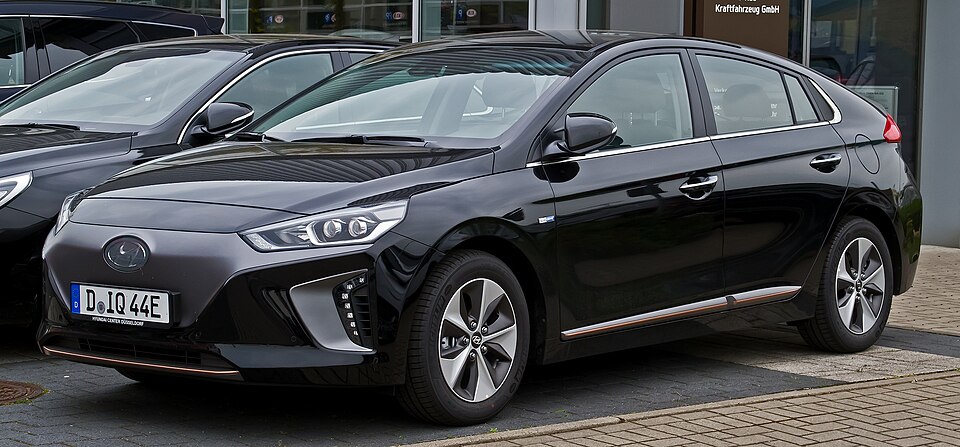
Hyundai Ioniq 2017
Versiones, desempeño, equipamiento, consumo, seguridad y problemas conocidos, con sus ventajas y desventajas frente a modelos similares 2017.
- Clase
- Auto mediano
- Carrocerías
- 4dr Hatch
- Motores
- 1.6L 4 cil.
- Tracción
- Tracción delantera
- Combustible
- Eléctrico, Híbrido
- MPG (mejor)
- 58 combinadas · 57 ciudad / 59 carretera
- Autonomía eléctrica
- 124 mi · 4 h a 240 V
- Largo
- 176 in
- Peso en vacío
- 3,014 lb
- Calificación NHTSA
- Sin calificar
- Retiros
- 5 campañas
Ventajas y desventajas
Lo bueno
- Excelente consumo de combustibleHasta 58 MPG combinadas: un 116 % mejor que el promedio de su clase (auto mediano, 2017: 26.9 MPG).
- Disponible en versión híbridaSe ofrece en versión híbrida y eléctrica además de gasolina.
A tener en cuenta
- 5 retirosMás que modelos similares (unos 2). Confirma las reparaciones con el VIN.
Calculado con datos de la EPA, la NHTSA y vPIC frente a 28 modelos similares 2017; no es una reseña. Cómo lo calculamos →
Resumen
El Hyundai Ioniq 2017 es un auto mediano con motor 1.6L 4 cil., incluida una versión híbrida, con tracción delantera.
Mide unas 176 pulgadas de largo y 72 de ancho, con una distancia entre ejes de 106 pulgadas, y pesa alrededor de 3,014 lb.
La EPA califica su versión más eficiente con 58 MPG combinadas (57 en ciudad / 59 en carretera), un 116 % mejor que el promedio de su clase (auto mediano, 2017: 26.9 MPG), con un gasto estimado de $550 al año en combustible.
La versión eléctrica tiene una autonomía EPA de hasta 124 millas y tarda unas 4 horas en cargarse con un cargador de nivel 2 (240 V).
La NHTSA no ha publicado una calificación general de 5 estrellas para este año modelo.
Tiene 5 campañas de retiro registradas y los propietarios han presentado 51 quejas ante la NHTSA desde 2015, sobre todo por problemas de sistema eléctrico.
Dimensiones y peso
| Carrocería | Largo | Ancho | Alto | Distancia entre ejes | Vía del. / tras. | Peso en vacío | Peso del./tras. |
|---|---|---|---|---|---|---|---|
| 4dr Hatch | 176 in | 71.7 in | 57.1 in | 106.3 in | 61.4 / 62.2 in | 3,014 lb |
Transport Canada CVS (Open Government Licence – Canada), medidas del mercado canadiense.
¿Cabe en tu garaje? Compruébalo con tus medidas →Motores, consumo y costo de uso
| Versión | Motor | Transmisión | Tracción | Ciudad / Carr. / Comb. | vs. su clase | Combustible / año | CO₂ g/mi |
|---|---|---|---|---|---|---|---|
| Ioniq Electric Eléctrico | 88 kW AC PMSM | Automática (A1) | Tracción delantera | 124 mi · 25 kWh/100mi | – | $550 | – |
| Ioniq Blue Híbrido | 1.6L 4 cil. | Automática (AM6) | Tracción delantera | 57 / 59 / 58 | +159% | $1,150 | 154 |
| Ioniq Híbrido | 1.6L 4 cil. | Automática (AM6) | Tracción delantera | 55 / 54 / 55 | +146% | $1,200 | 163 |
Estimaciones de la EPA; "vs. su clase" compara las MPG combinadas con el promedio 2017 de su clase EPA. Cómo lo calculamos →
Calificaciones de seguridad y tecnología
La NHTSA no ha publicado calificaciones de 5 estrellas para el Hyundai Ioniq 2017.
Auto mediano similares 2017
| Modelo | Mejor MPG / autonomía | General NHTSA | Retiros |
|---|---|---|---|
| Hyundai Ioniq 2017 (este auto) | 58 MPG | Sin calificar | 5 |
| Toyota Corolla 2017 | 34 MPG | ★★★★★ | 3 |
| Honda Civic 2017 | 36 MPG | ★★★★★ | 6 |
| Nissan GT-R 2017 | 18 MPG | Sin calificar | 0 |
| Toyota Prius 2017 | 56 MPG | ★★★★★ | 3 |
| Subaru Impreza/Outback Sport 2017 | 32 MPG | Sin calificar | 0 |
| Hyundai Elantra 2017 | 35 MPG | ★★★★★ | 4 |
Retiros (5)
Texto oficial de la NHTSA (en inglés).
Propulsión híbrida › Inverter · 28 jun 2022
Campaña NHTSA 22V459000 · 10,575 vehículos
- Problema
- Hyundai Motor America (Hyundai) is recalling certain 2017-2018 Ioniq HEV and Ionic PHV vehicles previously recalled under recall number 18V-704. The Power Relay Assembly (PRA) located underneath the rear seat may overheat.
- Riesgo
- An overheated PRA increases the risk of a fire.
- Solución
- Dealers will inspect and replace the main relay or PRA, as necessary, free of charge. Owner notification letters were mailed August 23, 2022. Owners may contact Hyundai customer service at 1-855-371-9460. Hyundai's number for this recall is 232. This recall replaces NHTSA recall number 18V-704. Vehicles already repaired under the previous recall will need to have the new remedy completed.
Sistema eléctrico › Propulsion System › Charging › Module › Onboard (Obcm) · 7 dic 2021
Campaña NHTSA 21V944000 · 2,679 vehículos
- Problema
- Hyundai Motor America (Hyundai) is recalling certain 2017-2019 Ioniq electric vehicles. An unstable electrical ground may cause the vehicle to enter a fail-safe mode with reduced acceleration and power. In certain conditions while in fail-safe mode, the vehicle may accelerate after the gas pedal is released.
- Riesgo
- Unexpected acceleration following gas pedal release can increase the risk of a crash.
- Solución
- Dealers will update the EPCU (Electric Power Control Unit) software and repair the ground wiring, free of charge. Owner notification letters were mailed February 9, 2022. Owners may contact Hyundai customer service at 1-855-371-9460. Hyundai's number for this recall is 215.
Propulsión híbrida › Inverter · 5 oct 2018
Campaña NHTSA 18V704000 · 10,575 vehículos
- Problema
- Hyundai Motor America (Hyundai) is recalling certain 2017-2018 Hyundai Ioniq Hybrid and 2018 Ioniq Plug-In Hybrid vehicles. The Main Relay within the Power Relay Assembly (PRA) may have inadequate connections between its contacts, causing increased electrical resistance.
- Riesgo
- The increased electrical resistance can overheat the rear seat which is above the PRA, increasing the risk of a fire.
- Solución
- Hyundai will notify owners, and dealers will inspect the Power Relay Assembly (PRA) for damage. If no damage is found, the main relay will be replaced. If damage is found, the PRA will be replaced. These repairs will be performed free of charge. The recall began February 28, 2019. Owners may contact Hyundai customer service at 1-855-371-9460. Hyundai's number for this recall is 178.
Propulsión híbrida · 24 abr 2018
Campaña NHTSA 18V260000 · 10,156 vehículos
- Problema
- Hyundai Motor America (Hyundai) is recalling certain 2017 Hyundai Ioniq Hybrid vehicles. The Hydraulic Clutch Actuator (HCA) inner oil seal may leak, allowing oil to accumulate in the cap area, possibly resulting in an electrical short.
- Riesgo
- An electrical short can increase the risk of a fire.
- Solución
- Hyundai will notify owners, and dealers will inspect the HCA caps for leaked oil and replace the HCA assembly if needed, free of charge. The recall is expected to begin June 20, 2018. Owners may contact Hyundai customer service at 1-855-371-9460. Hyundai's number for this recall is 176.
Propulsión híbrida · 28 ago 2017
Campaña NHTSA 17V532000 · 218 vehículos
- Problema
- Hyundai Motor Company (Hyundai) is recalling certain 2017 Ioniq Electric Vehicles. Manufacturing defects within the Electronic Power Control Unit (EPCU) may allow coolant to contact the unit's circuit board.
- Riesgo
- If coolant contacts the EPCU, a stall may result, increasing the risk of a crash.
- Solución
- Hyundai will notify owners, and dealers will inspect and replace the EPCU, as necessary, free of charge. Interim notices informing owners of the safety risk are expected were mailed October 26, 2017. Owners will receive a second notice when the remedy becomes available. Owners may contact Hyundai Customer Service at 1-800-633-5151. Hyundai's number for this recall is 166.
No todos los Ioniq 2017 están afectados: solo el VIN lo confirma.
Problemas reportados por propietarios
Reportes sin verificar; los más vendidos acumulan más.
Lista para comprar un Hyundai Ioniq 2017 usado
- Consulta el VIN en nhtsa.gov/recalls. 5 retiros en este año: pide comprobantes de reparación.
- Sistema eléctrico — 22 reportes de propietarios. Prueba todas las ventanas, seguros, luces, pantallas y puertos USB; revisa la antigüedad de la batería.
- Motor — 12 reportes de propietarios. Arranca el motor en frío, escucha si golpetea y fíjate en luces de advertencia o titubeos al acelerar.
- Tren motriz — 9 reportes de propietarios. Prueba todas las marchas, incluida la reversa; nota patinazos o cambios bruscos o tardíos.
- Millaje a vigilar. Los propietarios suelen reportar problemas alrededor de las 34,000 millas; pregunta qué se reparó cerca de ese punto.
- Salud de la batería. Pide un reporte del estado de la batería, revisa la garantía restante y compara la autonomía al 100 % con las 124 millas de la EPA.
- Antes de pagar: historial de servicio, reporte de antecedentes e inspección de un mecánico independiente.
Generado por DecodedCars a partir de retiros y quejas de propietarios ante la NHTSA para el Hyundai Ioniq 2017. No sustituye una inspección profesional.
Otros años del Ioniq
Comparar todos los años →| Año | MPG (mejor) | Largo | General | Retiros | Quejas |
|---|---|---|---|---|---|
| Ioniq 2022 | 59 | 176 in | Sin calificar | 0 | 27 |
| Ioniq 2021 | 59 | 176 in | Sin calificar | 0 | 20 |
| Ioniq 2020 | 58 | 176 in | Sin calificar | 1 | 31 |
| Ioniq 2019 | 58 | 176 in | Sin calificar | 2 | 33 |
| Ioniq 2018 | 58 | 176 in | Sin calificar | 3 | 17 |
Fuentes: EPA, NHTSA, Transport Canada, Wikimedia Commons. Sin afiliación con la NHTSA, la EPA ni Hyundai. Cómo lo calculamos →