 DecodedCars
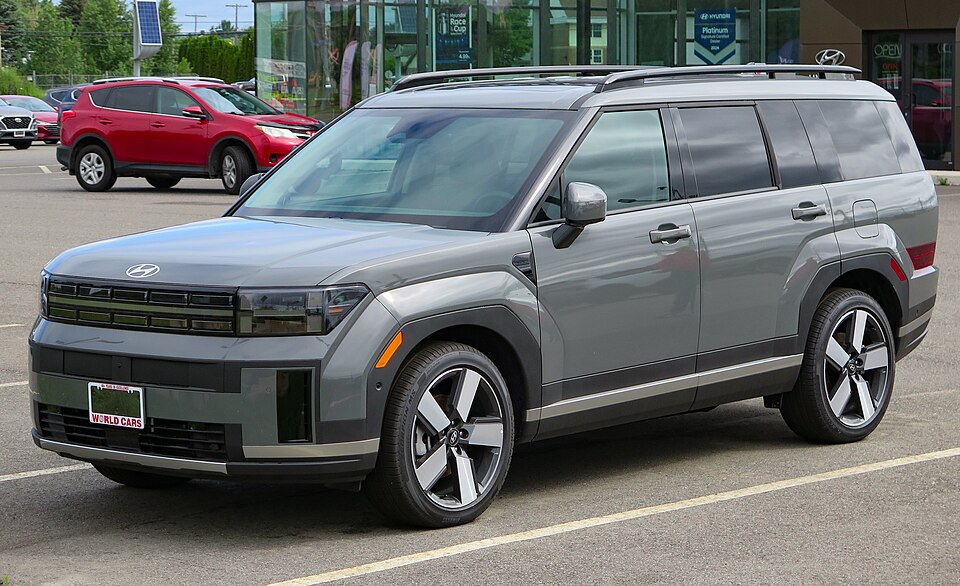
Hyundai Santa Fe
23 model years from 2005 to 2027, compared on size, efficiency, safety and reliability.
- Model years
- 2005–2027
- Class
- Small Sport Utility Vehicle 2WD, Small Sport Utility Vehicle 4WD, Sport Utility Vehicle - 2WD
- Latest engines
- 1.6L 4-cyl turbo, 2.5L 4-cyl turbo
- Best MPG
- 20–36 combined, by year
- Latest rating
- ★★★★★ (2025)
- Recalls
- 48 campaigns, all years
- Most complaints
- 2017 (1,327)
- Fewest problems
- 2020
- Interest
- 17,462 Wikipedia views / 30 days
The 2026 Santa Fe in brief
The 2026 Hyundai Santa Fe is a small SUV offered with 2 engines (1.6L 4-cyl turbo and 2.5L 4-cyl turbo), including a hybrid version and front-wheel drive and all-wheel drive.
It measures about 190 inches long and 75 inches wide on a 111-inch wheelbase, with a curb weight of roughly 4,442 lb.
EPA rates its most efficient version at 36 MPG combined (37 city / 36 highway), 19% better than the 2026 small SUV average of 30.2 MPG, for an estimated $1,850 a year in fuel.
It has 4 recall campaigns on file and owners have filed 58 complaints with NHTSA since 2015, most often about the unknown or other.
The Hyundai Santa Fe has 23 model years in our data, from 2005 to 2027, classed as Small Sport Utility Vehicle 2WD, Small Sport Utility Vehicle 4WD, Sport Utility Vehicle - 2WD.
Its most efficient year was 2027 at 36 MPG combined; across all years the best version ranged from 20 to 36 MPG.
Owners most often report problems with the engine (3,036), unknown or other (892), power train (800).
Buying used? 2024 has the fewest problems in our data, and 2017 is the year to avoid.
2022 has the most recalls (8); all years together count 48 campaigns and 6,809 owner complaints.
How the 2005 Santa Fe compares
The 2005 Hyundai Santa Fe is a SUV - offered with 3 engines (2.4L 4-cyl, 2.7L 6-cyl and 3.5L 6-cyl) and front-wheel drive and 4-wheel or all-wheel drive.
It measures about 177 inches long and 72 inches wide on a 103-inch wheelbase, with a curb weight of roughly 3,752 lb (4dr SUV AWD /Gl AWD/Gls).
About the Hyundai Santa Fe
The Hyundai Santa Fe is a series of crossover SUVs produced across five generations by the South Korean manufacturer Hyundai since 2000. It is named after the city of Santa Fe, New Mexico, and was introduced for the 2001 model year as Hyundai's first SUV. The Santa Fe was a milestone in the company's restructuring program of the late 1990s because the SUV was a hit with American buyers.
From the Wikipedia article "Hyundai Santa Fe", licensed under CC BY-SA 4.0.
2026 Santa Fe pros & cons
Full 2026 details →What's good
- Excellent fuel economyUp to 36 MPG combined — 19% better than the average 2026 small SUV (30.2 MPG).
- Hybrid version availableOffered as a hybrid as well as gas.
- AWD / 4WD available
- Lots of standard safety tech5 of 5 key driver aids standard on the versions we checked.
Watch out for
No weak spots against similar models in the data.
Best and worst years to buy used
2024 Santa Fe
191 owner complaints · 7 recalls · 1 fire report · 12 crash reports
NHTSA overall: ★★★★★
Year to avoid2017 Santa Fe
1,327 owner complaints · 7 recalls · 30 fire reports · 19 crash reports
Most reported: Engine
NHTSA recalls and complaints for 10 model years since 2015; use it alongside a pre-purchase inspection. How we calculate this →
Compare head to head
Santa Fe changes by model year
- 2024
- New body dimensions: 1.6 in longer, wheelbase +1.5 in — most likely a redesign or new generation
- No plug-in hybrid version any more
- Engine dropped: 2.5L 4-cyl
- Best combined MPG up from 34 to 36
- NHTSA overall rating down from 5 to 4 stars
- 2022
- New plug-in hybrid version
- 2021
- New hybrid version
- Engines added: 1.6L 4-cyl turbo, 2.5L 4-cyl and 2.5L 4-cyl turbo
- Engines dropped: 2.4L 4-cyl and 2.0L 4-cyl turbo
- Best combined MPG up from 25 to 34
- 2020
- Engine dropped: 3.3L 6-cyl
- 2019
- New body dimensions: 3.2 in longer, wheelbase +2.8 in — most likely a redesign or new generation
- 2018
- Now crash-tested by NHTSA: 5 stars overall
- 2015
- Lightest version 267 lb lighter
- 2013
- Engines added: 2.0L 4-cyl turbo and 3.3L 6-cyl
- Engine dropped: 3.5L 6-cyl
- 2010
- Engines added: 2.4L 4-cyl and 3.5L 6-cyl
- Engines dropped: 2.7L 6-cyl and 3.3L 6-cyl
- Best combined MPG up from 20 to 23
- 2007
- New body dimensions: 7.1 in longer, wheelbase +3.2 in — most likely a redesign or new generation
- Engine added: 3.3L 6-cyl
- Engines dropped: 2.4L 4-cyl and 3.5L 6-cyl
Years without a measurable change are left out.
Show all 23 model years side by side
| Year | Latest engines | Best MPG / range | Length | Weight | Overall | Recalls | Complaints |
|---|---|---|---|---|---|---|---|
| 2027 | 1.6L 4-cyl turbo, 2.5L 4-cyl turbo | 36 MPG | – | – | Not rated | 0 | 0 |
| 2026 | 1.6L 4-cyl turbo, 2.5L 4-cyl turbo | 36 MPG | 190.2 in | 4,442 lb | Not rated | 4 | 58 |
| 2025 | 1.6L 4-cyl turbo, 2.5L 4-cyl turbo | 36 MPG | 190.2 in | 4,486 lb | ★★★★★ | 5 | 240 |
| 2024 | 1.6L 4-cyl turbo, 2.5L 4-cyl turbo | 36 MPG | 190.2 in | 4,486 lb | ★★★★★ | 7 | 191 |
| 2023 | 1.6L 4-cyl turbo, 2.5L 4-cyl, 2.5L 4-cyl turbo | 34 MPG | 188.6 in | 3,812 lb | ★★★★★ | 2 | 290 |
| 2022 | 1.6L 4-cyl turbo, 2.5L 4-cyl, 2.5L 4-cyl turbo | 34 MPG | 188.6 in | 4,204 lb | ★★★★★ | 8 | 265 |
| 2021 | 1.6L 4-cyl turbo, 2.5L 4-cyl, 2.5L 4-cyl turbo | 34 MPG | 188.6 in | 3,812 lb | ★★★★★ | 8 | 187 |
| 2020 | 2.4L 4-cyl, 2.0L 4-cyl turbo | 25 MPG | 187.8 in | 4,063 lb | ★★★★★ | 2 | 218 |
| 2019 | 2.4L 4-cyl, 2.0L 4-cyl turbo, 3.3L 6-cyl | 25 MPG | 187.8 in | 4,063 lb | ★★★★★ | 3 | 229 |
| 2018 | 2.4L 4-cyl, 2.0L 4-cyl turbo, 3.3L 6-cyl | 24 MPG | 184.6 in | 3,616 lb | ★★★★★ | 5 | 432 |
| 2017 | 2.4L 4-cyl, 2.0L 4-cyl turbo, 3.3L 6-cyl | 24 MPG | 184.6 in | 3,616 lb | Not rated | 7 | 1,327 |
| 2016 | 2.4L 4-cyl, 2.0L 4-cyl turbo, 3.3L 6-cyl | 23 MPG | 184.6 in | 3,616 lb | Not rated | 3 | 306 |
| 2015 | 2.4L 4-cyl, 2.0L 4-cyl turbo, 3.3L 6-cyl | 23 MPG | 184.6 in | 3,459 lb | Not rated | 4 | 339 |
| 2014 | 2.4L 4-cyl, 2.0L 4-cyl turbo, 3.3L 6-cyl | 23 MPG | 184.6 in | 3,863 lb | Not rated | 7 | 634 |
| 2013 | 2.4L 4-cyl, 2.0L 4-cyl turbo, 3.3L 6-cyl | 24 MPG | 184.6 in | 3,772 lb | Not rated | 7 | 682 |
| 2012 | 2.4L 4-cyl, 3.5L 6-cyl | 23 MPG | 184.3 in | 3,975 lb | Not rated | 1 | 252 |
| 2011 | 2.4L 4-cyl, 3.5L 6-cyl | 23 MPG | 184.3 in | 3,975 lb | Not rated | 2 | 107 |
| 2010 | 2.4L 4-cyl, 3.5L 6-cyl | 23 MPG | 184.3 in | 4,118 lb | Not rated | 2 | 136 |
| 2009 | 2.7L 6-cyl, 3.3L 6-cyl | 20 MPG | 184.3 in | 4,125 lb | Not rated | 2 | 241 |
| 2008 | 2.7L 6-cyl, 3.3L 6-cyl | 20 MPG | 184.3 in | 4,125 lb | Not rated | 3 | 283 |
| 2007 | 2.7L 6-cyl, 3.3L 6-cyl | 21 MPG | 184.3 in | 4,120 lb | Not rated | 4 | 270 |
| 2006 | 2.4L 4-cyl, 2.7L 6-cyl, 3.5L 6-cyl | 20 MPG | 177.2 in | 3,752 lb | Not rated | 1 | 37 |
| 2005 | 2.4L 4-cyl, 2.7L 6-cyl, 3.5L 6-cyl | 20 MPG | 177.2 in | 3,752 lb | Not rated | 1 | 85 |
Alternatives to the 2026 Santa Fe
| Model | Best MPG / range | NHTSA overall | Recalls |
|---|---|---|---|
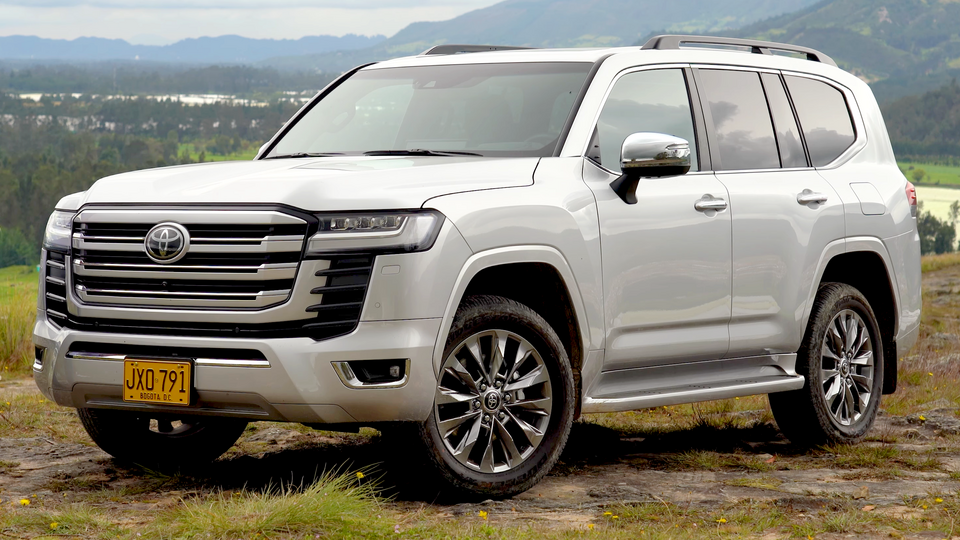
| 2026 Toyota Land Cruiser | 23 MPG | Not rated | 1 |
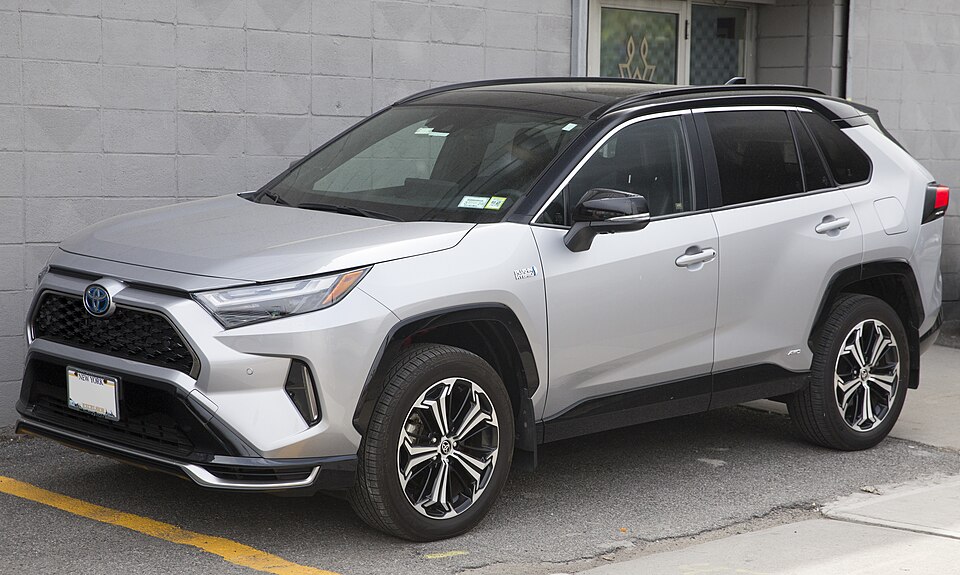
| 2026 Toyota RAV4 | 43 MPG | Not rated | 2 |
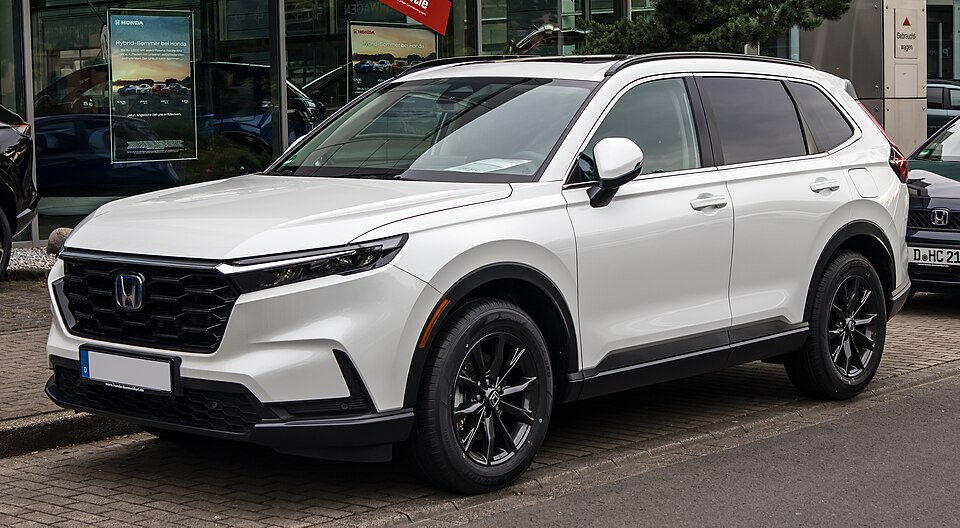
| 2026 Honda CR-V | 40 MPG | Not rated | 2 |
| 2026 Toyota 4Runner | 23 MPG | Not rated | 2 |
| 2026 Ford Explorer | 24 MPG | Not rated | 15 |
| 2026 Hyundai Tucson | 38 MPG | Not rated | 6 |
Most common owner-reported problems
Sources: EPA, NHTSA, Transport Canada, Wikipedia, Wikimedia Commons. Not affiliated with NHTSA, the EPA or Hyundai. How we calculate this →