 DecodedCars
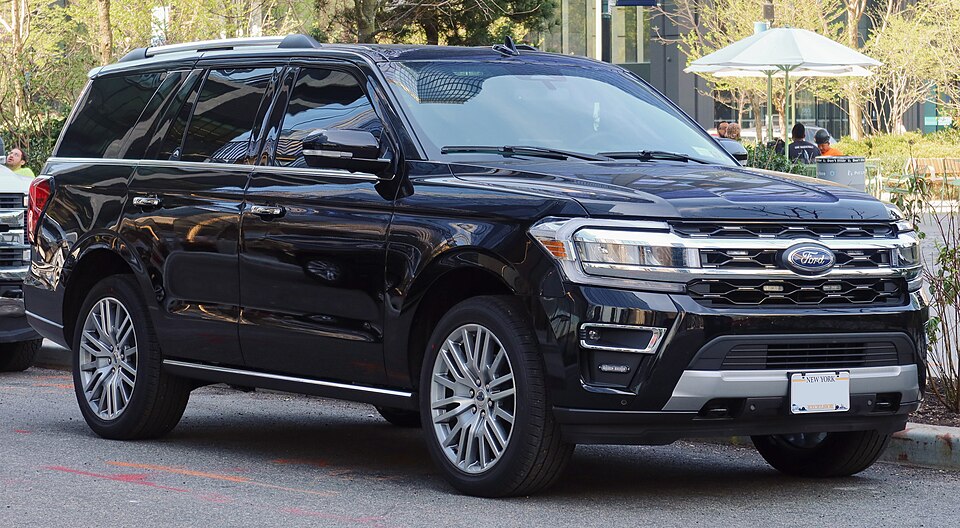
Ford Expedition 2017
Versiones, desempeño, equipamiento, consumo, seguridad y problemas conocidos, con sus ventajas y desventajas frente a modelos similares 2017.
- Clase
- SUV grande (2WD)
- Carrocerías
- 4WD SUV, Max 4WD SUV
- Motores
- 3.5L 6 cil. turbo
- Potencia
- 365 hp
- Tracción
- Tracción trasera, 4x4 conectable
- Asientos
- 8
- Combustible
- Gasolina regular
- MPG (mejor)
- 18 combinadas · 15 ciudad / 21 carretera
- Largo
- 205.9–220.9 in
- Peso en vacío
- 5,847–6,102 lb
- Calificación NHTSA
- ★★★★★
- Retiros
- 4 campañas
Ventajas y desventajas
Lo bueno
- Tracción total / 4x4 disponible
- Hasta 8 asientos3 filas de asientos.
- 5 estrellas en seguridad NHTSALa máxima calificación general en las pruebas de choque federales.
A tener en cuenta
- Mayor riesgo de volcaduraLa NHTSA estima un 21.2 % de probabilidad de volcadura en un choque de un solo vehículo.
Calculado con datos de la EPA, la NHTSA y vPIC frente a 12 modelos similares 2017; no es una reseña. Cómo lo calculamos →
Resumen
El Ford Expedition 2017 es un SUV grande con motor 3.5L 6 cil. turbo, con tracción trasera y 4x4 conectable.
Mide unas 206 pulgadas de largo y 79 de ancho, con una distancia entre ejes de 119 pulgadas, y pesa alrededor de 5,847 lb (4WD SUV).
La EPA califica su versión más eficiente con 18 MPG combinadas (15 en ciudad / 21 en carretera), un 6 % peor que el promedio de su clase (SUV grande, 2017: 19.1 MPG), con un gasto estimado de $3,700 al año en combustible.
En las pruebas de choque de la NHTSA obtuvo la máxima calificación general de 5 estrellas.
Tiene 4 campañas de retiro registradas y los propietarios han presentado 357 quejas ante la NHTSA desde 2015, sobre todo por problemas de sistema eléctrico.
Novedades del 2017
- Ya probado por la NHTSA: 5 estrellas en general
Comparado con 2016; no incluye cambios de versiones, equipamiento ni precio. Ver el Expedition 2016 →
Versiones, desempeño y equipamiento
Versiones
Seguridad y asistencias al conductor
Fabricado en: Jefferson County, Kentucky
NHTSA vPIC, según el fabricante, para 5 configuraciones del Expedition 2017; puede no incluir todas las versiones. Cómo lo calculamos →
Dimensiones y peso
| Carrocería | Largo | Ancho | Alto | Distancia entre ejes | Vía del. / tras. | Peso en vacío | Peso del./tras. |
|---|---|---|---|---|---|---|---|
| 4WD SUV | 205.9 in | 78.7 in | 77.2 in | 118.9 in | 66.9 / 67.3 in | 5,847 lb | 50/50 |
| Max 4WD SUV | 220.9 in | 78.7 in | 77.6 in | 131.1 in | 66.9 / 67.3 in | 6,102 lb | 50/50 |
Transport Canada CVS (Open Government Licence – Canada), medidas del mercado canadiense.
¿Cabe en tu garaje? Compruébalo con tus medidas →Motores, consumo y costo de uso
| Versión | Motor | Transmisión | Tracción | Ciudad / Carr. / Comb. | vs. su clase | Combustible / año | CO₂ g/mi |
|---|---|---|---|---|---|---|---|
| Expedition 2WD | 3.5L 6 cil. turbo | Automática (S6) | Tracción trasera | 15 / 21 / 18 | -6% | $3,700 | 507 |
| Expedition EL 2WD | 3.5L 6 cil. turbo | Automática (S6) | Tracción trasera | 15 / 20 / 17 | -11% | $3,950 | 535 |
| Expedition 4WD | 3.5L 6 cil. turbo | Automática (S6) | 4x4 conectable | 15 / 20 / 17 | -8% | $3,950 | 537 |
| Expedition EL 4WD | 3.5L 6 cil. turbo | Automática (S6) | 4x4 conectable | 15 / 19 / 16 | -14% | $4,200 | 543 |
Estimaciones de la EPA; "vs. su clase" compara las MPG combinadas con el promedio 2017 de su clase EPA. Cómo lo calculamos →
Calificaciones de seguridad y tecnología
| Versión | General | Frontal | Conductor / pasajero | Lateral | Poste lateral | Volcadura | Riesgo de volcadura |
|---|---|---|---|---|---|---|---|
| 2017 Ford Expedition SUV 4x4 | ★★★★★ | ★★★★★ | 5★ / 5★ | ★★★★★ | ★★★★★ | ★★★★★ | 19.8% |
| 2017 Ford Expedition SUV 4x2 | ★★★★★ | ★★★★★ | 5★ / 5★ | ★★★★★ | ★★★★★ | ★★★★★ | 21.2% |


SUV grande similares 2017
| Modelo | Mejor MPG / autonomía | General NHTSA | Retiros |
|---|---|---|---|
| Ford Expedition 2017 (este auto) | 18 MPG | ★★★★★ | 4 |
| Toyota Land Cruiser 2017 | 15 MPG | Sin calificar | 1 |
| Ford Explorer 2017 | 22 MPG | ★★★★★ | 14 |
| GMC Yukon 2017 | 19 MPG | ★★★★★ | 3 |
| Chevrolet Tahoe 2017 | 19 MPG | ★★★★★ | 4 |
| Nissan Pathfinder 2017 | 23 MPG | Sin calificar | 2 |
| Dodge Durango 2017 | 21 MPG | ★★★★★ | 2 |
Retiros (4)
Texto oficial de la NHTSA (en inglés).
Prevención de impacto en reversa › Sensing System › Camera · 3 sept 2025
Campaña NHTSA 25V572000 · 1,456,417 vehículos
- Problema
- Ford Motor Company (Ford) is recalling certain 2015-2019 Lincoln MKC, Mustang, F-350 SD, F-250 SD, F-450 SD, 2015-2017 Lincoln Navigator, Expedition, 2015-2018 Edge, Transit Connect, 2016-2019 F-550 SD, Transit, 2017-2019 Econoline, and 2019 Ranger vehicles. The rearview camera may display a distorted, inverted, or blank image when the vehicle is in reverse.
- Riesgo
- A rearview camera that displays an inverted, distorted, or blank image can reduce the driverâs view behind the vehicle, increasing the risk of a crash.
- Solución
- Dealers will inspect and replace the rearview camera as necessary, free of charge. Owner notification letters were mailed January 13, 2026. Ford owners will receive letters in phases, beginning January 2026 and June 2026. Owners may contact Ford customer service at 1-866-436-7332. Ford's number for this recall is 25S89. This recall expands previous NHTSA recall number 25V270. Vehicle Identification Numbers (VINs) involved in this recall will be searchable on NHTSA.gov beginning September 8, 2025.
Frenos hidráulicos › Foundation Components › Master Cylinder · 11 abr 2025
Campaña NHTSA 25V236000 · 123,611 vehículos
- Problema
- Ford Motor Company (Ford) is recalling certain 2017-2018 F-150, Expedition, and Lincoln Navigator vehicles. The brake master cylinder may allow brake fluid to leak from the front wheel circuit into the brake booster.
- Riesgo
- A brake fluid leak can cause reduced brake function and extend the distance required to stop, increasing the risk of a crash.
- Solución
- Dealers will replace the brake master cylinder. If the master cylinder is leaking, the brake booster will also be replaced. Repairs will be performed free of charge. Owner notification letters were mailed September 25, 2025. Owners may contact Ford customer service at 1-866-436-7332. Ford's number for this recall is 25S37. This recall is an expansion of NHTSA recall number 22V-150.
Visibilidad › Defroster/Defogger/Hvac System › Fan/Motor · 26 ago 2022
Campaña NHTSA 22V648000 · 198,482 vehículos
- Problema
- Ford Motor Company (Ford) is recalling certain 2015-2017 Ford Expedition and Lincoln Navigator vehicles. The front blower motor located behind the glove box may fail.
- Riesgo
- Front blower motor failure can increase the risk of a vehicle interior fire.
- Solución
- Dealers will replace the front blower motor assembly, free of charge. Owner notification letters were mailed August 4, 2023. Remedy parts are expected to become available in the second quarter of 2023. Owners may contact Ford customer service at 1-866-436-7332. Ford's number for this recall is 22S56.
Frenos hidráulicos › Foundation Components › Master Cylinder · 11 mar 2022
Campaña NHTSA 22V150000 · 195,864 vehículos
- Problema
- Ford Motor Company (Ford) is recalling certain 2016-2017 Ford Expedition, Lincoln Navigator, and 2016-2018 F-150 vehicles equipped with 3.5L Ecoboost engines. The brake master cylinder may allow brake fluid to leak from the front wheel circuit into the brake booster.
- Riesgo
- A loss of brake fluid may result in a change in brake pedal travel, increased pedal effort and reduced front brake function, requiring greater effort and distance to stop the vehicle. These conditions can increase the risk of a crash.
- Solución
- Dealers will replace the brake master cylinder. If the master cylinder is leaking, the brake booster will also be replaced. Repairs will be performed free of charge. An interim owner notification letter notifying customers of the safety defect were mailed on April 29, 2022. Owner notification letters were mailed April 29, 2022. This recall is an expansion of NHTSA recall number 20V-332. Owners may contact Ford customer service at 1-866-436-7332. Ford's number for this recall is 22S11.
No todos los Expedition 2017 están afectados: solo el VIN lo confirma.
Problemas reportados por propietarios
Reportes sin verificar; los más vendidos acumulan más.
Lista para comprar un Ford Expedition 2017 usado
- Consulta el VIN en nhtsa.gov/recalls. 4 retiros en este año: pide comprobantes de reparación.
- Sistema eléctrico — 91 reportes de propietarios. Prueba todas las ventanas, seguros, luces, pantallas y puertos USB; revisa la antigüedad de la batería.
- Tren motriz — 51 reportes de propietarios. Prueba todas las marchas, incluida la reversa; nota patinazos o cambios bruscos o tardíos.
- Frenos — 43 reportes de propietarios. Frena con fuerza a velocidad; revisa si se jala hacia un lado, si el pedal vibra o si se enciende la luz del ABS.
- Millaje a vigilar. Los propietarios suelen reportar problemas alrededor de las 77,276 millas; pregunta qué se reparó cerca de ese punto.
- Antes de pagar: historial de servicio, reporte de antecedentes e inspección de un mecánico independiente.
Generado por DecodedCars a partir de retiros y quejas de propietarios ante la NHTSA para el Ford Expedition 2017. No sustituye una inspección profesional.
Otros años del Expedition
Comparar todos los años →| Año | MPG (mejor) | Largo | General | Retiros | Quejas |
|---|---|---|---|---|---|
| Expedition 2027 | 18 | – | Sin calificar | 2 | 0 |
| Expedition 2026 | 19 | 209.8 in | Sin calificar | 2 | 10 |
| Expedition 2025 | 19 | 209.8 in | ★★★★★ | 6 | 38 |
| Expedition 2024 | 19 | 209.8 in | ★★★★★ | 7 | 79 |
| Expedition 2023 | 19 | 209.8 in | ★★★★★ | 8 | 65 |
| Expedition 2022 | 19 | 209.8 in | ★★★★★ | 12 | 116 |
| Expedition 2021 | 19 | 209.8 in | ★★★★★ | 12 | 241 |
| Expedition 2020 | 19 | 209.8 in | ★★★★★ | 18 | 425 |
| Expedition 2019 | 20 | 209.8 in | ★★★★★ | 11 | 522 |
| Expedition 2018 | 20 | 209.8 in | ★★★★★ | 14 | 382 |
| Expedition 2016 | 18 | 205.9 in | Sin calificar | 3 | 217 |
| Expedition 2015 | 18 | 205.9 in | Sin calificar | 3 | 164 |
Fuentes: EPA, NHTSA, Transport Canada, Wikimedia Commons. Sin afiliación con la NHTSA, la EPA ni Ford. Cómo lo calculamos →