 DecodedCars
Dodge Durango 2019
Versiones, desempeño, equipamiento, consumo, seguridad y problemas conocidos, con sus ventajas y desventajas frente a modelos similares 2019.
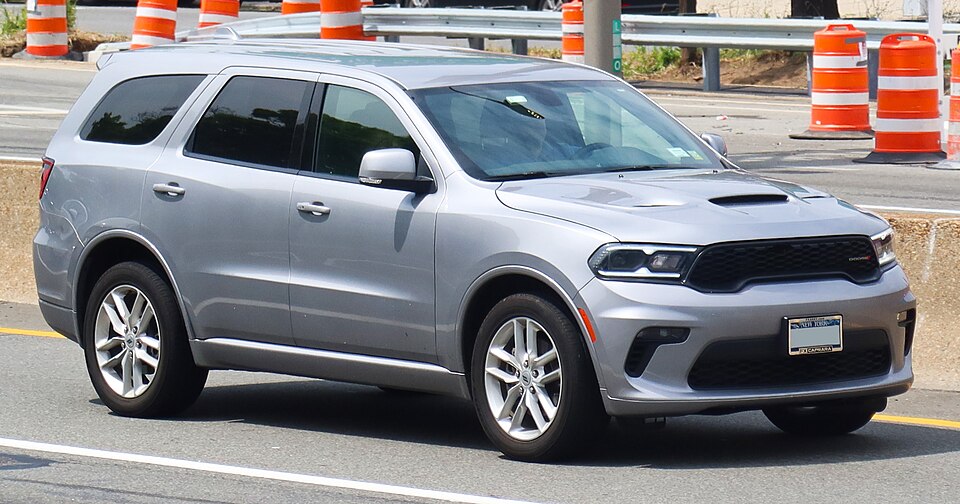
- Clase
- SUV grande (2WD)
- Carrocerías
- 4dr SUV AWD V6, 4dr SUV AWD V8
- Motores
- 3.6L 6 cil., 5.7L 8 cil., 6.4L 8 cil.
- Potencia
- 295–360 hp
- Transmisión
- 8-speed Automática
- Tracción
- Tracción trasera, Tracción total (AWD)
- Asientos
- 5–7
- Combustible
- Gasolina regular, Gasolina intermedia, Gasolina premium
- MPG (mejor)
- 21 combinadas · 19 ciudad / 26 carretera
- Largo
- 200 in
- Peso en vacío
- 4,987–5,331 lb
- Calificación NHTSA
- ★★★★★
- Retiros
- 4 campañas
Ventajas y desventajas
Lo bueno
- Tracción total / 4x4 disponible
- Hasta 7 asientos3 filas de asientos.
A tener en cuenta
- Mayor riesgo de volcaduraLa NHTSA estima un 21.2 % de probabilidad de volcadura en un choque de un solo vehículo.
- Frenado de emergencia no es de serieEl frenado automático de emergencia es opcional o solo está en algunas versiones.
Calculado con datos de la EPA, la NHTSA y vPIC frente a 18 modelos similares 2019; no es una reseña. Cómo lo calculamos →
Resumen
El Dodge Durango 2019 es un SUV grande disponible con 3 motores (3.6L 6 cil., 5.7L 8 cil. y 6.4L 8 cil.), con tracción trasera y tracción total (AWD).
Mide unas 200 pulgadas de largo y 76 de ancho, con una distancia entre ejes de 120 pulgadas, y pesa alrededor de 4,987 lb (4dr SUV AWD V6).
La EPA califica su versión más eficiente con 21 MPG combinadas (19 en ciudad / 26 en carretera), un 11 % mejor que el promedio de su clase (SUV grande, 2019: 18.9 MPG), con un gasto estimado de $3,200 al año en combustible.
En las pruebas de choque de la NHTSA obtuvo una calificación general de 4 estrellas.
Tiene 4 campañas de retiro registradas y los propietarios han presentado 145 quejas ante la NHTSA desde 2015, sobre todo por problemas de iluminación exterior.
Novedades del 2019
Sin cambios en motores, versiones, tracción, tamaño, consumo EPA ni calificación NHTSA respecto al Durango 2018: un año sin cambios según los datos.
Comparado con 2018; no incluye cambios de versiones, equipamiento ni precio. Ver el Durango 2018 →
Versiones, desempeño y equipamiento
Versiones
Seguridad y asistencias al conductor
Fabricado en: Detroit, Michigan
NHTSA vPIC, según el fabricante, para 5 configuraciones del Durango 2019; puede no incluir todas las versiones. Cómo lo calculamos →
Dimensiones y peso
| Carrocería | Largo | Ancho | Alto | Distancia entre ejes | Vía del. / tras. | Peso en vacío | Peso del./tras. |
|---|---|---|---|---|---|---|---|
| 4dr SUV AWD V6 | 200 in | 76 in | 70.9 in | 119.7 in | 63.8 / 64.2 in | 4,987 lb | 56/44 |
| 4dr SUV AWD V8 | 200 in | 76 in | 70.9 in | 119.7 in | 63.8 / 64.2 in | 5,331 lb | 56/44 |
Transport Canada CVS (Open Government Licence – Canada), medidas del mercado canadiense.
¿Cabe en tu garaje? Compruébalo con tus medidas →Motores, consumo y costo de uso
| Versión | Motor | Transmisión | Tracción | Ciudad / Carr. / Comb. | vs. su clase | Combustible / año | CO₂ g/mi |
|---|---|---|---|---|---|---|---|
| Durango RWD | 3.6L 6 cil. | Automática 8-spd | Tracción trasera | 19 / 26 / 21 | +11% | $3,200 | 414 |
| Durango AWD | 3.6L 6 cil. | Automática 8-spd | Tracción total (AWD) | 18 / 25 / 21 | +13% | $3,200 | 427 |
| Durango RWD | 5.7L 8 cil. | Automática 8-spd | Tracción trasera | 14 / 22 / 17 | -10% | $4,450 | 525 |
| Durango AWD | 5.7L 8 cil. | Automática 8-spd | Tracción total (AWD) | 14 / 22 / 17 | -9% | $4,450 | 533 |
| Durango SRT AWD | 6.4L 8 cil. | Automática 8-spd | Tracción total (AWD) | 13 / 19 / 15 | -19% | $5,500 | 584 |
Estimaciones de la EPA; "vs. su clase" compara las MPG combinadas con el promedio 2019 de su clase EPA. Cómo lo calculamos →
Calificaciones de seguridad y tecnología
| Versión | General | Frontal | Conductor / pasajero | Lateral | Poste lateral | Volcadura | Riesgo de volcadura |
|---|---|---|---|---|---|---|---|
| 2019 Dodge Durango SUV 2WD | ★★★★★ | ★★★★★ | 3★ / 4★ | ★★★★★ | ★★★★★ | ★★★★★ | 19.8% |
| 2019 Dodge Durango SUV 4WD | ★★★★★ | ★★★★★ | 3★ / 4★ | ★★★★★ | ★★★★★ | ★★★★★ | 21.2% |


SUV grande similares 2019
| Modelo | Mejor MPG / autonomía | General NHTSA | Retiros |
|---|---|---|---|
| Dodge Durango 2019 (este auto) | 21 MPG | ★★★★★ | 4 |
| Toyota Land Cruiser 2019 | 15 MPG | Sin calificar | 3 |
| Ford Explorer 2019 | 22 MPG | ★★★★★ | 6 |
| Toyota Highlander 2019 | 29 MPG | ★★★★★ | 3 |
| GMC Yukon 2019 | 18 MPG | ★★★★★ | 3 |
| Chevrolet Tahoe 2019 | 18 MPG | ★★★★★ | 2 |
| Ford Expedition 2019 | 20 MPG | ★★★★★ | 11 |
Retiros (4)
Texto oficial de la NHTSA (en inglés).
Frenos hidráulicos › Antilock/Traction Control/Electronic Limited Slip › Control Unit/Module · 7 nov 2024
Campaña NHTSA 24V838000 · 206,502 vehículos
- Problema
- Chrysler (FCA US, LLC) is recalling certain 2018-2019 Jeep Grand Cherokee and Dodge Durango vehicles. A malfunction in the antilock-brake system (ABS) module may incorrectly illuminate the brake lights and disable the ABS and electronic stability control (ESC). In addition, the vehicle operator may be able to start and shift out of Park without the brake pedal being applied.
- Riesgo
- A vehicle that can be started and shifted out of Park without applying the brake pedal can result in a vehicle rollaway. Disabled ABS and ESC systems can reduce vehicle handling and control in certain driving situations. Brake lights that incorrectly illuminate can fail to properly indicate the driver's intention to following traffic. Any of these scenarios can increase the risk of a crash.
- Solución
- Dealers will replace the integrated pressure transducer and update the ABS module software, as necessary free of charge. Owner notification letters were mailed December 16, 2025. Owners may contact FCA customer service at 1-800-853-1403. FCA's number for this recall is 94B. This recall replaces previous recall number 22V-426. Vehicles previously remedied under 22V-426 will need to have the new remedy completed.
Frenos hidráulicos › Antilock/Traction Control/Electronic Limited Slip › Control Unit/Module · 9 jun 2022
Campaña NHTSA 22V426000 · 206,502 vehículos
- Problema
- Chrysler (FCA US, LLC) is recalling certain 2018-2019 Jeep Grand Cherokee and Dodge Durango vehicles. A malfunction in the antilock-brake system (ABS) module may illuminate the brake lights, and allow the vehicle to start and shift out of Park without the brake pedal being applied.
- Riesgo
- A vehicle that starts and shifts out of Park without applying the brake pedal can result in vehicle rollaway, increasing the risk of a crash without prior warning and/or injury to others outside of the vehicle.
- Solución
- This recall is replaced by NHTSA recall number 24V838. Vehicles already repaired under this recall will need to have the new remedy completed. The remedy includes updated HCU/ABS module software that prevents the HCU/ABS module from falsely reading pressure in the primary circuit. FCA has decided to do a two-Phase Campaign remedy schedule. Phase 1 began November 17, 2022. Phase 2 begin date has not been determined yet. Interim owner notification letters explaining the safety risk were mailed July 28, 2020. Owner notification letters were mailed on November 29, 2022. Owners may contact FCA US, LLC customer service at 1-800-853-1403. FCA US, LLC's number for this recall is Z48.
Prevención de impacto en reversa › Sensing System › Camera · 10 sept 2020
Campaña NHTSA 20V191000 · 319,610 vehículos
- Problema
- Chrysler (FCA US LLC) is recalling certain 2020 Jeep Gladiator and Jeep Cherokee, 2019-2020 Ram 1500 Pickup, Ram 2500 Pickup, Ram 3500 Pickup, Chrysler Pacifica, Dodge Durango, Jeep Grand Cherokee, Jeep Wrangler, and Jeep Renegade and 2019 Dodge Challenger vehicles equipped with 8.4" or 12" radio displays. A software error can cause the rearview camera image to remain displayed after the vehicle has been shifted out of reverse. As such, these vehicles fail to comply with the requirements of Federal Motor Vehicle Safety Standard (FMVSS) number 111, "Rearview Mirrors."
- Riesgo
- The lingering rearview image can distract the driver, increasing the risk of a crash.
- Solución
- Chrysler has notified owners, and dealers will update the radio display software, free of charge. Optionally, owners can choose to remotely update their software via an Over-The-Air (OTA) update available as of May 1, 2020. The recall began April 27, 2020. Owners may contact Chrysler customer service at 1-800-853-1403. Chrysler's number for this recall is W30-W37.
Tren motriz › Driveline › Differential Unit · 26 mar 2020
Campaña NHTSA 20V183000 · 515 vehículos
- Problema
- Chrysler (FCA US LLC) is recalling certain 2019 Jeep Grand Cherokee and Dodge Durango vehicles. The front differential may have been assembled with pinion gears that are insufficiently hardened, which can lead to the gear teeth wearing down. If both pinion gears have their teeth sufficiently worn off, torque power can not be transferred from the front wheels to the driveline, resulting in loss of power while driving and loss of the PARK function when stationary.
- Riesgo
- A sudden loss of power while driving or loss of the transmission PARK function can increase the risk of a crash.
- Solución
- Chrysler will notify owners, and dealers will replace the front differential, free of charge. The recall began May 21, 2020. Owners may contact Chrysler customer service at 1-800-853-1403. Chrysler's number for this recall is W22.
No todos los Durango 2019 están afectados: solo el VIN lo confirma.
Problemas reportados por propietarios
Reportes sin verificar; los más vendidos acumulan más.
Lista para comprar un Dodge Durango 2019 usado
- Consulta el VIN en nhtsa.gov/recalls. 4 retiros en este año: pide comprobantes de reparación.
- Iluminación exterior — 41 reportes de propietarios. Revisa todas las luces exteriores, los limpiaparabrisas y que el parabrisas no tenga grietas.
- Sistema eléctrico — 39 reportes de propietarios. Prueba todas las ventanas, seguros, luces, pantallas y puertos USB; revisa la antigüedad de la batería.
- Motor — 25 reportes de propietarios. Arranca el motor en frío, escucha si golpetea y fíjate en luces de advertencia o titubeos al acelerar.
- Millaje a vigilar. Los propietarios suelen reportar problemas alrededor de las 26,059 millas; pregunta qué se reparó cerca de ese punto.
- Antes de pagar: historial de servicio, reporte de antecedentes e inspección de un mecánico independiente.
Generado por DecodedCars a partir de retiros y quejas de propietarios ante la NHTSA para el Dodge Durango 2019. No sustituye una inspección profesional.
Otros años del Durango
Comparar todos los años →| Año | MPG (mejor) | Largo | General | Retiros | Quejas |
|---|---|---|---|---|---|
| Durango 2027 | 20 | – | Sin calificar | 0 | 0 |
| Durango 2026 | 20 | 200 in | Sin calificar | 1 | 15 |
| Durango 2025 | 20 | 200 in | ★★★★★ | 0 | 8 |
| Durango 2024 | 21 | 200 in | ★★★★★ | 0 | 14 |
| Durango 2023 | 21 | 200 in | ★★★★★ | 3 | 38 |
| Durango 2022 | 21 | 200 in | ★★★★★ | 7 | 60 |
| Durango 2021 | 21 | 200 in | ★★★★★ | 8 | 205 |
| Durango 2020 | 21 | 200 in | ★★★★★ | 2 | 56 |
| Durango 2018 | 21 | 200 in | ★★★★★ | 5 | 233 |
| Durango 2017 | 21 | 200 in | ★★★★★ | 2 | 215 |
| Durango 2016 | 21 | 200 in | ★★★★★ | 3 | 161 |
| Durango 2015 | 20 | 200 in | ★★★★★ | 4 | 504 |
Fuentes: EPA, NHTSA, Transport Canada, Wikimedia Commons. Sin afiliación con la NHTSA, la EPA ni Dodge. Cómo lo calculamos →