 DecodedCars
Dodge Challenger 2015
Versiones, desempeño, equipamiento, consumo, seguridad y problemas conocidos, con sus ventajas y desventajas frente a modelos similares 2015.
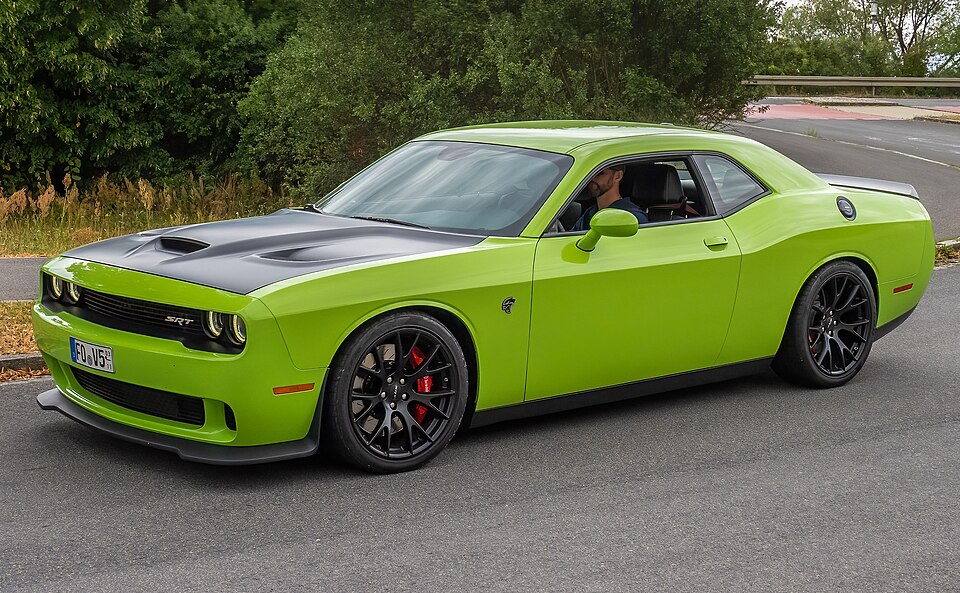
- Clase
- Auto mediano
- Carrocerías
- 2dr Coupe RWD R/T / R/T Classic, 2dr Coupe RWD Srt / Hellcat, 2dr Coupe RWD Sxt/Sxt Plus/Rally Redline
- Motores
- 3.6L 6 cil., 5.7L 8 cil., 6.4L 8 cil., 6.2L 8 cil.
- Tracción
- Tracción trasera
- Combustible
- Gasolina regular, Gasolina intermedia, Gasolina premium
- MPG (mejor)
- 23 combinadas · 19 ciudad / 30 carretera
- Largo
- 197.6 in
- Peso en vacío
- 3,935–4,169 lb
- Calificación NHTSA
- Sin calificar
- Retiros
- 5 campañas
Resumen
El Dodge Challenger 2015 es un auto mediano disponible con 4 motores (3.6L 6 cil., 5.7L 8 cil., 6.4L 8 cil. y 6.2L 8 cil.), con tracción trasera.
Mide unas 198 pulgadas de largo y 76 de ancho, con una distancia entre ejes de 116 pulgadas, y pesa alrededor de 4,083 lb (2dr Coupe RWD R/T / R/T Classic).
La EPA califica su versión más eficiente con 23 MPG combinadas (19 en ciudad / 30 en carretera), un 11 % peor que el promedio de su clase (auto mediano, 2015: 25.7 MPG), con un gasto estimado de $2,900 al año en combustible.
La NHTSA no ha publicado una calificación general de 5 estrellas para este año modelo.
Tiene 5 campañas de retiro registradas y los propietarios han presentado 127 quejas ante la NHTSA desde 2015, sobre todo por problemas de tren motriz.
Novedades del 2015
- Motor nuevo: 6.2L 8 cil.
- Mejor consumo combinado sube de 21 a 23 MPG
Comparado con 2014; no incluye cambios de versiones, equipamiento ni precio. Ver el Challenger 2014 →
Versiones, desempeño y equipamiento
Versiones
Fabricado en: Brampton, Ontario
NHTSA vPIC, según el fabricante, para 5 configuraciones del Challenger 2015; puede no incluir todas las versiones. Cómo lo calculamos →
Dimensiones y peso
| Carrocería | Largo | Ancho | Alto | Distancia entre ejes | Vía del. / tras. | Peso en vacío | Peso del./tras. |
|---|---|---|---|---|---|---|---|
| 2dr Coupe RWD R/T / R/T Classic | 197.6 in | 75.6 in | 57.1 in | 116.1 in | 63 / 63.8 in | 4,083 lb | 56/44 |
| 2dr Coupe RWD Srt / Hellcat | 197.6 in | 75.6 in | 57.1 in | 116.1 in | 63 / 63.8 in | 4,169 lb | 56/44 |
| 2dr Coupe RWD Sxt/Sxt Plus/Rally Redline | 197.6 in | 75.6 in | 57.1 in | 116.1 in | 63 / 63.8 in | 3,935 lb | 56/44 |
Transport Canada CVS (Open Government Licence – Canada), medidas del mercado canadiense.
¿Cabe en tu garaje? Compruébalo con tus medidas →Motores, consumo y costo de uso
| Versión | Motor | Transmisión | Tracción | Ciudad / Carr. / Comb. | vs. su clase | Combustible / año | CO₂ g/mi |
|---|---|---|---|---|---|---|---|
| Challenger | 3.6L 6 cil. | Automática 8-spd | Tracción trasera | 19 / 30 / 23 | -11% | $2,900 | 392 |
| Challenger | 5.7L 8 cil. | Automática 8-spd | Tracción trasera | 16 / 25 / 19 | -26% | $4,000 | 466 |
| Challenger | 5.7L 8 cil. | Manual 6-spd | Tracción trasera | 15 / 23 / 18 | -30% | $4,550 | 495 |
| Challenger SRT8 | 6.4L 8 cil. | Automática 8-spd | Tracción trasera | 15 / 25 / 18 | -30% | $4,550 | 486 |
| Challenger | 6.4L 8 cil. | Automática 8-spd | Tracción trasera | 15 / 25 / 18 | -30% | $4,550 | 486 |
| Challenger | 6.4L 8 cil. | Manual 6-spd | Tracción trasera | 14 / 23 / 17 | -34% | $4,850 | 523 |
| Challenger SRT8 | 6.4L 8 cil. | Manual 6-spd | Tracción trasera | 14 / 23 / 17 | -34% | $4,850 | 523 |
| Challenger SRT8 | 6.2L 8 cil. | Automática 8-spd | Tracción trasera | 13 / 22 / 16 | -38% | $5,150 | 556 |
| Challenger SRT8 | 6.2L 8 cil. | Manual 6-spd | Tracción trasera | 13 / 21 / 16 | -38% | $5,150 | 566 |
Estimaciones de la EPA; "vs. su clase" compara las MPG combinadas con el promedio 2015 de su clase EPA. Cómo lo calculamos →
Calificaciones de seguridad y tecnología
La NHTSA no ha publicado calificaciones de 5 estrellas para el Dodge Challenger 2015.
Auto mediano similares 2015
| Modelo | Mejor MPG / autonomía | General NHTSA | Retiros |
|---|---|---|---|
| Dodge Challenger 2015 (este auto) | 23 MPG | Sin calificar | 5 |
| Ford Mustang 2015 | 25 MPG | Sin calificar | 11 |
| Honda Accord 2015 | 47 MPG | Sin calificar | 6 |
| Chevrolet Impala 2015 | 25 MPG | Sin calificar | 3 |
| Toyota Camry 2015 | 40 MPG | Sin calificar | 1 |
| Chevrolet Camaro 2015 | 22 MPG | Sin calificar | 1 |
| Dodge Charger 2015 | 23 MPG | Sin calificar | 7 |
Retiros (5)
Texto oficial de la NHTSA (en inglés).
Sistema eléctrico › Software · 17 may 2018
Campaña NHTSA 18V332000 · 4,815,661 vehículos
- Problema
- Chrysler (FCA US LLC) is recalling certain 2014-2018 Dodge Journey, Charger and Durango, RAM 2500, 3500, 3500 Cab Chassis (more than 10,000lb), 4500 Cab Chassis and 5500 Cab Chassis, Jeep Cherokee and Grand Cherokee and Chrysler 300, 2014-2019 RAM 1500, 2015-2018 Dodge Challenger, 2015-2017 Chrysler 200, 2016-2018 RAM 3500 Cab Chassis (less than 10,000 lb), 2017-2018 Chrysler Pacifica and 2018 Jeep Wrangler vehicles. These vehicles are being recalled to address a defect that could prevent the cruise control system from disengaging. If, when using cruise control, there is a short circuit within the vehicle's wiring, the driver may not be able to shut off the cruise control either by depressing the brake pedal or manually turning the system off once it has been engaged, resulting in either the vehicle maintaining its current speed or possibly accelerating.
- Riesgo
- If the vehicle maintains its speed or accelerates despite attempts to deactivate the cruise control, there would be an increased risk of a crash.
- Solución
- Chrysler will notify owners, and dealers will inspect the software, and perform a software flash on the engine or powertrain control module, free of charge. The recall began June 4, 2018. Owners may contact Chrysler customer service at 1-800-853-1403. Note: Owners are advised to stop using cruise control until the software update has been performed. In the event that cruise control cannot be disengaged while driving, owners should firmly and steadily apply the brakes and shift the transmission to neutral, placing the vehicle in park once it has stopped.
Equipamiento › Electrical › Radio/Tape Deck/Cd Etc. · 23 jul 2015
Campaña NHTSA 15V461000 · 1,416,903 vehículos
- Problema
- Chrysler (FCA US LLC) is recalling certain model year 2013-2015 Ram 1500, 2500, 3500, 4500, and 5500, 2015 Chrysler 200, Chrysler 300, Dodge Charger, and Dodge Challenger, 2014-2015 Jeep Grand Cherokee, Cherokee, and Dodge Durango, and 2013-2015 Dodge Viper vehicles. The affected vehicles are equipped with radios that have software vulnerabilities that can allow third-party access to certain networked vehicle control systems.
- Riesgo
- Exploitation of the software vulnerability may result in unauthorized remote modification and control of certain vehicle systems, increasing the risk of a crash.
- Solución
- Chrysler will notify and mail affected owners a USB drive that includes a software update that eliminates the vulnerability, free of charge. Optionally, owners may download the update to their own USB drive from http://www.driveuconnect.com/software-update/ or take their vehicle to a Chrysler dealer for immediate installation. In an effort to mitigate the effects of this security vulnerability, Chrysler has had the wireless service provider close the open cellular connection to the vehicle that provided unauthorized access to the vehicle network. This measure may not have been implemented on all vehicles and does not address access by other means that will be remedied by the software update. The recall began on August 25, 2015. Owners may contact Chrysler customer service at 1-800-853-1403. Chrysler's number for this recall is R40.
Bolsas de aire › Side/Window · 13 may 2015
Campaña NHTSA 15V282000 · 72 vehículos
- Problema
- Chrysler (FCA US LLC) is recalling certain model year 2015 Dodge Challenger vehicles manufactured March 28, 2015, to April 1, 2015. In the affected vehicles, the driver's side air bag inflated curtain (SABIC) may have a loose or missing rear mounting bolt.
- Riesgo
- A loose or missing SABIC rear mounting bolt may alter the air bag inflated curtain's deployment, increasing the risk of occupant injury in the event of a side impact or roll-over crash.
- Solución
- Chrysler has notified owners, and dealers will inspect and repair the vehicles, as needed, free of charge. The recall began on May 28, 2015. Owners may contact Chrysler customer service at 1-800-853-1403. Chrysler's number for this recall is R22.
Combustible (gasolina) › Delivery › Hoses, Lines/Piping, And Fittings · 27 feb 2015
Campaña NHTSA 15V114000 · 1,875 vehículos
- Problema
- Chrysler (FCA US LLC) is recalling certain model year 2015 Dodge Challenger SRT and Dodge Charger SRT vehicles manufactured September 18, 2014, to February 5, 2015, and equipped with a 6.2L supercharged engine. O-ring seal and fuel rail crossover hose damage may result in the fuel rail hose connection leaking fuel.
- Riesgo
- A fuel leak in the presence of an ignition source such as hot engine or exhaust components increases the risk of a vehicle fire.
- Solución
- Chrysler will notify owners and dealers will replace the engine fuel rail injector crossover hose, free of charge. The recall began April 23, 2015. Owners may contact Chrysler customer service at 1-800-853-1403. Chrysler's number for this recall is R07.
Sistema eléctrico › Instrument Cluster/Panel · 24 nov 2014
Campaña NHTSA 14V749000 · 11,674 vehículos
- Problema
- Chrysler Group LLC (Chrysler) is recalling certain model year 2015 Dodge Challenger vehicles manufactured June 30, 2014, to October 8, 2014. In the affected vehicles, the instrument cluster may become inoperative. This could cause the gauges to oscillate at zero and the Vehicle Theft Alarm could remain illuminated. Thus, the affected vehicles fail to conform to Federal Motor Vehicle Safety Standard (FMVSS) No. 101, "Controls and displays."
- Riesgo
- If the instrument cluster becomes inoperative, it can increase the risk of a vehicle crash.
- Solución
- Chrysler will notify owners, and dealers will install a software enhancement, free of charge. The recall began on December 15, 2014. Owners can contact Chrysler customer service at 1-800-853-1403. Chrysler's number for this recall is P74.
No todos los Challenger 2015 están afectados: solo el VIN lo confirma.
Problemas reportados por propietarios
Reportes sin verificar; los más vendidos acumulan más.
Lista para comprar un Dodge Challenger 2015 usado
- Consulta el VIN en nhtsa.gov/recalls. 5 retiros en este año: pide comprobantes de reparación.
- Tren motriz — 27 reportes de propietarios. Prueba todas las marchas, incluida la reversa; nota patinazos o cambios bruscos o tardíos.
- Motor — 26 reportes de propietarios. Arranca el motor en frío, escucha si golpetea y fíjate en luces de advertencia o titubeos al acelerar.
- Sistema eléctrico — 25 reportes de propietarios. Prueba todas las ventanas, seguros, luces, pantallas y puertos USB; revisa la antigüedad de la batería.
- Millaje a vigilar. Los propietarios suelen reportar problemas alrededor de las 31,500 millas; pregunta qué se reparó cerca de ese punto.
- Antes de pagar: historial de servicio, reporte de antecedentes e inspección de un mecánico independiente.
Generado por DecodedCars a partir de retiros y quejas de propietarios ante la NHTSA para el Dodge Challenger 2015. No sustituye una inspección profesional.
Otros años del Challenger
Comparar todos los años →| Año | MPG (mejor) | Largo | General | Retiros | Quejas |
|---|---|---|---|---|---|
| Challenger 2023 | 23 | 197.6 in | ★★★★★ | 2 | 43 |
| Challenger 2022 | 23 | 197.6 in | ★★★★★ | 2 | 9 |
| Challenger 2021 | 23 | 197.6 in | ★★★★★ | 2 | 19 |
| Challenger 2020 | 23 | 197.6 in | ★★★★★ | 1 | 20 |
| Challenger 2019 | 23 | 197.6 in | ★★★★★ | 3 | 59 |
| Challenger 2018 | 23 | 197.6 in | ★★★★★ | 3 | 75 |
| Challenger 2017 | 23 | 197.6 in | Sin calificar | 3 | 49 |
| Challenger 2016 | 23 | 197.6 in | Sin calificar | 1 | 78 |
| Challenger 2014 | 21 | 197.6 in | Sin calificar | 4 | 135 |
| Challenger 2013 | 21 | 197.6 in | Sin calificar | 5 | 159 |
| Challenger 2012 | 21 | 197.6 in | Sin calificar | 6 | 195 |
| Challenger 2011 | 21 | 197.6 in | Sin calificar | 6 | 149 |
Fuentes: EPA, NHTSA, Transport Canada, Wikimedia Commons. Sin afiliación con la NHTSA, la EPA ni Dodge. Cómo lo calculamos →